Jungian Concept
Carl Jung and Art
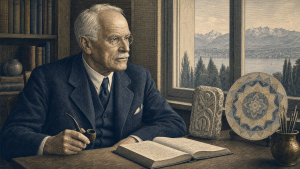
Carl Jung used drawing, painting, mandalas, sculpture, and symbolic image-making as means of engaging psychic material, while distinguishing this work from aesthetic criticism.
Definition
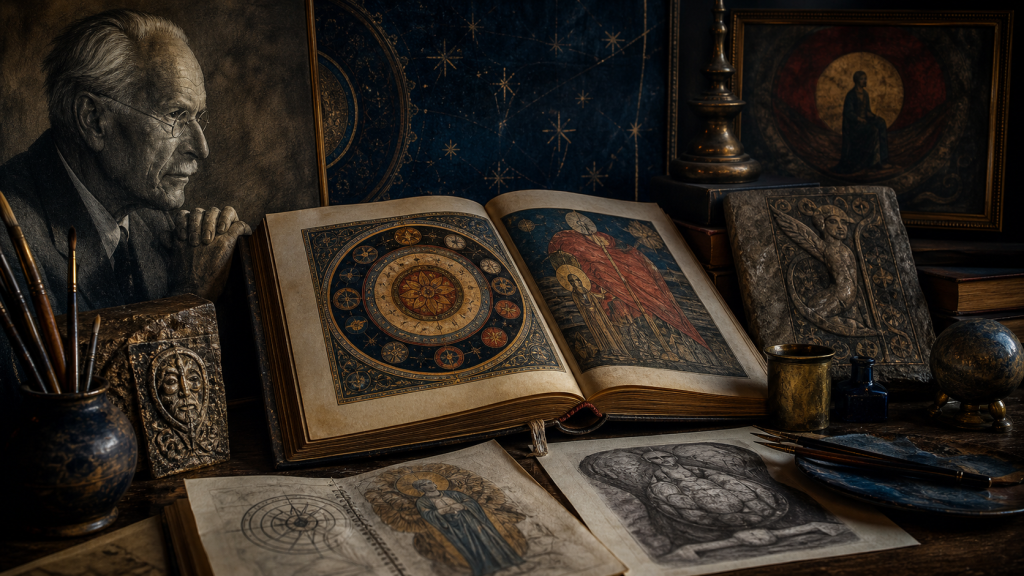
Jung’s relationship to art centered on symbolic image-making as a way to give visible form to inner experience and establish dialogue with unconscious material.
Why images mattered to Jung
For Jung, an image could hold tensions that abstract explanation resolved too quickly. Drawing or painting an image allowed a person to stay with its form, emotion, and development before deciding what it meant.
The Red Book
The Red Book combines calligraphy, narrative, dialogue, and painting. It documents a sustained confrontation with inner figures and became a major source for concepts Jung later presented in more formal psychological language.
Mandalas
Jung observed circular and quaternary forms in his own work and in material produced by patients. He interpreted many mandalas as images of order and centering, while their meaning still depended on the individual sequence and context.
Art and active imagination
Image-making can support active imagination when the image is allowed to change, answer, or reveal tension. It should not be used to force a preferred revelation or to diagnose someone from style alone.
Why art mattered to Carl Jung
Carl Jung used drawing, painting, calligraphy, carving, and architectural work as ways of giving form to inner experience. He resisted identifying himself primarily as an artist, yet image-making was central to the period documented in his Black Books and later shaped into The Red Book.
For Jung, an image could hold psychological material that had not yet become a clear concept. Making or studying an image created distance from immediate emotion and allowed a person to observe recurring forms, tensions, and transformations.
Mandalas and images of order
Jung became interested in circular and quaternary images that appeared in dreams, religious traditions, alchemy, and spontaneous artwork. He interpreted many mandalas as images of psychic order or the Self. That does not mean every circular drawing has the same meaning, nor that drawing a mandala guarantees integration.
Art and active imagination
Active imagination may use writing, dialogue, movement, painting, or another medium to engage an inner image while maintaining conscious reflection. The crucial element is an ongoing relationship between the ego and the material—not aesthetic quality and not passive immersion.
Jung was not offering a universal art dictionary
An artwork’s personal circumstances, cultural setting, materials, and the maker’s associations matter. Archetypal comparison can expand understanding, but it should not erase biography or historical difference.
Looking at Jung’s own visual work
Read The Red Book as a deliberately constructed historical and artistic document, not as a self-help manual. Compare its finished pages with the earlier notebooks, notice how text and image interact, and avoid assuming that every private image supplies a general prescription for other people.
Jung’s art versus art therapy
Jung’s image-making influenced later therapeutic practices, but his personal methods should not be equated automatically with professional art therapy. Art therapy is a clinical discipline with training, ethical standards, and varied theoretical approaches. Creating an image independently can support reflection, yet it does not provide diagnosis or guarantee a therapeutic outcome.
A context-first way to reflect on an image
- Describe what is visibly present before interpreting it.
- Record personal associations to colors, figures, setting, and movement.
- Identify the circumstances in which the image was made.
- Consider cultural and historical meanings without assuming they override personal context.
- Notice how the image changes across a series rather than isolating one example.
This sequence keeps observation separate from interpretation and reduces the temptation to force an image into a predetermined archetypal meaning.
Origin and Development
During the period documented in The Red Book, Jung painted, drew, wrote dialogues, and developed elaborate symbolic images. Mandala drawings later became especially important in his accounts of psychic centering and development.
Examples
- The calligraphic paintings and images of The Red Book
- Mandalas as records of psychic states
- Stone carving and architectural work at Bollingen
- Active imagination expressed through drawing or painting
Common Misconceptions
- Jungian image-making is not judged primarily by artistic skill.
- Every artwork is not a diagnostic test.
- Jung did not create modern art therapy as a profession.
- A symbol’s meaning cannot be determined from appearance alone.
Continue your study
Recommended Reading
Books selected because they directly develop ideas discussed on this page.
The Red Book: Liber Novus
The Red Book: Liber Novus records and artistically develops Carl Jung's confrontation with inner figures and images during a formative period of his psychology.
Memories, Dreams, Reflections
Memories, Dreams, Reflections is a semi-autobiographical account assembled from Carl Jung's recollections, manuscripts, and conversations with editor Aniela Jaffé.
Man and His Symbols
Man and His Symbols is an illustrated introduction to dreams, symbols, archetypes, and individuation written by Carl Jung and four close collaborators for general readers.
Paid links. As an Amazon Associate I earn from qualifying purchases.
Related Concepts
Mandala
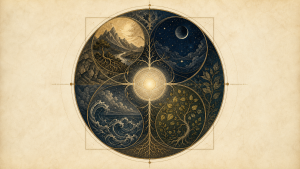
A mandala is a centered, often circular symbolic form that Jung associated with psychic order, wholeness, containment, and the Self.
Individuation
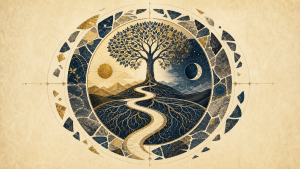
Individuation is Jung’s term for the lifelong process of becoming a more differentiated and integrated psychological whole.
Collective Unconscious
In Jungian psychology, the collective unconscious is a proposed inherited layer of the psyche expressed through universal patterns called archetypes.
Related Practices
Active Imagination
Active imagination is Jung’s method of consciously engaging emerging images, emotions, or figures through sustained attention and expression while preserving awareness and judgment.
Circumambulation
Circumambulation is a Jungian method of staying close to one image while examining it repeatedly from different personal, emotional, symbolic, and practical viewpoints.
Related Books
The Red Book: Liber Novus
The Red Book: Liber Novus records and artistically develops Carl Jung's confrontation with inner figures and images during a formative period of his psychology.
Memories, Dreams, Reflections
Memories, Dreams, Reflections is a semi-autobiographical account assembled from Carl Jung's recollections, manuscripts, and conversations with editor Aniela Jaffé.
Man and His Symbols
Man and His Symbols is an illustrated introduction to dreams, symbols, archetypes, and individuation written by Carl Jung and four close collaborators for general readers.
The Black Books
Carl Jung’s private notebooks recording fantasies, dreams, dialogues, and reflections from the period that also produced The Red Book.
Psychology and Alchemy
Carl Jung’s major study connecting dream series, Christian symbolism, and Western alchemy with projection and the psychological process of individuation.