Book
Psychology and Alchemy
Carl Jung’s major study connecting dream series, Christian symbolism, and Western alchemy with projection and the psychological process of individuation.
Summary
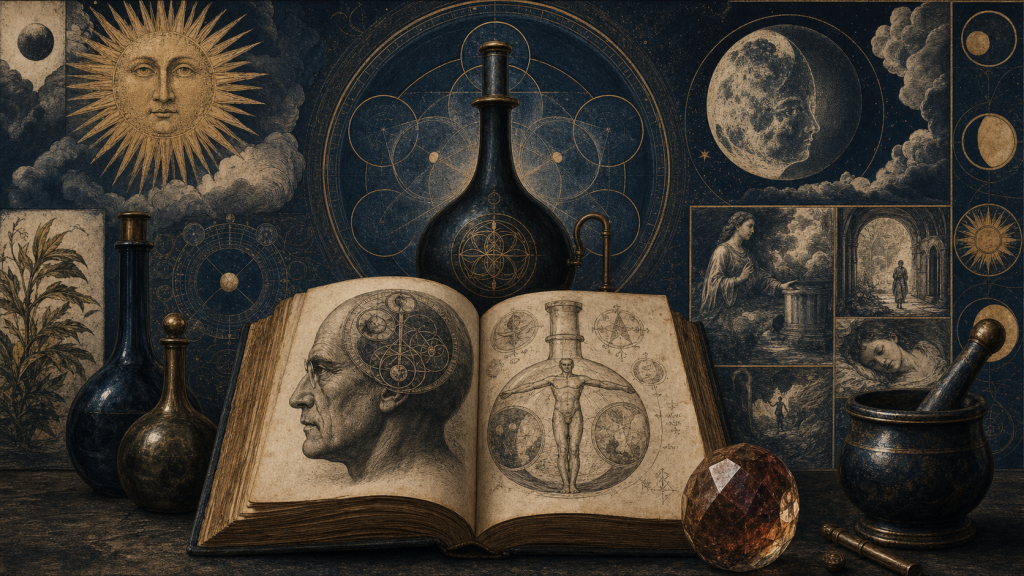
Psychology and Alchemy presents dream material and a wide field of alchemical images to argue that historical alchemy parallels processes encountered in depth psychology. It became a foundation for Jung’s later work on the coniunctio and transformation.
Key Topics
- Projection
- Dream series
- Mandala symbolism
- Christian and alchemical imagery
- Individuation
- The philosopher’s stone
Reader Guidance
A demanding work best read after basic familiarity with Jung’s model. Keep a distinction between historical alchemical practices, the original images, and Jung’s psychological interpretation.
Approach the alchemical images historically and psychologically before treating them as personal prescriptions. A basic understanding of shadow, Self, projection, and individuation will make the book easier to follow. Readers should distinguish Jung’s interpretations from the historical aims of alchemical authors and from modern scientific chemistry.
Jung’s argument
Jung proposed that alchemical practitioners projected unconscious contents into matter and encountered those contents through symbolic operations. The texts therefore preserve images that can be compared with modern dreams and fantasies.
The dream series
A substantial portion of the book examines recurring images across a sequence of dreams. Jung’s method emphasizes pattern across the series rather than treating one dream as a self-contained code.
Alchemy and Christianity
The book places alchemical symbolism beside Christian images and asks what excluded material alchemy may have carried. This interpretation is psychological and historical; it should not be confused with a neutral account of theology or chemistry.
Reading cautions
Popular summaries often turn alchemical terms into a fixed self-help ladder. Jung’s material is more varied, and historical alchemy is more complex still. Use symbolic stages as hypotheses, not guaranteed milestones.
Related Concepts
Carl Jung, Psychology, and Alchemy
Carl Jung interpreted alchemical images as historical parallels to unconscious psychological processes, especially projection, transformation, opposites, and individuation.

Projection
Projection is the largely unconscious process of experiencing one’s own psychological content as if it belonged primarily or entirely to another person, group, or object.
Coniunctio
Coniunctio is an alchemical image Jung used to explore the psychological union of opposites and the possibility of a new, more inclusive attitude.
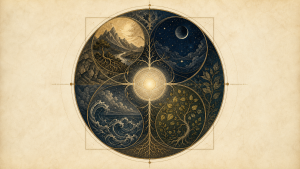
Mandala
A mandala is a centered, often circular symbolic form that Jung associated with psychic order, wholeness, containment, and the Self.

Individuation
Individuation is Jung’s term for the lifelong process of becoming a more differentiated and integrated psychological whole.
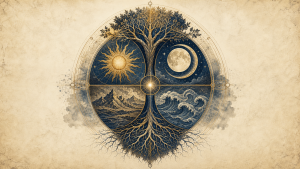
Self
The Self is Jung’s concept of the whole psyche—conscious and unconscious—and the archetypal principle of its organization, development, and potential integration.
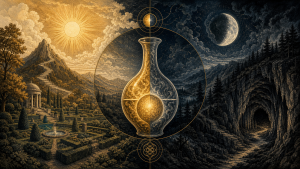
Psychological Opposites
Psychological opposites are conflicting conscious and unconscious positions whose tension can reveal one-sidedness and support development.
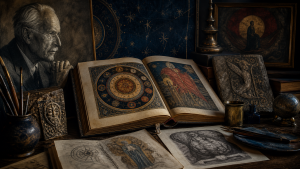
Carl Jung and Art
Carl Jung used drawing, painting, mandalas, sculpture, and symbolic image-making as means of engaging psychic material, while distinguishing this work from aesthetic criticism.
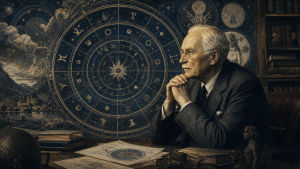
Carl Jung and Astrology
Carl Jung discussed astrology as a historical symbolic system and explored astrological data in relation to synchronicity, without establishing astrology as validated causal science.
Related Psychologists
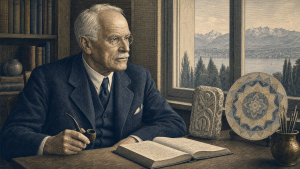
Carl Jung
Carl Gustav Jung was a Swiss psychiatrist who founded analytical psychology and developed influential ideas about complexes, archetypes, the collective unconscious, psychological types, and individuation.

Marie-Louise von Franz
Marie-Louise von Franz was a Swiss Jungian analyst and scholar known for her work on dreams, fairy tales, alchemy, and the process of individuation.
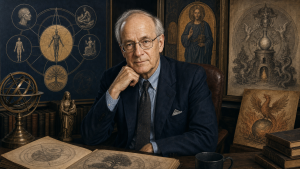
Edward F. Edinger
Edward F. Edinger was an American psychiatrist, Jungian analyst, lecturer, and author who became a prominent interpreter of Jung’s work on the ego, Self, individuation, alchemy, and religious symbolism.