Interactive Tool
Best Shadow Work Books
A carefully differentiated reading guide to primary Jungian sources and responsible modern books related to the shadow and Shadow Work.

Purpose
Help readers distinguish Jung’s original concept of the shadow from later Shadow Work exercises and commercial journals.
This curated guide separates primary Jungian sources, historically important commentaries, and accessible modern introductions. It helps readers choose a book based on experience level and purpose rather than treating every title marketed as “shadow work” as equivalent.
Begin with one overview and one primary-source reading guide. Taking notes on projection, persona, conflict, and emotional reactions is usually more useful than collecting many prompt books at once. Book links may earn the site a commission at no additional cost to the reader.
Instructions
Choose a primary-source path for theory or a practical path for structured reflection. Open each related book page for edition-specific guidance and available purchase links.
Privacy
This guide does not collect personal information.
Important Disclaimer
Amazon links may be affiliate links. Editorial inclusion and ordering are not determined by commission.
Best starting point
Man and His Symbols is the easiest broad introduction because it places the shadow within dreams, symbols, archetypes, and psychological development. Readers seeking Jung’s more technical treatment should move to Aion.
Primary Jungian sources
- Aion — Jung’s mature discussion of the shadow, anima and animus, and the Self. Dense but foundational.
- Man and His Symbols — accessible context for symbols, dreams, and unconscious compensation.
- The Archetypes and the Collective Unconscious — broader archetypal framework surrounding the shadow.
Post-Jungian development
Edward Edinger’s books clarify ego–Self relations and symbolic development. James Hillman and other post-Jungian writers revise or challenge classical assumptions. These works are valuable precisely because Jungian psychology is a debated tradition, not a closed doctrine.
Choosing a practical journal
A useful journal asks for specific events, evidence, alternatives, boundaries, and responsibility. Avoid products that promise instant healing, recovered memories, universal symbolic meanings, or certainty about other people’s hidden motives.
Continue your study
Recommended Reading
Books selected because they directly develop ideas discussed on this page.
Aion: Researches into the Phenomenology of the Self
Aion is Jung’s advanced study of the Self, the shadow, opposites, and the religious, astrological, Gnostic, and alchemical symbols of psychological totality.
Man and His Symbols
Man and His Symbols is an illustrated introduction to dreams, symbols, archetypes, and individuation written by Carl Jung and four close collaborators for general readers.
Ego and Archetype
Ego and Archetype is Edward F. Edinger’s influential Jungian study of individuation and the changing relationship between the conscious ego and the Self.
Paid links. As an Amazon Associate I earn from qualifying purchases.
Related Concepts
Shadow
In Jungian psychology, the shadow is the part of the personality containing qualities, impulses, and capacities that the conscious ego does not recognize or accept as its own.
Projection
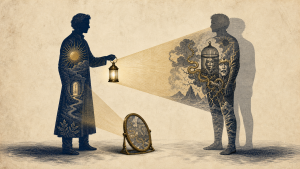
Projection is the largely unconscious process of experiencing one’s own psychological content as if it belonged primarily or entirely to another person, group, or object.
Persona
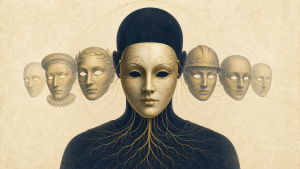
In Jungian psychology, the persona is the social identity or “mask” through which a person adapts to roles, expectations, and relationships.

Self
The Self is Jung’s concept of the whole psyche—conscious and unconscious—and the archetypal principle of its organization, development, and potential integration.

Individuation
Individuation is Jung’s term for the lifelong process of becoming a more differentiated and integrated psychological whole.
Related Practices

Related Books
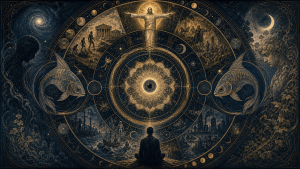
Aion: Researches into the Phenomenology of the Self
Aion is Jung’s advanced study of the Self, the shadow, opposites, and the religious, astrological, Gnostic, and alchemical symbols of psychological totality.

Man and His Symbols
Man and His Symbols is an illustrated introduction to dreams, symbols, archetypes, and individuation written by Carl Jung and four close collaborators for general readers.

Ego and Archetype
Ego and Archetype is Edward F. Edinger’s influential Jungian study of individuation and the changing relationship between the conscious ego and the Self.

Encounter with the Self
Encounter with the Self is Edward F. Edinger’s Jungian commentary on William Blake’s illustrations of the Book of Job and their imagery of psychic and religious transformation.
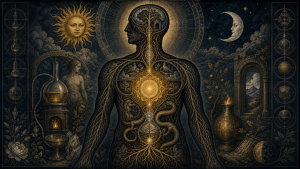
Anatomy of the Psyche
Anatomy of the Psyche is Edward F. Edinger’s Jungian study of Western alchemical images and operations as symbolic parallels for psychological processes and psychotherapy.