Jungian Concept
Self
The Self is Jung’s concept of the whole psyche—conscious and unconscious—and the archetypal principle of its organization, development, and potential integration.
Definition
The Self is Jung’s name for the total conscious-and-unconscious personality and for the archetypal principle through which psychic wholeness and order may be represented.
What Is the Self?
In Jungian psychology, the Self represents the personality as a whole, including both conscious and unconscious dimensions. Jung also described it as an archetype of wholeness and an organizing center of the psyche.
The capitalized term is used to distinguish this technical concept from ordinary phrases such as self-esteem, self-image, “your best self,” or selfishness. The Self is not a perfected personality that can be fully possessed or displayed.
Self and Ego
The ego is the center of consciousness; the Self encompasses a wider totality. The ego experiences, judges, and chooses, but it remains only partly aware of the forces shaping psychological life.
Jung used images of a center and circumference to describe the relationship. This does not make the ego disposable. Consciousness is needed to interpret experience, test claims against reality, and take ethical responsibility.
How the Self May Be Represented
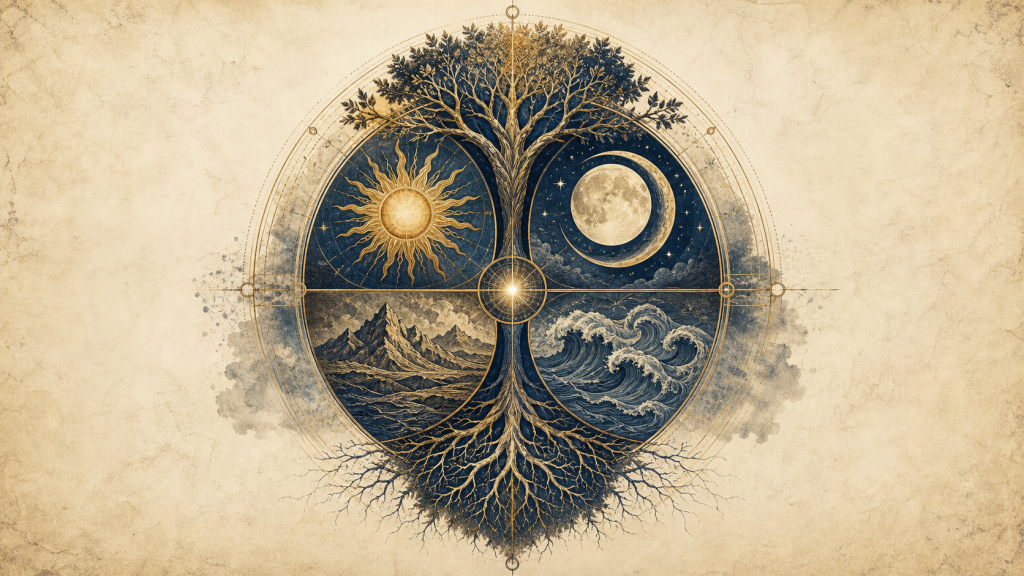
Jung associated the Self with images of order, totality, and the union of opposites. Examples include circles, squares, mandalas, paired figures, divine children, kings, guides, stones, and other symbols that organize a larger pattern.
No image has a guaranteed meaning. A circle in a dream is not proof that the Self has appeared, and a powerful experience does not certify spiritual attainment. Personal context, emotional tone, and the surrounding sequence matter.
The Self and Individuation
Individuation is often described as developing a more conscious relationship between ego and Self. The process may involve differentiating from the persona, recognizing the shadow, and engaging conflicts that challenge a one-sided identity.
Wholeness does not mean perfection or permanent harmony. Jung’s Self contains tension and opposition. A more integrated personality can remain conflicted, limited, and unfinished.
Inflation and Misidentification
Experiences associated with the Self can feel unusually powerful or meaningful. Jung warned that the ego may identify with that power and become inflated, believing itself uniquely wise, chosen, or beyond criticism.
A grounded relationship with the Self tends to increase humility and responsibility rather than grandiosity. Symbolic experience remains subject to ordinary evidence, relationship, law, and ethical judgment.
Psychological and Religious Language
Jung often compared experiences of the Self with religious images. His psychological method described the effects and meanings of such images without settling theological questions about what exists beyond the psyche. Readers should distinguish a psychological interpretation from a religious claim.
The Self Is Not an Inner Command
A dream figure or powerful conviction should not be obeyed merely because it feels connected with the Self. Psychological totality includes unconscious conflict and ambiguity; it does not arrive as an infallible private authority. Any proposed meaning must still be examined through evidence, consequences, consent, law, and ethical responsibility. A relation to the Self broadens the ego’s perspective—it does not remove the ego’s duty to judge and choose.
Sources and Further Reading
Origin and Development
Jung developed the concept across his mature work, with major discussions in Psychological Types, Psychology and Alchemy, and Aion. The term belongs to his psychological model and should not be assumed to mean the everyday ego or a universally accepted scientific entity.
Examples
A dream in a period of disorientation may organize itself around a previously unknown center, circular structure, or reconciling figure. A Jungian interpretation might consider whether the image compensates a fragmented conscious position, while remaining open to other personal explanations.
Common Misconceptions
- The Self is not the ego.
- It is not an idealized “best version” of a person.
- Wholeness is not perfection.
- A numinous experience does not make the ego infallible.
- Psychological use of religious imagery does not settle theological truth.
Continue your study
Recommended Reading
Books selected because they directly develop ideas discussed on this page.
Aion: Researches into the Phenomenology of the Self
Aion is Jung’s advanced study of the Self, the shadow, opposites, and the religious, astrological, Gnostic, and alchemical symbols of psychological totality.
Man and His Symbols
Man and His Symbols is an illustrated introduction to dreams, symbols, archetypes, and individuation written by Carl Jung and four close collaborators for general readers.
Memories, Dreams, Reflections
Memories, Dreams, Reflections is a semi-autobiographical account assembled from Carl Jung's recollections, manuscripts, and conversations with editor Aniela Jaffé.
Paid links. As an Amazon Associate I earn from qualifying purchases.
Related Concepts
Shadow
In Jungian psychology, the shadow is the part of the personality containing qualities, impulses, and capacities that the conscious ego does not recognize or accept as its own.
Persona
In Jungian psychology, the persona is the social identity or “mask” through which a person adapts to roles, expectations, and relationships.

Individuation
Individuation is Jung’s term for the lifelong process of becoming a more differentiated and integrated psychological whole.
Collective Unconscious
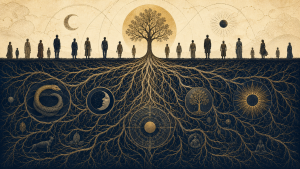
In Jungian psychology, the collective unconscious is a proposed inherited layer of the psyche expressed through universal patterns called archetypes.

Personal Unconscious
In Jungian psychology, the personal unconscious contains experiences, perceptions, and emotionally charged material outside an individual’s present awareness.
Ego
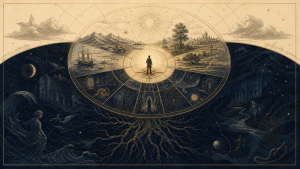
In Jungian psychology, the ego is the central complex of consciousness: the organizing “I” that experiences identity, makes choices, and adapts to inner and outer life.
Archetype
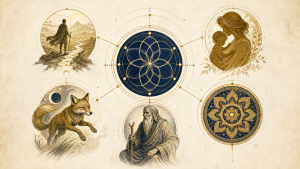
An archetype is an inherited organizing pattern in Jung’s theory that can shape recurring forms of imagery, emotion, perception, and behavior without prescribing one fixed image.

Anima
Anima is Jung’s historical term for an inner feminine archetypal figure in a man, associated with feeling, relationship, imagery, and mediation between consciousness and the unconscious.
Animus
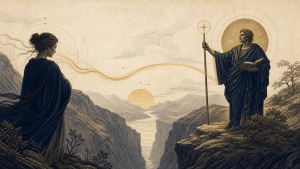
Animus is Jung’s historical term for an inner masculine archetypal figure in a woman, associated with opinion, agency, meaning, and mediation between consciousness and the unconscious.
Synchronicity
Synchronicity is Jung’s term for a meaningful coincidence between an inner psychological state and an external event when no adequate causal connection is apparent.
Psychological Types
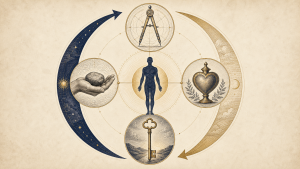
Jung’s psychological types combine two attitudes—introversion and extraversion—with four functions: thinking, feeling, sensation, and intuition.
Introversion
Introversion is a Jungian attitude in which conscious energy and motivation give greater priority to the subject’s inner impressions, ideas, and standpoint.

Extraversion
Extraversion is a Jungian attitude in which conscious energy and motivation give greater priority to external people, events, objects, and shared conditions.
Transcendent Function
The transcendent function is the new psychological attitude or symbolic possibility that can emerge when conscious and unconscious positions are held in genuine dialogue.
Psychological Opposites
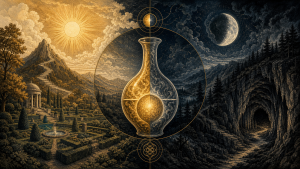
Psychological opposites are conflicting conscious and unconscious positions whose tension can reveal one-sidedness and support development.

Psychological Inflation
Psychological inflation is an expanded or diminished self-estimate caused by identifying the ego with an archetype, role, group, insight, or unconscious content.
Mandala
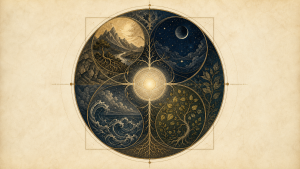
A mandala is a centered, often circular symbolic form that Jung associated with psychic order, wholeness, containment, and the Self.

Participation Mystique
Participation mystique is a Jungian term for an unconscious state of identity in which the boundary between subject and object, self and other, is insufficiently differentiated.

Coniunctio
Coniunctio is an alchemical image Jung used to explore the psychological union of opposites and the possibility of a new, more inclusive attitude.

Analytical Psychology
Analytical psychology, often called Jungian psychology, is Carl Jung’s approach to the psyche, unconscious life, symbols, and psychological development.

Carl Jung’s Theory of Personality
Carl Jung’s personality theory combines psychological attitudes and functions with a broader model of ego, persona, shadow, unconscious life, and individuation.

Carl Jung’s Philosophy
Carl Jung’s philosophy centers on psychological wholeness, symbols, opposites, meaning, and the relationship between conscious and unconscious life.
Anima and Animus
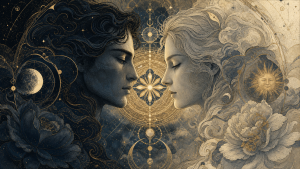
Anima and animus are Jung’s historically gendered terms for inner otherness, relational projection, and qualities excluded from conscious identity.
Carl Jung and Religion
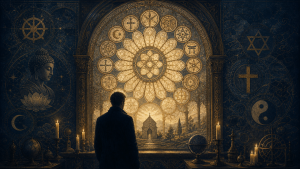
Carl Jung approached religion as a psychological and symbolic phenomenon whose images can organize experience, while avoiding a clinical proof of theological claims.
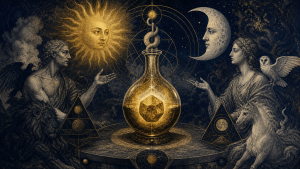
Carl Jung, Psychology, and Alchemy
Carl Jung interpreted alchemical images as historical parallels to unconscious psychological processes, especially projection, transformation, opposites, and individuation.
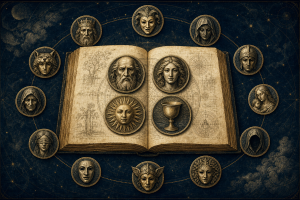
Did Carl Jung Define 12 Archetypes?
Carl Jung did not establish a canonical list of twelve personality archetypes; the popular twelve-archetype model is a later simplification.
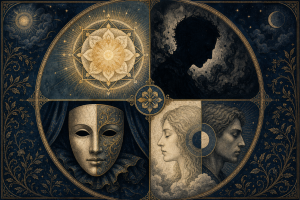
The Four Major Jungian Archetypes
The shadow, persona, anima or animus, and Self are often taught as four major Jungian archetypes, though Jung’s wider theory is not limited to four.
Symbolic Attitude
A symbolic attitude is the willingness to hold an image, event, or conflict as potentially meaningful without forcing it into a literal or fixed explanation.
Ego–Self Axis
The ego–Self axis is Edward Edinger’s influential model for the changing relationship between conscious identity and the wider psychic totality Jung called the Self.
Archetypal Possession
Archetypal possession describes a state in which an impersonal pattern overwhelms ordinary perspective and is experienced as if it defines the whole person or situation.
Autonomy of Complexes
The autonomy of complexes refers to the way emotionally charged patterns can interrupt intention, capture attention, and produce reactions that feel partly outside conscious control.
The Numinous
The numinous is an experience of compelling awe, fascination, dread, or significance that seems greater than ordinary conscious intention.
Libido in Jungian Psychology
In Jungian psychology, libido means general psychic energy rather than sexual drive alone.
Psychological Differentiation
Psychological differentiation is the development of clearer distinctions among functions, values, roles, emotions, and unconscious influences.
Psychological Integration
Psychological integration is the ongoing work of bringing previously excluded experience into a more conscious and responsible relationship with the personality.
Psychological Wholeness
Psychological wholeness is Jung’s ideal of a personality able to relate consciously to its tensions, limits, and wider range rather than identifying with a narrow self-image.

Teleology in Jungian Psychology
Teleology in Jungian psychology is the practice of asking what direction or future possibility a psychological event may be moving toward, alongside asking what caused it.
Related Archetypes

Hero
The Hero is an archetypal motif of confronting danger, overcoming an obstacle, and winning something that can contribute to greater consciousness or renewal.

Wise Old Person
The Wise Old Person is an archetypal guide figure associated with meaning, counsel, insight, and the danger of identifying with borrowed authority.
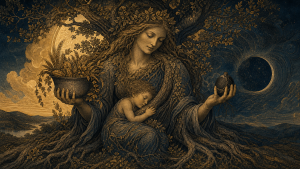
Great Mother
The Great Mother is an archetypal pattern of origin, nourishment, protection, fertility, containment, engulfment, and destructive power.

Child
The Child archetype represents vulnerable beginnings, unrealized potential, renewal, dependence, abandonment, and a future personality still developing.

Maiden (Kore)
The Maiden, or Kore, is an archetypal image of youth, potential, vulnerability, separation, descent, renewal, and an identity not yet fully differentiated.

Senex
The Senex archetype carries time, structure, discipline, memory, authority, limit, and responsibility; one-sided, it may harden into rigidity, control, sterility, or punitive order.

Wounded Healer
The Wounded Healer archetype holds vulnerability and the capacity to help in tension while requiring self-knowledge, competence, accountability, and clear boundaries.
Related Dream Symbols

House
A house in a dream may represent the dreamer, a structure of personality, family life, memory, safety, or a psychological situation, depending on context.

Water
Water in a dream may relate to emotion, bodily life, the unconscious, renewal, danger, depth, or overwhelming experience, depending on its form and context.

Forest
A forest in a dream may suggest an unfamiliar psychological territory, instinctive life, concealment, danger, refuge, disorientation, or a path of discovery.

Door
A door in a dream may suggest access, exclusion, transition, opportunity, secrecy, protection, choice, or a boundary between psychological situations.

Mirror
A mirror in a dream may concern self-recognition, appearance, identity, reversal, duplication, self-judgment, projection, or the unsettling failure to recognize oneself.

Mountain
A mountain dream may evoke challenge, perspective, endurance, isolation, boundary, permanence, sacred space, or a goal, depending on the mountain and the dreamer’s relationship to it.
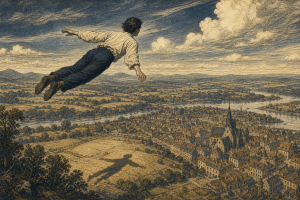
Flying Dream Meaning
Flying dreams may involve freedom, perspective, confidence, escape, inflation, instability, fear of falling, or the sensory qualities of sleep.
Related Practices

Active Imagination
Active imagination is Jung’s method of consciously engaging emerging images, emotions, or figures through sustained attention and expression while preserving awareness and judgment.

Jungian Dream Analysis
Jungian dream analysis explores a dream’s personal associations, structure, emotional context, and possible compensatory relationship to conscious life without using fixed symbol definitions.

Symbol Amplification
Symbol amplification is a Jungian method of comparing an image with mythic, religious, artistic, historical, and cultural parallels while staying anchored to personal context.

Circumambulation
Circumambulation is a Jungian method of staying close to one image while examining it repeatedly from different personal, emotional, symbolic, and practical viewpoints.

Sandplay Therapy
Sandplay therapy is a clinical, expressive method in which a client creates scenes with sand, water, and miniatures within a protected therapeutic relationship.

Jungian Therapy
Jungian therapy is a depth-oriented form of psychotherapy that explores conscious and unconscious patterns through relationships, dreams, symbols, and personal history.
Related Books
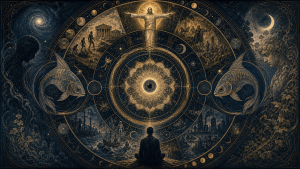
Aion: Researches into the Phenomenology of the Self
Aion is Jung’s advanced study of the Self, the shadow, opposites, and the religious, astrological, Gnostic, and alchemical symbols of psychological totality.

Man and His Symbols
Man and His Symbols is an illustrated introduction to dreams, symbols, archetypes, and individuation written by Carl Jung and four close collaborators for general readers.

Memories, Dreams, Reflections
Memories, Dreams, Reflections is a semi-autobiographical account assembled from Carl Jung's recollections, manuscripts, and conversations with editor Aniela Jaffé.
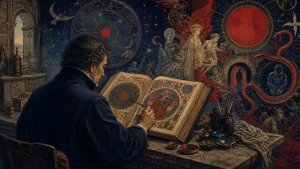
The Red Book: Liber Novus
The Red Book: Liber Novus records and artistically develops Carl Jung's confrontation with inner figures and images during a formative period of his psychology.
The Archetypes and the Collective Unconscious
The Archetypes and the Collective Unconscious collects major essays in which Carl Jung develops his accounts of archetypes, collective psychic patterns, rebirth, the mother, the child, and individuation.
The Origins and History of Consciousness
Erich Neumann’s The Origins and History of Consciousness uses mythic sequences to propose an archetypal model of ego development and the differentiation of consciousness.
Re-Visioning Psychology
Re-Visioning Psychology is James Hillman’s foundational statement of archetypal psychology and its imaginal approach to soul, symptoms, myth, and psychological plurality.

Senex & Puer
Senex & Puer collects James Hillman’s essays on the archetypal polarity between time, structure, authority, and the youthful forces of possibility, freedom, and renewal.

Ego and Archetype
Ego and Archetype is Edward F. Edinger’s influential Jungian study of individuation and the changing relationship between the conscious ego and the Self.
The Eternal Drama
The Eternal Drama is Edward F. Edinger’s Jungian exploration of major Greek myths and divine figures as recurring images of psychological conflict, development, and transformation.
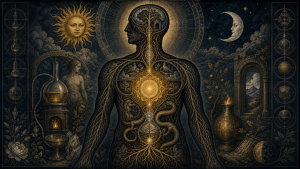
Anatomy of the Psyche
Anatomy of the Psyche is Edward F. Edinger’s Jungian study of Western alchemical images and operations as symbolic parallels for psychological processes and psychotherapy.

The Sacred Psyche
The Sacred Psyche is Edward F. Edinger’s psychological interpretation of the Psalms, developed from lectures and focused on their continuing significance in individual experience.
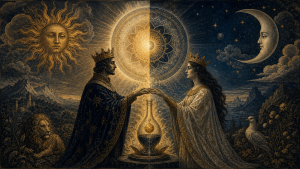
The Mystery of the Coniunctio
The Mystery of the Coniunctio is Edward F. Edinger’s compact Jungian study of alchemical union as an image of the relationship and possible integration of psychological opposites.
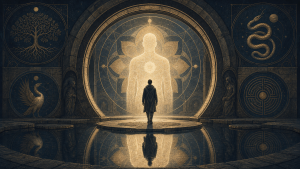
Encounter with the Self
Encounter with the Self is Edward F. Edinger’s Jungian commentary on William Blake’s illustrations of the Book of Job and their imagery of psychic and religious transformation.
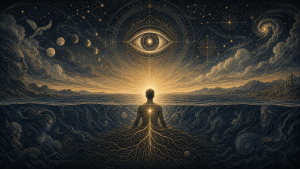
The Creation of Consciousness
The Creation of Consciousness is Edward F. Edinger’s concise proposal for a modern Jungian worldview joining the scientific pursuit of knowledge with the religious search for meaning.
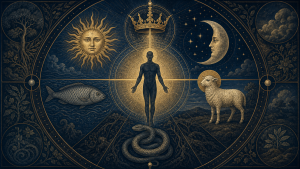
The Christian Archetype
The Christian Archetype is Edward F. Edinger’s Jungian commentary on central episodes in the life of Christ and their possible psychological significance.
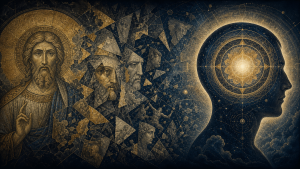
Transformation of the God-Image
Transformation of the God-Image is Edinger’s Jungian elucidation of Answer to Job, developed from seminars at the C. G. Jung Institute of Los Angeles.

Science of the Soul
Science of the Soul is a posthumous collection of five Edinger essays on psychotherapy, transference, vocation, the greater personality, and Jungian psychological method.

Goethe’s Faust: Notes for a Jungian Commentary
Goethe’s Faust is Edinger’s Jungian commentary on Goethe’s drama as a psychological portrait, symbolic analytic process, and bridge to alchemy.

Melville’s Moby-Dick: An American Nekyia
Melville’s Moby-Dick is Edinger’s Jungian interpretation of Melville’s novel as an American nekyia—a descent into dangerous and transformative psychic depths.
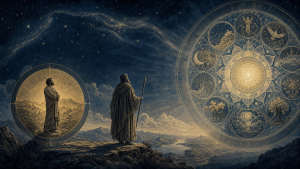
Ego and Self: The Old Testament Prophets
Ego and Self is Edinger’s psychological commentary on the prophetic books of the Hebrew Bible, continuing the work begun in The Bible and the Psyche.
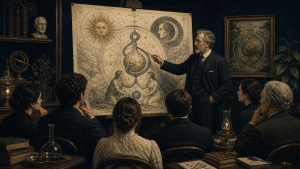
The Mysterium Lectures
The Mysterium Lectures is Edinger’s extensive chapter-by-chapter guide to Jung’s Mysterium Coniunctionis and its relevance to dreams and psychological life.

The Bible and the Psyche
The Bible and the Psyche is Edinger’s Jungian commentary on individuation symbolism in biblical books from Genesis through Esther.
The Psyche in Antiquity, Book One
The Psyche in Antiquity, Book One is Edinger’s psychological tour of early Greek philosophy from the Milesians through Plotinus.
The Psyche on Stage
The Psyche on Stage is Edinger’s Jungian study of Measure for Measure, Romeo and Juliet, Oedipus the King, and Oedipus at Colonus.
The Aion Lectures
The Aion Lectures is Edinger’s edited lecture companion to C. G. Jung’s Aion, originally delivered in Los Angeles in 1988–89.

The Black Books
Carl Jung’s private notebooks recording fantasies, dreams, dialogues, and reflections from the period that also produced The Red Book.
Psychology and Alchemy
Carl Jung’s major study connecting dream series, Christian symbolism, and Western alchemy with projection and the psychological process of individuation.
Related Psychologists
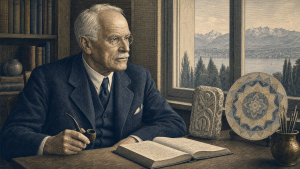
Carl Jung
Carl Gustav Jung was a Swiss psychiatrist who founded analytical psychology and developed influential ideas about complexes, archetypes, the collective unconscious, psychological types, and individuation.

Emma Jung
Emma Jung was a Swiss Jungian analyst and author known for her work on the anima and animus, the Grail legend, and the early analytical psychology movement.

Dora Kalff
Dora Kalff was a Swiss therapist who developed Jungian sandplay therapy by integrating Margaret Lowenfeld’s World Technique with analytical psychology.
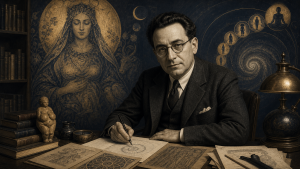
Erich Neumann
Erich Neumann was a German-born Israeli analytical psychologist who extended Jungian psychology through studies of consciousness, mythology, ethics, creativity, and Jewish thought.

James Hillman
James Hillman was an American post-Jungian psychologist and writer who founded archetypal psychology, an imaginal approach centered on soul, myth, plurality, and close attention to images.

Edward F. Edinger
Edward F. Edinger was an American psychiatrist, Jungian analyst, lecturer, and author who became a prominent interpreter of Jung’s work on the ego, Self, individuation, alchemy, and religious symbolism.

Jolande Jacobi
Jolande Jacobi was a Swiss psychologist, author, and early interpreter of C. G. Jung whose systematic introductions helped make analytical psychology accessible.