
Book
The Black Books
Carl Jung’s private notebooks recording fantasies, dreams, dialogues, and reflections from the period that also produced The Red Book.

Summary
The Black Books publish the notebooks in which Jung recorded much of the visionary material, dialogues, and reflections later transformed in The Red Book. They reveal process, revision, chronology, and context not visible in the finished illuminated volume.
Key Topics
- Active imagination
- Inner figures and dialogue
- The formation of The Red Book
- Jung’s confrontation with the unconscious
- Development of later psychological ideas
Reader Guidance
Best for serious readers who already know The Red Book or Jung’s biography. The multi-volume scholarly edition is a primary-source archive rather than a beginner introduction.
This multivolume primary source is best suited to readers already familiar with Jung’s biography, active imagination, and the later publication history of The Red Book. Use editorial notes and dates carefully. The notebooks document an unfolding personal process; they are not a step-by-step practice manual.
What the Black Books contain
The notebooks preserve dated entries, fantasies, conversations with inner figures, dreams, and reflections. They show Jung working through material before selecting, rewriting, and illustrating portions for The Red Book.
Black Books versus The Red Book
The Black Books are working records. The Red Book is a shaped literary and visual work. Comparing them helps readers distinguish immediate notation from later composition and interpretation.
Why scholars value them
The notebooks provide chronology and editorial context for a decisive period in Jung’s intellectual development. They also complicate simplified stories about how concepts emerged.
Who should read them?
They suit researchers, clinicians, and committed readers more than newcomers. Beginners will usually gain more from Man and His Symbols, Memories, Dreams, Reflections, or a guided introduction.
Related Concepts

Individuation
Individuation is Jung’s term for the lifelong process of becoming a more differentiated and integrated psychological whole.
Shadow
In Jungian psychology, the shadow is the part of the personality containing qualities, impulses, and capacities that the conscious ego does not recognize or accept as its own.
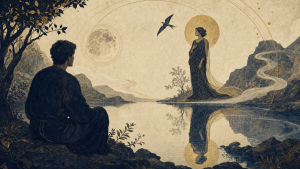
Anima
Anima is Jung’s historical term for an inner feminine archetypal figure in a man, associated with feeling, relationship, imagery, and mediation between consciousness and the unconscious.
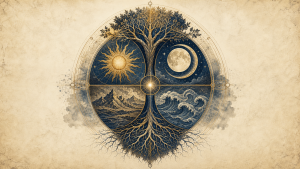
Self
The Self is Jung’s concept of the whole psyche—conscious and unconscious—and the archetypal principle of its organization, development, and potential integration.

Carl Jung and Art
Carl Jung used drawing, painting, mandalas, sculpture, and symbolic image-making as means of engaging psychic material, while distinguishing this work from aesthetic criticism.