Jungian Concept
Did Carl Jung Define 12 Archetypes?
Carl Jung did not establish a canonical list of twelve personality archetypes; the popular twelve-archetype model is a later simplification.
Definition
No. Jung discussed many archetypal images and patterns, but he did not publish the familiar twelve-type list as a complete personality system.
The short answer
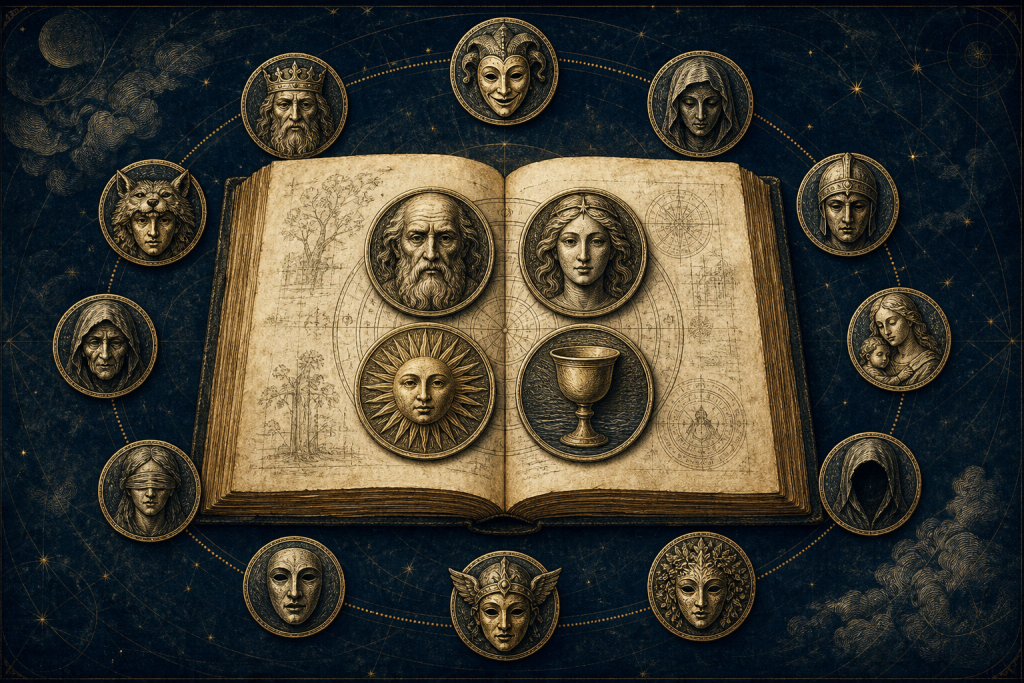
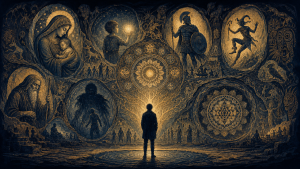
The familiar list of Innocent, Everyman, Hero, Caregiver, Explorer, Rebel, Lover, Creator, Jester, Sage, Magician, and Ruler is widely described online as “Jung’s twelve archetypes.” That wording is historically misleading. Jung did not present this list as his definitive system.
What Jung meant by archetype
For Jung, an archetype was not simply a stock character or market segment. It was an underlying tendency to organize human experience and symbolic imagery in recurring ways. We encounter an archetype through particular images shaped by culture, biography, and circumstance; the underlying pattern cannot be reduced to one picture or checklist.
Why the twelve-part model became popular
Twelve is memorable, symmetrical, and easy to apply in storytelling, coaching, and brand strategy. Later frameworks converted a fluid symbolic theory into a manageable typology. Such models can support creative reflection, but they should be identified as later adaptations rather than direct summaries of Jung’s scholarship.
How to use later archetype models responsibly
- Treat labels as prompts, not diagnoses.
- Ask how a pattern changes across situations.
- Look for both constructive and destructive expressions.
- Notice what the model leaves out.
- Return to primary sources when making historical claims about Jung.
What the historical distinction changes
Calling the twelve-part list Jung’s own can make later interpretations seem more settled than they are. It also hides disagreements within analytical psychology about how archetypes should be described. Jung’s examples emerged through clinical observation, comparative symbolism, dreams, religion, myth, and cultural study. They were not designed as a consumer-facing inventory.
Archetype versus archetypal image
Jung distinguished the underlying archetypal tendency from the particular image through which it appears. A hero in one culture, dream, or life stage does not carry exactly the same meaning as a hero elsewhere. Images inherit local history, personal emotion, and narrative context. That flexibility is precisely what a fixed twelve-card system tends to flatten.
Origin and Development
Jung developed archetype as a theoretical concept within analytical psychology. Later writers adapted archetypal ideas for mythology, branding, storytelling, and personality frameworks. The popular twelve-part model belongs to that later history.
Examples
Jung repeatedly examined patterns such as the shadow, persona, anima, animus, Self, child, mother, wise old person, hero, and trickster. These examples were not intended as an exhaustive inventory.
Common Misconceptions
- The twelve archetypes are not a Jung-authored test.
- Jung did not claim every person has one dominant brand-like identity.
- Archetypes are not fixed characters with universal checklists.
Continue your study
Recommended Reading
Books selected because they directly develop ideas discussed on this page.
The Archetypes and the Collective Unconscious
The Archetypes and the Collective Unconscious collects major essays in which Carl Jung develops his accounts of archetypes, collective psychic patterns, rebirth, the mother, the child,…
Man and His Symbols
Man and His Symbols is an illustrated introduction to dreams, symbols, archetypes, and individuation written by Carl Jung and four close collaborators for general readers.
Paid links. As an Amazon Associate I earn from qualifying purchases.
Related Concepts
Archetype
An archetype is an inherited organizing pattern in Jung’s theory that can shape recurring forms of imagery, emotion, perception, and behavior without prescribing one fixed image.
Collective Unconscious
In Jungian psychology, the collective unconscious is a proposed inherited layer of the psyche expressed through universal patterns called archetypes.
Self
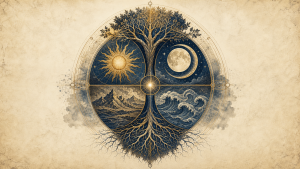
The Self is Jung’s concept of the whole psyche—conscious and unconscious—and the archetypal principle of its organization, development, and potential integration.
Shadow
In Jungian psychology, the shadow is the part of the personality containing qualities, impulses, and capacities that the conscious ego does not recognize or accept as its own.
Persona
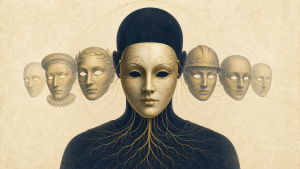
In Jungian psychology, the persona is the social identity or “mask” through which a person adapts to roles, expectations, and relationships.
Related Archetypes
Hero
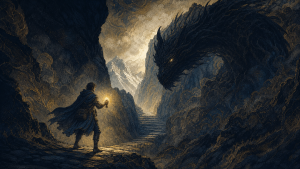
The Hero is an archetypal motif of confronting danger, overcoming an obstacle, and winning something that can contribute to greater consciousness or renewal.
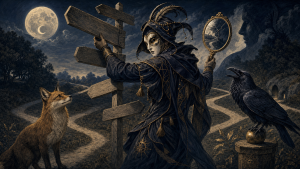
Trickster
The Trickster is an archetypal boundary-breaker whose humor, appetite, deception, mistakes, and reversals can expose rigidity while also causing real harm.
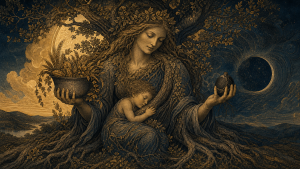
Great Mother
The Great Mother is an archetypal pattern of origin, nourishment, protection, fertility, containment, engulfment, and destructive power.
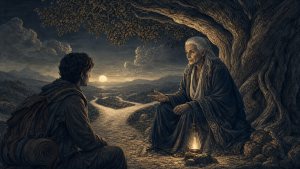
Wise Old Person
The Wise Old Person is an archetypal guide figure associated with meaning, counsel, insight, and the danger of identifying with borrowed authority.
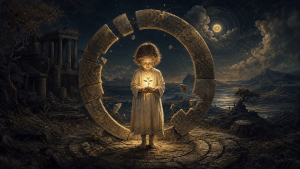
Child
The Child archetype represents vulnerable beginnings, unrealized potential, renewal, dependence, abandonment, and a future personality still developing.
Related Books
The Archetypes and the Collective Unconscious
The Archetypes and the Collective Unconscious collects major essays in which Carl Jung develops his accounts of archetypes, collective psychic patterns, rebirth, the mother, the child, and individuation.
Man and His Symbols
Man and His Symbols is an illustrated introduction to dreams, symbols, archetypes, and individuation written by Carl Jung and four close collaborators for general readers.