Jungian Concept
Archetype
An archetype is an inherited organizing pattern in Jung’s theory that can shape recurring forms of imagery, emotion, perception, and behavior without prescribing one fixed image.
Definition
An archetype is a theoretical, inherited organizing pattern in Jung’s model. It is known indirectly through variable archetypal images, motifs, emotions, and behaviors rather than as a fixed representation.
What Is an Archetype?
In Jungian psychology, an archetype is an inherited organizing pattern associated with the collective unconscious. It is not a ready-made character, picture, personality type, or list of traits.
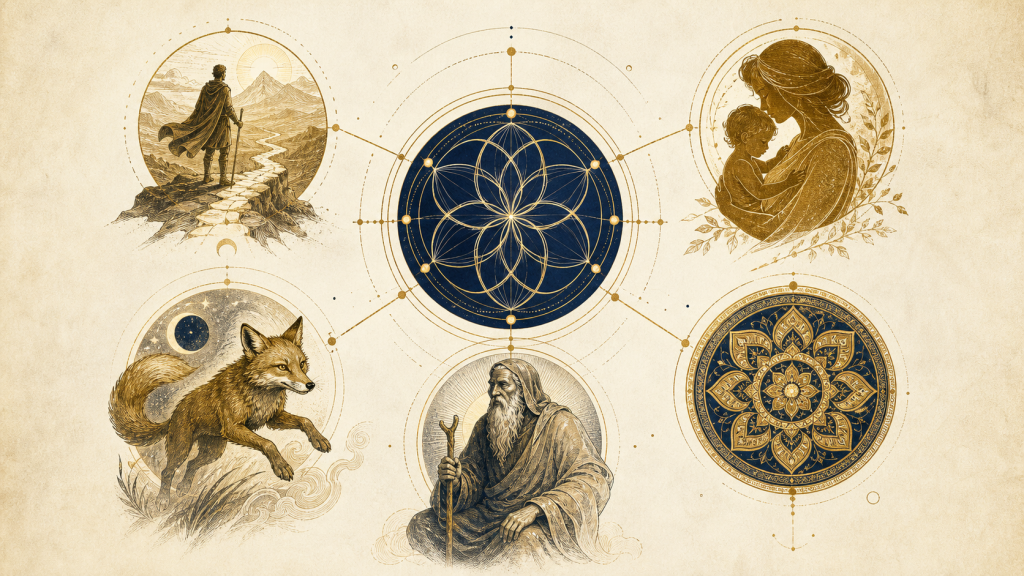
Jung distinguished the archetype itself—which cannot be observed directly—from the archetypal images and motifs through which its effects become visible. A mother figure, hero, trickster, wise guide, or journey may express an archetypal pattern, but each expression is shaped by personal history and culture.
Archetype vs. Archetypal Image
This distinction prevents a common misunderstanding. People do not inherit one fixed image of “the Hero” or “the Mother.” Jung proposed inherited possibilities for forming recurring kinds of experience and representation.
The image is the particular form: a named character, dream figure, ritual, work of art, or story. The archetype is the theoretical organizing tendency inferred from patterns across many expressions.
Archetypes and Instinct
Jung compared archetypes with patterns of instinct. In his model, instinct describes a recurring tendency toward action, while an archetypal image gives that tendency a form through which it can be experienced psychologically.
This does not establish every Jungian interpretation as biological fact. Contemporary scholars debate whether archetypes are best understood as innate structures, emergent patterns, cultural developments, metaphors, or some combination.
Common Examples
Frequently discussed motifs include the Hero, child, mother, father, trickster, wise old person, shadow, persona, anima and animus, and Self. Jung did not establish the popular commercial list of exactly twelve brand or personality archetypes.
An archetype is also not a box into which an entire person fits. A single person, dream, or story can express several patterns, tensions, and cultural meanings at once.
Archetypes in Dreams and Culture
Archetypal images may appear in dreams, fantasies, myths, religion, art, and collective events. Jungian interpretation compares the individual image with broader parallels through a method often called amplification.
Amplification should widen possibilities rather than replace the dreamer’s associations. Similar images in two cultures do not automatically have identical meanings, and interpretation should avoid stripping traditions of their historical context.
Why the Concept Matters
Archetype theory offers a language for experiences that feel larger than personal biography and for recurring structures in story and symbolic life. It also carries risks: vague claims can become unfalsifiable, cultural differences can be flattened, and stereotypes can be mistaken for universal psychology.
A careful approach treats archetypes as a contested Jungian framework—not as proven entities, fortune-telling devices, or fixed identities.
Sources and Further Reading
- Jung Lexicon: Archetype and Archetypal Image
- IAAP: Development of a Reconceptualization of Archetype Theory
- IAAP: Archetype—multiple perspectives in contemporary analytical psychology
Archetypes and Complexes
Archetypes are not the same as complexes. An archetype is a broad pattern in Jung’s theory; a complex is an emotionally charged network of personal associations that can gather around an archetypal theme. Read Archetypes vs. Complexes for a closer comparison.
Building your foundation? Download the free beginner's guide to Jungian psychology for a practical introduction to archetypes, dreams, the Shadow, and individuation.
Origin and Development
Jung first used the term “archetype” in 1919, building on his earlier language of primordial images and his studies of mythological parallels. His definitions changed across his work, and contemporary analytical psychology continues to debate and revise the concept.
Examples
A dangerous journey can organize itself as heroic imagery, but the particular hero, obstacle, goal, and moral meaning arise from a specific dreamer or culture. The recurring pattern is not identical to any one story.
Common Misconceptions
- Archetypes are not inherited photographs or fixed characters.
- They are not personality-test results.
- Jung did not define one canonical list of twelve archetypes.
- Similar symbols do not always have the same meaning.
- Archetype theory is influential but scientifically contested.
Continue your study
Recommended Reading
Books selected because they directly develop ideas discussed on this page.
Aion: Researches into the Phenomenology of the Self
Aion is Jung’s advanced study of the Self, the shadow, opposites, and the religious, astrological, Gnostic, and alchemical symbols of psychological totality.
Man and His Symbols
Man and His Symbols is an illustrated introduction to dreams, symbols, archetypes, and individuation written by Carl Jung and four close collaborators for general readers.
Memories, Dreams, Reflections
Memories, Dreams, Reflections is a semi-autobiographical account assembled from Carl Jung's recollections, manuscripts, and conversations with editor Aniela Jaffé.
Paid links. As an Amazon Associate I earn from qualifying purchases.
Related Concepts
Shadow
In Jungian psychology, the shadow is the part of the personality containing qualities, impulses, and capacities that the conscious ego does not recognize or accept as its own.
Individuation
Individuation is Jung’s term for the lifelong process of becoming a more differentiated and integrated psychological whole.
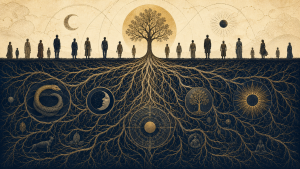
Collective Unconscious
In Jungian psychology, the collective unconscious is a proposed inherited layer of the psyche expressed through universal patterns called archetypes.
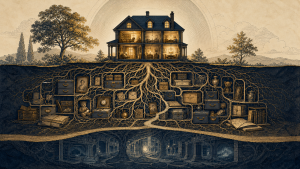
Personal Unconscious
In Jungian psychology, the personal unconscious contains experiences, perceptions, and emotionally charged material outside an individual’s present awareness.
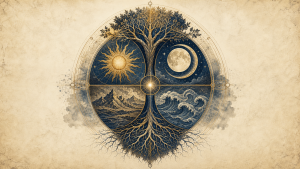
Self
The Self is Jung’s concept of the whole psyche—conscious and unconscious—and the archetypal principle of its organization, development, and potential integration.
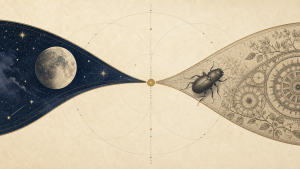
Synchronicity
Synchronicity is Jung’s term for a meaningful coincidence between an inner psychological state and an external event when no adequate causal connection is apparent.
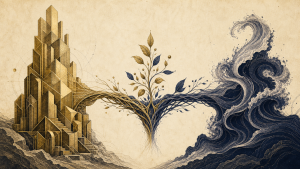
Transcendent Function
The transcendent function is the new psychological attitude or symbolic possibility that can emerge when conscious and unconscious positions are held in genuine dialogue.
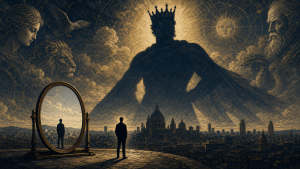
Psychological Inflation
Psychological inflation is an expanded or diminished self-estimate caused by identifying the ego with an archetype, role, group, insight, or unconscious content.
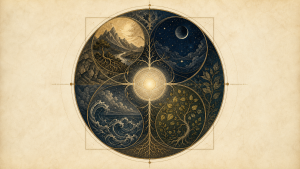
Mandala
A mandala is a centered, often circular symbolic form that Jung associated with psychic order, wholeness, containment, and the Self.
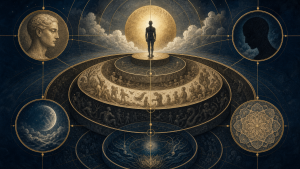
Analytical Psychology
Analytical psychology, often called Jungian psychology, is Carl Jung’s approach to the psyche, unconscious life, symbols, and psychological development.
Carl Jung and Religion
Carl Jung approached religion as a psychological and symbolic phenomenon whose images can organize experience, while avoiding a clinical proof of theological claims.
Carl Jung and Astrology
Carl Jung discussed astrology as a historical symbolic system and explored astrological data in relation to synchronicity, without establishing astrology as validated causal science.
Did Carl Jung Define 12 Archetypes?
Carl Jung did not establish a canonical list of twelve personality archetypes; the popular twelve-archetype model is a later simplification.
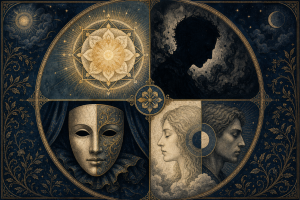
The Four Major Jungian Archetypes
The shadow, persona, anima or animus, and Self are often taught as four major Jungian archetypes, though Jung’s wider theory is not limited to four.
Personal Unconscious vs Collective Unconscious
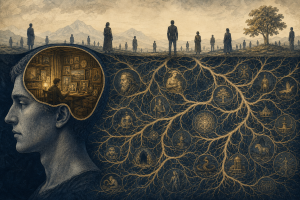
The personal unconscious contains forgotten or repressed individual material, while the collective unconscious names inherited archetypal patterns shared across human life.
Related Archetypes

Hero
The Hero is an archetypal motif of confronting danger, overcoming an obstacle, and winning something that can contribute to greater consciousness or renewal.

Wise Old Person
The Wise Old Person is an archetypal guide figure associated with meaning, counsel, insight, and the danger of identifying with borrowed authority.
Great Mother
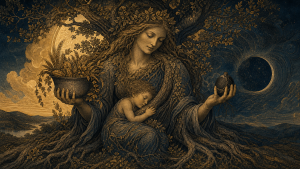
The Great Mother is an archetypal pattern of origin, nourishment, protection, fertility, containment, engulfment, and destructive power.
Child
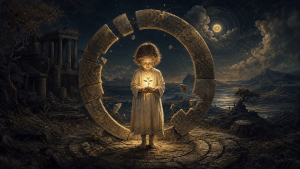
The Child archetype represents vulnerable beginnings, unrealized potential, renewal, dependence, abandonment, and a future personality still developing.
Trickster
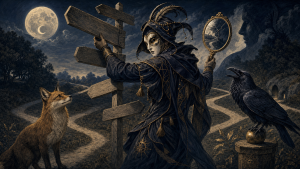
The Trickster is an archetypal boundary-breaker whose humor, appetite, deception, mistakes, and reversals can expose rigidity while also causing real harm.
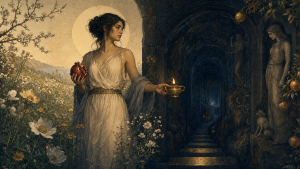
Maiden (Kore)
The Maiden, or Kore, is an archetypal image of youth, potential, vulnerability, separation, descent, renewal, and an identity not yet fully differentiated.
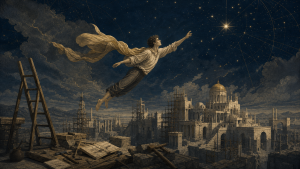
Puer Aeternus
Puer aeternus, the eternal-youth archetype, carries possibility, freedom, renewal, and imagination but becomes one-sided when potential repeatedly replaces commitment and lived experience.

Senex
The Senex archetype carries time, structure, discipline, memory, authority, limit, and responsibility; one-sided, it may harden into rigidity, control, sterility, or punitive order.
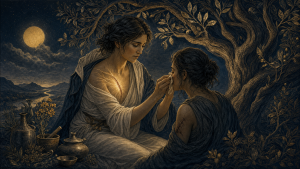
Wounded Healer
The Wounded Healer archetype holds vulnerability and the capacity to help in tension while requiring self-knowledge, competence, accountability, and clear boundaries.
Father Archetype
The father archetype is a recurring pattern associated with authority, order, law, protection, tradition, judgment, and orientation.
Mother Archetype
The mother archetype is a recurring pattern associated with origin, nourishment, belonging, protection, embodiment, growth, and engulfment.
King Archetype
The king archetype is a pattern of ordering authority, stewardship, judgment, fertility, and responsibility for a larger whole.
Queen Archetype
The queen archetype is a pattern of sovereign presence, relational authority, discernment, protection, and the organization of a shared realm.
Mentor Archetype
The mentor archetype is a recurring pattern of guidance, transmission, initiation, perspective, and preparation for a difficult passage.
Related Dream Symbols
Snake
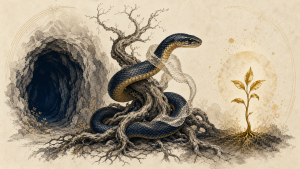
A snake in a dream can evoke danger, instinct, transformation, healing, sexuality, wisdom, or something unfamiliar—but its meaning depends on the dream’s details and the dreamer’s associations.

House
A house in a dream may represent the dreamer, a structure of personality, family life, memory, safety, or a psychological situation, depending on context.

Water
Water in a dream may relate to emotion, bodily life, the unconscious, renewal, danger, depth, or overwhelming experience, depending on its form and context.

Forest
A forest in a dream may suggest an unfamiliar psychological territory, instinctive life, concealment, danger, refuge, disorientation, or a path of discovery.

Door
A door in a dream may suggest access, exclusion, transition, opportunity, secrecy, protection, choice, or a boundary between psychological situations.

Bird
A bird in a dream may raise questions about perspective, movement, voice, care, migration, territory, vulnerability, or confinement, depending on the species and complete context.

Mountain
A mountain dream may evoke challenge, perspective, endurance, isolation, boundary, permanence, sacred space, or a goal, depending on the mountain and the dreamer’s relationship to it.
Lion Dream Meaning
A lion dream may involve authority, courage, predation, pride, protection, status, family structure, captivity, or familiar cultural imagery.
Related Practices
Active Imagination
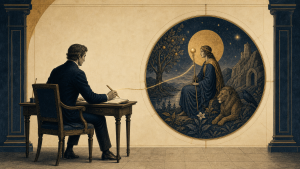
Active imagination is Jung’s method of consciously engaging emerging images, emotions, or figures through sustained attention and expression while preserving awareness and judgment.
Jungian Dream Analysis
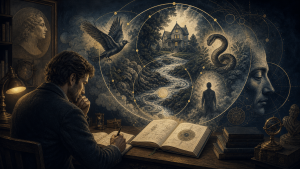
Jungian dream analysis explores a dream’s personal associations, structure, emotional context, and possible compensatory relationship to conscious life without using fixed symbol definitions.

Dream Journaling
Dream journaling is the practice of recording dreams promptly and preserving their sequence, atmosphere, images, emotions, and personal associations.
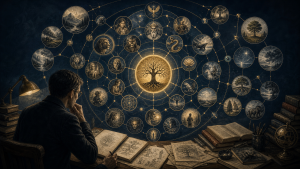
Symbol Amplification
Symbol amplification is a Jungian method of comparing an image with mythic, religious, artistic, historical, and cultural parallels while staying anchored to personal context.
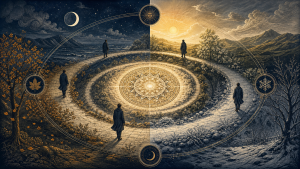
Circumambulation
Circumambulation is a Jungian method of staying close to one image while examining it repeatedly from different personal, emotional, symbolic, and practical viewpoints.

Sandplay Therapy
Sandplay therapy is a clinical, expressive method in which a client creates scenes with sand, water, and miniatures within a protected therapeutic relationship.
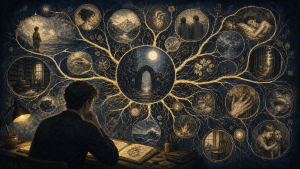
Personal Association in Dream Work
Personal association explores the dreamer’s own memories, feelings, language, culture, sensory responses, and current circumstances around a specific dream image.
Related Books
Aion: Researches into the Phenomenology of the Self
Aion is Jung’s advanced study of the Self, the shadow, opposites, and the religious, astrological, Gnostic, and alchemical symbols of psychological totality.
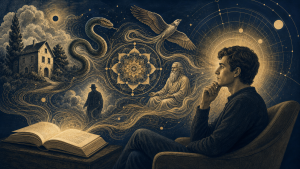
Man and His Symbols
Man and His Symbols is an illustrated introduction to dreams, symbols, archetypes, and individuation written by Carl Jung and four close collaborators for general readers.

Memories, Dreams, Reflections
Memories, Dreams, Reflections is a semi-autobiographical account assembled from Carl Jung's recollections, manuscripts, and conversations with editor Aniela Jaffé.
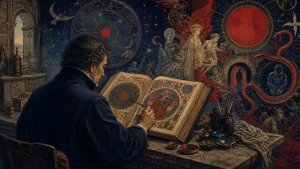
The Red Book: Liber Novus
The Red Book: Liber Novus records and artistically develops Carl Jung's confrontation with inner figures and images during a formative period of his psychology.
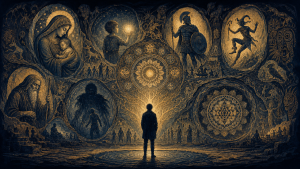
The Archetypes and the Collective Unconscious
The Archetypes and the Collective Unconscious collects major essays in which Carl Jung develops his accounts of archetypes, collective psychic patterns, rebirth, the mother, the child, and individuation.
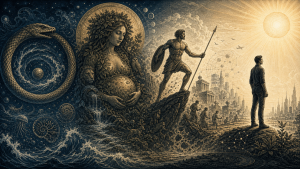
The Origins and History of Consciousness
Erich Neumann’s The Origins and History of Consciousness uses mythic sequences to propose an archetypal model of ego development and the differentiation of consciousness.
Re-Visioning Psychology
Re-Visioning Psychology is James Hillman’s foundational statement of archetypal psychology and its imaginal approach to soul, symptoms, myth, and psychological plurality.
Senex & Puer
Senex & Puer collects James Hillman’s essays on the archetypal polarity between time, structure, authority, and the youthful forces of possibility, freedom, and renewal.

Ego and Archetype
Ego and Archetype is Edward F. Edinger’s influential Jungian study of individuation and the changing relationship between the conscious ego and the Self.
The Eternal Drama
The Eternal Drama is Edward F. Edinger’s Jungian exploration of major Greek myths and divine figures as recurring images of psychological conflict, development, and transformation.
Anatomy of the Psyche
Anatomy of the Psyche is Edward F. Edinger’s Jungian study of Western alchemical images and operations as symbolic parallels for psychological processes and psychotherapy.
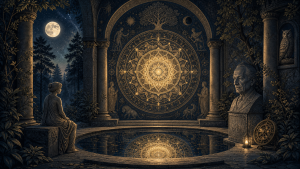
The Sacred Psyche
The Sacred Psyche is Edward F. Edinger’s psychological interpretation of the Psalms, developed from lectures and focused on their continuing significance in individual experience.
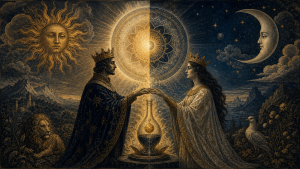
The Mystery of the Coniunctio
The Mystery of the Coniunctio is Edward F. Edinger’s compact Jungian study of alchemical union as an image of the relationship and possible integration of psychological opposites.
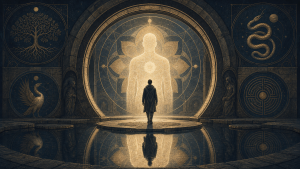
Encounter with the Self
Encounter with the Self is Edward F. Edinger’s Jungian commentary on William Blake’s illustrations of the Book of Job and their imagery of psychic and religious transformation.
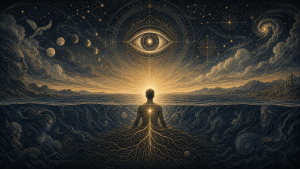
The Creation of Consciousness
The Creation of Consciousness is Edward F. Edinger’s concise proposal for a modern Jungian worldview joining the scientific pursuit of knowledge with the religious search for meaning.
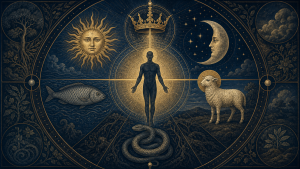
The Christian Archetype
The Christian Archetype is Edward F. Edinger’s Jungian commentary on central episodes in the life of Christ and their possible psychological significance.
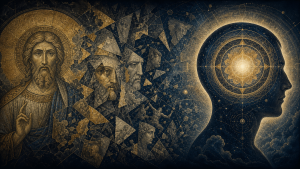
Transformation of the God-Image
Transformation of the God-Image is Edinger’s Jungian elucidation of Answer to Job, developed from seminars at the C. G. Jung Institute of Los Angeles.

Science of the Soul
Science of the Soul is a posthumous collection of five Edinger essays on psychotherapy, transference, vocation, the greater personality, and Jungian psychological method.

Goethe’s Faust: Notes for a Jungian Commentary
Goethe’s Faust is Edinger’s Jungian commentary on Goethe’s drama as a psychological portrait, symbolic analytic process, and bridge to alchemy.

Melville’s Moby-Dick: An American Nekyia
Melville’s Moby-Dick is Edinger’s Jungian interpretation of Melville’s novel as an American nekyia—a descent into dangerous and transformative psychic depths.
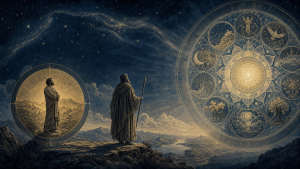
Ego and Self: The Old Testament Prophets
Ego and Self is Edinger’s psychological commentary on the prophetic books of the Hebrew Bible, continuing the work begun in The Bible and the Psyche.
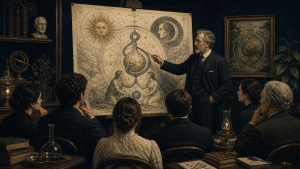
The Mysterium Lectures
The Mysterium Lectures is Edinger’s extensive chapter-by-chapter guide to Jung’s Mysterium Coniunctionis and its relevance to dreams and psychological life.
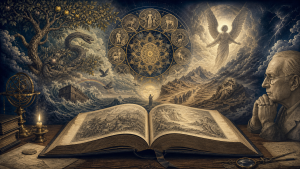
The Bible and the Psyche
The Bible and the Psyche is Edinger’s Jungian commentary on individuation symbolism in biblical books from Genesis through Esther.
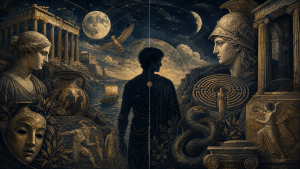
The Psyche in Antiquity, Book One
The Psyche in Antiquity, Book One is Edinger’s psychological tour of early Greek philosophy from the Milesians through Plotinus.
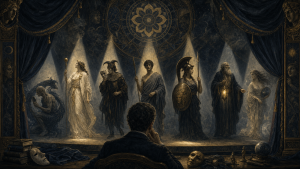
The Psyche on Stage
The Psyche on Stage is Edinger’s Jungian study of Measure for Measure, Romeo and Juliet, Oedipus the King, and Oedipus at Colonus.
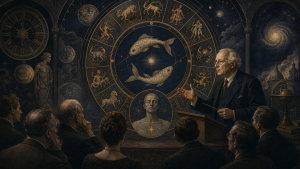
The Aion Lectures
The Aion Lectures is Edinger’s edited lecture companion to C. G. Jung’s Aion, originally delivered in Los Angeles in 1988–89.

Synchronicity: An Acausal Connecting Principle
Carl Jung’s principal essay proposing synchronicity as a framework for meaningful coincidence not adequately described by ordinary causal explanation.
Related Psychologists
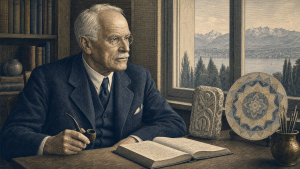
Carl Jung
Carl Gustav Jung was a Swiss psychiatrist who founded analytical psychology and developed influential ideas about complexes, archetypes, the collective unconscious, psychological types, and individuation.
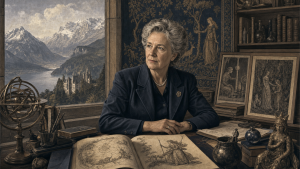
Marie-Louise von Franz
Marie-Louise von Franz was a Swiss Jungian analyst and scholar known for her work on dreams, fairy tales, alchemy, and the process of individuation.

Aniela Jaffé
Aniela Jaffé was a German-born Swiss Jungian analyst, author, and longtime collaborator who recorded and edited the material behind Memories, Dreams, Reflections.

Emma Jung
Emma Jung was a Swiss Jungian analyst and author known for her work on the anima and animus, the Grail legend, and the early analytical psychology movement.

Dora Kalff
Dora Kalff was a Swiss therapist who developed Jungian sandplay therapy by integrating Margaret Lowenfeld’s World Technique with analytical psychology.
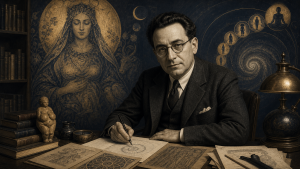
Erich Neumann
Erich Neumann was a German-born Israeli analytical psychologist who extended Jungian psychology through studies of consciousness, mythology, ethics, creativity, and Jewish thought.
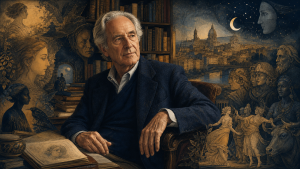
James Hillman
James Hillman was an American post-Jungian psychologist and writer who founded archetypal psychology, an imaginal approach centered on soul, myth, plurality, and close attention to images.
Toni Wolff
Toni Wolff was a Swiss analyst, scholar, institutional leader, and close collaborator of Carl Jung who developed four structural forms of the feminine psyche.
Edward F. Edinger
Edward F. Edinger was an American psychiatrist, Jungian analyst, lecturer, and author who became a prominent interpreter of Jung’s work on the ego, Self, individuation, alchemy, and religious symbolism.
Jolande Jacobi
Jolande Jacobi was a Swiss psychologist, author, and early interpreter of C. G. Jung whose systematic introductions helped make analytical psychology accessible.