
Jungian Concept
Feeling
Feeling is the Jungian function that evaluates experience by assigning value: acceptable or unacceptable, important or unimportant, welcomed or rejected.

Definition
Feeling is a rational or judging function that determines value. In Jungian terminology it is distinct from sensation, mood, and affect, even though those experiences can accompany it.
What Is Feeling in Jungian Psychology?
In Jungian psychology, feeling is the function that evaluates worth. It determines whether something is acceptable or unacceptable, important or unimportant, welcome or unwelcome. It answers the question, “What value does this have?”
This technical meaning differs from everyday speech. Feeling is not simply emotion, sensitivity, or physical sensation.
Why Jung Called Feeling Rational
Jung classified feeling with thinking as a rational function because both make judgments. Thinking evaluates through logical relationship; feeling evaluates through value. A feeling judgment can be calm, deliberate, and highly differentiated.
Feeling vs. Emotion
Emotion, or affect, can involve bodily arousal and a temporary loss of control. Jungian feeling does not require either. Someone may quietly decide that a proposal violates an important value without displaying strong emotion.
Any function can become emotionally charged. A thinker can defend an idea angrily, and a sensation type can react intensely to discomfort. Emotion alone does not identify a feeling type.
Introverted and Extraverted Feeling
Extraverted feeling gives greater weight to values expressed through external relationships, shared standards, and the needs of a situation. Introverted feeling gives greater weight to an inner scale of value that may not be visible to observers.
Neither is automatically sincere, agreeable, moral, or compassionate. Both can be mature or one-sided.
Feeling as an Inferior Function
When thinking dominates consciousness, feeling may remain less developed. It can then appear through unexplained attachments, touchiness, harsh value judgments, or difficulty saying what truly matters. Jungian development seeks a more conscious relationship with feeling rather than replacing thinking.
Developing the Feeling Function
Feeling can be differentiated by naming what matters, comparing competing values, noticing personal likes and dislikes without treating them as universal facts, and considering how decisions affect relationships. Mature feeling is not automatic agreement; it can make firm distinctions.
Feeling and Conflicting Values
Differentiated feeling can hold more than one value at once: loyalty and honesty, compassion and boundaries, belonging and independence. Its task is not merely to identify a preference but to establish a responsible hierarchy in a particular situation. Naming the cost of a choice makes the judgment more conscious. A mature feeling decision can disappoint someone and still preserve respect, consent, and proportion.
Sources and Further Reading
Origin and Development
Jung formalized feeling as one of four psychological functions in Psychological Types. He paired it with thinking because both judge, while using different standards.
Examples
Feeling operates when someone recognizes that a choice is personally meaningful, socially appropriate, ethically unacceptable, or worth preserving. It may be warm and expressive, quiet and private, or emotionally neutral.
Common Misconceptions
- Feeling is not the same as emotion or sentimentality.
- A feeling type is not necessarily more empathetic or kind.
- Feeling is a form of judgment in Jung’s terminology.
- Men and women both use every function.
- Value judgments can be thoughtful or poorly developed.
Continue your study
Recommended Reading
Books selected because they directly develop ideas discussed on this page.
Man and His Symbols
Man and His Symbols is an illustrated introduction to dreams, symbols, archetypes, and individuation written by Carl Jung and four close collaborators for general readers.
Psychological Types
Carl Jung’s foundational study of introversion, extraversion, and the psychological functions of thinking, feeling, sensation, and intuition.
Paid links. As an Amazon Associate I earn from qualifying purchases.
Related Concepts
Psychological Types
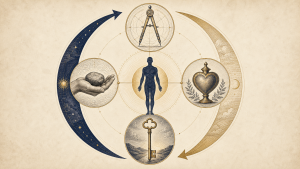
Jung’s psychological types combine two attitudes—introversion and extraversion—with four functions: thinking, feeling, sensation, and intuition.

Introversion
Introversion is a Jungian attitude in which conscious energy and motivation give greater priority to the subject’s inner impressions, ideas, and standpoint.

Extraversion
Extraversion is a Jungian attitude in which conscious energy and motivation give greater priority to external people, events, objects, and shared conditions.

Thinking
Thinking is the Jungian function that evaluates experience through concepts, logical relationships, and judgments about what something means.

Sensation
Sensation is the Jungian function that perceives immediate concrete reality through the physical senses and awareness of bodily states.

Intuition
Intuition is the Jungian function that perceives possibilities, patterns, and implications through unconscious processes rather than direct sensory evidence.

Dominant Function
The dominant function is the psychological function a person uses most habitually and has developed most fully under conscious control.

Auxiliary Function
The auxiliary function supports the dominant function by adding a different mode of perception or judgment and helping consciousness adapt more flexibly.

Inferior Function
The inferior function is the least differentiated function in a person's conscious typology and the opposite of the dominant function.

Carl Jung’s Theory of Personality
Carl Jung’s personality theory combines psychological attitudes and functions with a broader model of ego, persona, shadow, unconscious life, and individuation.

Carl Jung and MBTI
The Myers-Briggs Type Indicator was inspired by Carl Jung’s psychological types, but its four-letter system and assessment method were developed by Katharine Cook Briggs and Isabel Briggs Myers.
Related Books

Man and His Symbols
Man and His Symbols is an illustrated introduction to dreams, symbols, archetypes, and individuation written by Carl Jung and four close collaborators for general readers.

Psychological Types
Carl Jung’s foundational study of introversion, extraversion, and the psychological functions of thinking, feeling, sensation, and intuition.
Related Psychologists

Carl Jung
Carl Gustav Jung was a Swiss psychiatrist who founded analytical psychology and developed influential ideas about complexes, archetypes, the collective unconscious, psychological types, and individuation.

Toni Wolff
Toni Wolff was a Swiss analyst, scholar, institutional leader, and close collaborator of Carl Jung who developed four structural forms of the feminine psyche.