Assessment
Jungian Archetype Assessment
A non-diagnostic self-reflection that compares recurring archetypal themes without reducing a person to one fixed type.
Purpose
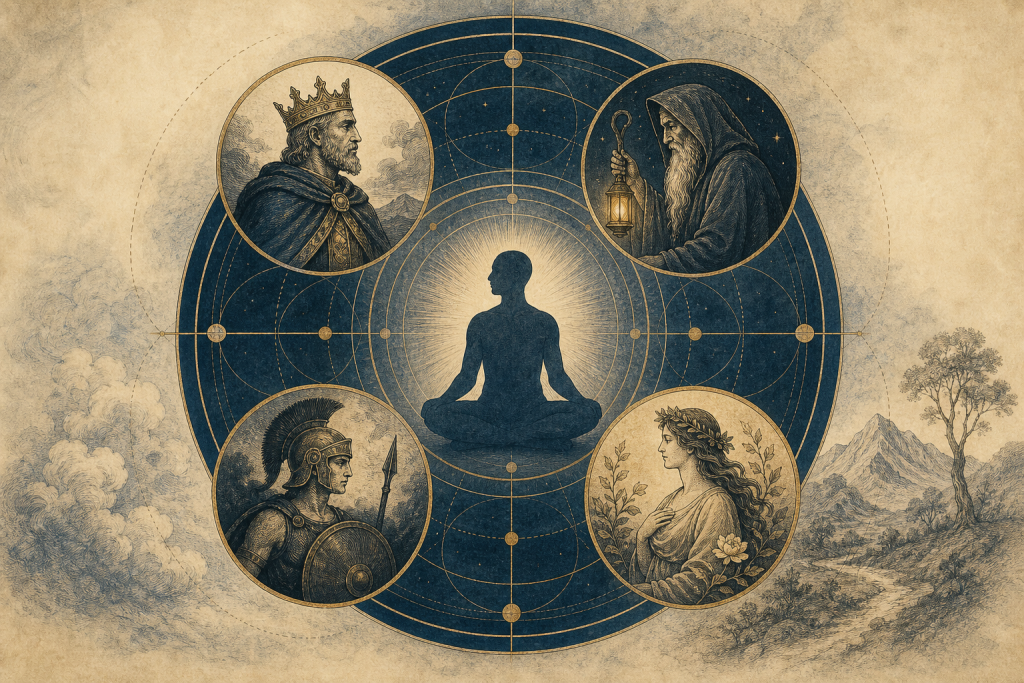
Help readers notice recurring symbolic roles, tensions, and neglected capacities without claiming to identify one permanent archetype or personality type.
Instructions
Read each group of prompts and note which themes feel familiar, which feel overused, and which feel difficult to express. Answer from recent behavior rather than an ideal self-image.
Important Disclaimer
This educational reflection is not a validated psychological test, diagnosis, personality classification, or substitute for professional assessment.
How to use this assessment
Jung did not describe archetypes as personality boxes. Archetypes are recurring patterns that can appear in dreams, stories, relationships, institutions, and changing phases of life. A useful assessment therefore asks where a pattern is active, exaggerated, missing, or projected—not which single label defines you.
Four patterns to reflect on
The Hero pattern
- I organize difficulty as a challenge to overcome.
- I feel responsible for proving courage or competence.
- I may ignore limits, dependence, grief, or the need to retreat.
The Caregiving or Great Mother pattern
- I readily notice what people need and provide support.
- Being useful gives me a strong sense of identity.
- I may overprotect, control through care, or neglect my own boundaries.
The Wise Guide pattern
- I seek perspective, knowledge, and meaning before acting.
- Others may approach me for interpretation or advice.
- I may hide in analysis, certainty, or distance from ordinary participation.
The Trickster pattern
- I expose contradictions through humor, disruption, or reversal.
- I adapt quickly when rules stop making sense.
- I may evade responsibility, destabilize trust, or turn every limit into a game.
Interpret the pattern, not the score
Strong recognition can mean a capacity is available, a role is overdeveloped, or a quality is being demanded by current circumstances. Weak recognition can mean the pattern is less relevant, consciously rejected, or encountered through other people. Compare your answers with specific events and invite correction from experience.
Questions for integration
- Which pattern most often organizes my response under pressure?
- Which pattern do I admire or condemn most strongly in others?
- What useful capacity does my favored role exclude?
- What small behavior would express a neglected capacity without abandoning responsibility?
Continue your study
Recommended Reading
Books selected because they directly develop ideas discussed on this page.
The Archetypes and the Collective Unconscious
The Archetypes and the Collective Unconscious collects major essays in which Carl Jung develops his accounts of archetypes, collective psychic patterns, rebirth, the mother, the child,…
Man and His Symbols
Man and His Symbols is an illustrated introduction to dreams, symbols, archetypes, and individuation written by Carl Jung and four close collaborators for general readers.
Aion: Researches into the Phenomenology of the Self
Aion is Jung’s advanced study of the Self, the shadow, opposites, and the religious, astrological, Gnostic, and alchemical symbols of psychological totality.
Paid links. As an Amazon Associate I earn from qualifying purchases.
Related Concepts
Archetype
An archetype is an inherited organizing pattern in Jung’s theory that can shape recurring forms of imagery, emotion, perception, and behavior without prescribing one fixed image.
Persona
In Jungian psychology, the persona is the social identity or “mask” through which a person adapts to roles, expectations, and relationships.
Shadow
In Jungian psychology, the shadow is the part of the personality containing qualities, impulses, and capacities that the conscious ego does not recognize or accept as its own.
Self
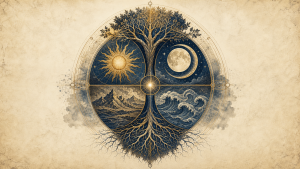
The Self is Jung’s concept of the whole psyche—conscious and unconscious—and the archetypal principle of its organization, development, and potential integration.

Individuation
Individuation is Jung’s term for the lifelong process of becoming a more differentiated and integrated psychological whole.
Related Archetypes

Hero
The Hero is an archetypal motif of confronting danger, overcoming an obstacle, and winning something that can contribute to greater consciousness or renewal.
Great Mother
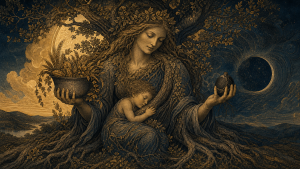
The Great Mother is an archetypal pattern of origin, nourishment, protection, fertility, containment, engulfment, and destructive power.

Wise Old Person
The Wise Old Person is an archetypal guide figure associated with meaning, counsel, insight, and the danger of identifying with borrowed authority.

Trickster
The Trickster is an archetypal boundary-breaker whose humor, appetite, deception, mistakes, and reversals can expose rigidity while also causing real harm.
Related Books

The Archetypes and the Collective Unconscious
The Archetypes and the Collective Unconscious collects major essays in which Carl Jung develops his accounts of archetypes, collective psychic patterns, rebirth, the mother, the child, and individuation.

Man and His Symbols
Man and His Symbols is an illustrated introduction to dreams, symbols, archetypes, and individuation written by Carl Jung and four close collaborators for general readers.
Aion: Researches into the Phenomenology of the Self
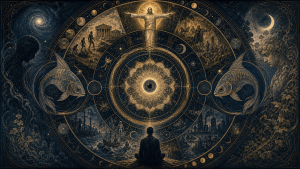
Aion is Jung’s advanced study of the Self, the shadow, opposites, and the religious, astrological, Gnostic, and alchemical symbols of psychological totality.