Psychologist
Erich Neumann
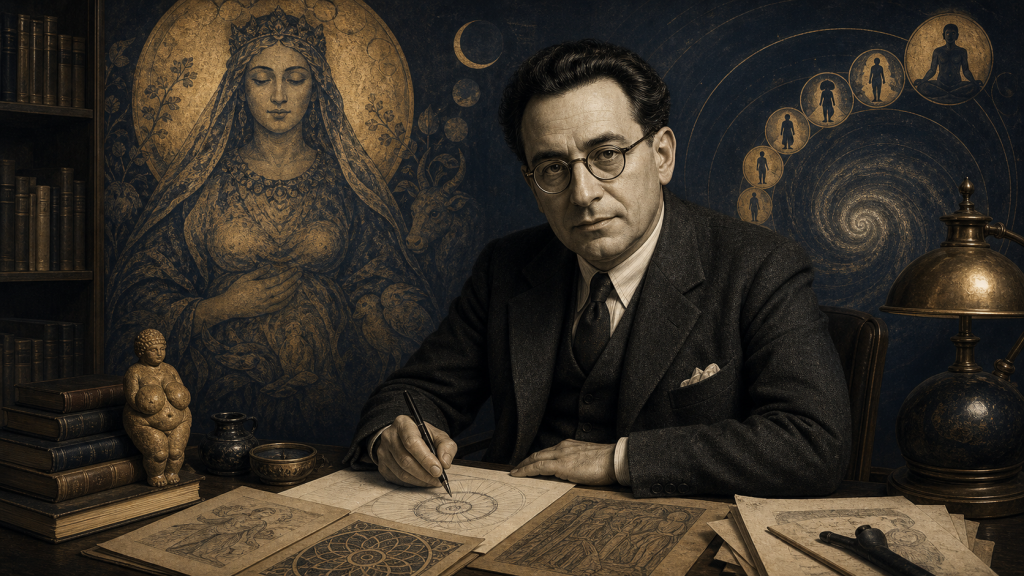
Erich Neumann was a German-born Israeli analytical psychologist who extended Jungian psychology through studies of consciousness, mythology, ethics, creativity, and Jewish thought.
Known For
The Origins and History of Consciousness; The Great Mother; Depth Psychology and a New Ethic; archetypal development; creativity; and Jewish consciousness.
Biography
Born in Berlin in 1905, Neumann completed doctoral study in philosophy, pursued medicine, studied with Carl Jung in Zurich, and emigrated with his family to Tel Aviv in 1934. He worked there as an analytical therapist and independent scholar, lectured regularly at Eranos from 1948, and maintained a long correspondence with Jung. He died in Tel Aviv in 1960.
Key Ideas
- Mythic stages in the differentiation of consciousness
- Shadow responsibility and a “new ethic” beyond purity and scapegoating
- The Great Mother as an ambivalent symbolic structure
- Creativity as mediation between ego consciousness and the Self
- Psychological study of Jewish consciousness, Kabbalah, and Hasidism
Who Was Erich Neumann?
Erich Neumann (1905–1960) was a German-born Jewish analytical psychologist, writer, and independent scholar who lived and practiced in Tel Aviv. A student and correspondent of Carl Jung, he extended analytical psychology through ambitious studies of mythology, consciousness, ethics, creativity, and symbolic images of the feminine.
Neumann is best known for The Origins and History of Consciousness, The Great Mother, and Depth Psychology and a New Ethic. His work remains influential, but its sweeping developmental and gender claims require critical historical reading rather than unqualified acceptance.
Early Life and Education
Neumann was born in Berlin on January 23, 1905, into a secular Jewish family. He studied philosophy, psychology, literature, art history, education, and Semitic studies at the University of Erlangen, where he completed a doctorate on the German philosopher Johann Arnold Kanne.
He later pursued medical study, but anti-Jewish restrictions under National Socialism prevented the ordinary completion of his medical qualification. Neumann and his family left Germany in 1934 and settled in Tel Aviv, then in Mandatory Palestine.
Relationship With Carl Jung
Before settling in Tel Aviv, Neumann studied with Jung in Zurich. Their intellectual relationship continued through correspondence from 1933 to 1959. Neumann worked within the framework of the collective unconscious, archetypes, and individuation, but developed a distinctive system rather than merely repeating Jung.
From 1948 onward, Neumann regularly lectured at the Eranos conferences in Ascona, where scholars from psychology, religion, mythology, philosophy, and the natural sciences exchanged ideas. His residence in Tel Aviv and sustained engagement with Jewish mysticism also gave his work a setting different from the predominantly European institutions around Jung.
The Origins and History of Consciousness
Neumann proposed that mythic sequences could illuminate recurring stages in the differentiation of ego consciousness from an original unconscious matrix. He organized images such as the uroboros, Great Mother, separation of world parents, hero, dragon combat, and transformation into a broad developmental narrative.
This approach strongly influenced later mythological and developmental readings of analytical psychology. It should not, however, be treated as a demonstrated biological history of humanity or a universal timeline followed by every person and culture. The book is most defensible as a symbolic model whose assumptions must be tested rather than as literal evolutionary science.
Depth Psychology and a New Ethic
Writing in the aftermath of fascism and war, Neumann argued that conventional morality often protects a socially approved persona by projecting unwanted qualities onto enemies and outsiders. A “new ethic,” in his account, requires greater responsibility for one’s own shadow instead of pursuing purity through scapegoating.
This does not mean abandoning judgment or excusing harm. Psychological responsibility includes recognizing aggression and contradiction while still maintaining ethical limits. Owning a capacity within oneself is different from approving its expression.
The Great Mother and Feminine Symbolism
In The Great Mother, Neumann assembled a vast comparative study of images associated with nourishment, containment, birth, transformation, danger, death, and rebirth. He used a structural arrangement of elementary and transformative characteristics to organize material from many cultures.
The work became influential in archetypal studies and art history, but it also illustrates major risks in older comparative scholarship: separating sacred images from their living traditions, treating unlike cultures as interchangeable evidence, and turning culturally situated ideas into a universal “feminine.” Contemporary readers should retain historical and cultural context and avoid assigning psychological qualities to people based on sex or gender.
Creativity and the Ego–Self Relationship
Neumann wrote extensively about art and creativity. He understood the creative person as negotiating tensions between ego consciousness and deeper organizing processes associated with the Self. Creative work could make emerging symbolic material available to both the individual and the surrounding culture.
This view helps explain why images can feel larger than the artist’s conscious intention. It does not make every artwork an archetypal revelation, nor does it replace attention to craft, biography, politics, material conditions, and historical influence.
Jewish Consciousness and Exile
Neumann’s engagement with Judaism, Hasidism, and Kabbalah was not incidental to his psychology. He began a major study of Jewish consciousness in the 1930s, although the manuscripts were not published during his lifetime. Later publication of this work and his correspondence with Jung has encouraged closer study of exile, Jewish identity, and disagreement within the history of analytical psychology.
Criticisms and Limits
- Universal developmental claims: symbolic sequences can be illuminating without proving one evolution of consciousness for all people.
- Gender essentialism: “masculine” and “feminine” structures should not be assigned rigidly to bodies, identities, or social roles.
- Decontextualized comparison: images from different traditions require their own histories and meanings.
- Speculative scope: mythological interpretation is not a substitute for empirical developmental, clinical, or historical evidence.
- Clinical boundaries: Neumann’s theories are interpretive frameworks, not diagnostic instruments.
Major Works
- The Origins and History of Consciousness
- Depth Psychology and a New Ethic
- The Great Mother
- Art and the Creative Unconscious
- Amor and Psyche
- The Child
- The Roots of Jewish Consciousness, published posthumously in English
Legacy
Neumann died in Tel Aviv on November 5, 1960. His enduring contribution lies in linking Jungian psychology with mythology, ethics, creativity, and Jewish thought on a scale few early analytical psychologists attempted. His work is most useful when read as an imaginative, historically situated system—powerful enough to generate questions, but not exempt from evidence, cultural context, or revision.
Developmental Sequence as Interpretation
Neumann’s sequence from uroboric unity through separation and heroic consciousness is a symbolic developmental model, not a demonstrated evolutionary ranking of cultures. Readers should resist mapping societies onto supposedly earlier psychological stages. The model can be used cautiously to compare mythic patterns or personal narratives while anthropology, history, colonial context, and contemporary developmental research provide independent checks on its claims.
Sources and Further Reading
Continue your study
Recommended Reading
Books selected because they directly develop ideas discussed on this page.
Man and His Symbols
Man and His Symbols is an illustrated introduction to dreams, symbols, archetypes, and individuation written by Carl Jung and four close collaborators for general readers.
The Archetypes and the Collective Unconscious
The Archetypes and the Collective Unconscious collects major essays in which Carl Jung develops his accounts of archetypes, collective psychic patterns, rebirth, the mother, the child,…
The Origins and History of Consciousness
Erich Neumann’s The Origins and History of Consciousness uses mythic sequences to propose an archetypal model of ego development and the differentiation of consciousness.
Paid links. As an Amazon Associate I earn from qualifying purchases.
Related Concepts
Shadow
In Jungian psychology, the shadow is the part of the personality containing qualities, impulses, and capacities that the conscious ego does not recognize or accept as its own.

Individuation
Individuation is Jung’s term for the lifelong process of becoming a more differentiated and integrated psychological whole.
Collective Unconscious
In Jungian psychology, the collective unconscious is a proposed inherited layer of the psyche expressed through universal patterns called archetypes.
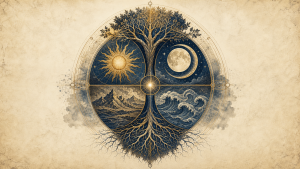
Self
The Self is Jung’s concept of the whole psyche—conscious and unconscious—and the archetypal principle of its organization, development, and potential integration.
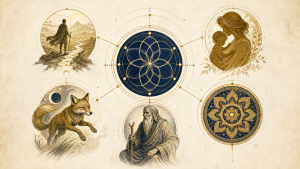
Archetype
An archetype is an inherited organizing pattern in Jung’s theory that can shape recurring forms of imagery, emotion, perception, and behavior without prescribing one fixed image.
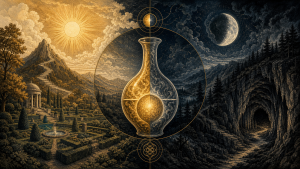
Psychological Opposites
Psychological opposites are conflicting conscious and unconscious positions whose tension can reveal one-sidedness and support development.
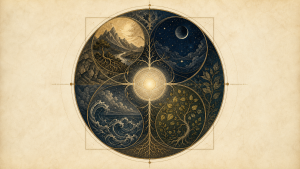
Mandala
A mandala is a centered, often circular symbolic form that Jung associated with psychic order, wholeness, containment, and the Self.
Related Books
Man and His Symbols
Man and His Symbols is an illustrated introduction to dreams, symbols, archetypes, and individuation written by Carl Jung and four close collaborators for general readers.
The Archetypes and the Collective Unconscious
The Archetypes and the Collective Unconscious collects major essays in which Carl Jung develops his accounts of archetypes, collective psychic patterns, rebirth, the mother, the child, and individuation.
The Origins and History of Consciousness
Erich Neumann’s The Origins and History of Consciousness uses mythic sequences to propose an archetypal model of ego development and the differentiation of consciousness.
Related Practices
Active Imagination
Active imagination is Jung’s method of consciously engaging emerging images, emotions, or figures through sustained attention and expression while preserving awareness and judgment.
Symbol Amplification
Symbol amplification is a Jungian method of comparing an image with mythic, religious, artistic, historical, and cultural parallels while staying anchored to personal context.