
Jungian Concept
Anima and Animus
Anima and animus are Jung’s historically gendered terms for inner otherness, relational projection, and qualities excluded from conscious identity.

Definition
In Jung’s classical model, anima described unconscious feminine personification in a man and animus unconscious masculine personification in a woman. Contemporary readers often reinterpret both as symbolic patterns of inner otherness and relational projection rather than fixed traits determined by sex.
Why study the concepts together?
Separate pages clarify each term, but comparison reveals their shared function in Jung’s theory: both describe forms of otherness that can be projected into relationships and encountered through dreams, fantasies, ideals, opinions, and emotional reactions.
Classical formulation
Jung associated anima and animus with contrasexual qualities, inherited images, and mediating functions between ego consciousness and deeper unconscious life. His descriptions often relied on broad generalizations about men and women that should be read historically and critically.
Contemporary use
Many contemporary Jungians focus less on assigning one figure by sex and more on plurality, gender complexity, relationship patterns, and the psychological encounter with qualities excluded from conscious identity. Others retain the classical terms but interpret them symbolically rather than biologically.
Projection and responsibility
Recognizing projection does not mean that attraction, conflict, or admiration is imaginary. It means the emotional intensity may contain expectations and qualities contributed by the perceiver. Integration involves reclaiming those contributions while continuing to see the other person realistically.
Origin and Development
Jung developed these concepts through dreams, clinical material, mythology, and his theory of contrasexual psychic factors. His formulations reflect early twentieth-century assumptions about sex and gender. Later analytical psychologists have revised, criticized, pluralized, or abandoned parts of the classical model.
Examples
Intense idealization may place wisdom, beauty, authority, creativity, or spiritual promise onto another person. Hostile projection may assign irrationality, coldness, seduction, weakness, or domination to others. The useful question is not which label wins, but which disowned capacity or expectation is organizing the relationship.
Common Misconceptions
- Anima does not simply mean “a man’s emotions.”
- Animus does not simply mean “a woman’s logic.”
- The concepts do not prove binary gender roles.
- Projection does not make the other person unreal or remove ordinary accountability.
- Integration does not mean becoming stereotypically masculine or feminine.
Continue your study
Recommended Reading
Books selected because they directly develop ideas discussed on this page.
Aion: Researches into the Phenomenology of the Self
Aion is Jung’s advanced study of the Self, the shadow, opposites, and the religious, astrological, Gnostic, and alchemical symbols of psychological totality.
Man and His Symbols
Man and His Symbols is an illustrated introduction to dreams, symbols, archetypes, and individuation written by Carl Jung and four close collaborators for general readers.
Two Essays on Analytical Psychology
Two central essays in which Carl Jung explains the ego, personal and collective unconscious, persona, anima, and the movement toward individuation.
Paid links. As an Amazon Associate I earn from qualifying purchases.
Related Concepts

Anima
Anima is Jung’s historical term for an inner feminine archetypal figure in a man, associated with feeling, relationship, imagery, and mediation between consciousness and the unconscious.

Animus
Animus is Jung’s historical term for an inner masculine archetypal figure in a woman, associated with opinion, agency, meaning, and mediation between consciousness and the unconscious.

Projection
Projection is the largely unconscious process of experiencing one’s own psychological content as if it belonged primarily or entirely to another person, group, or object.
Persona
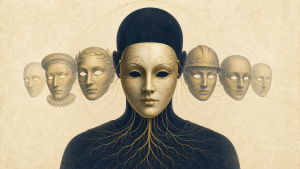
In Jungian psychology, the persona is the social identity or “mask” through which a person adapts to roles, expectations, and relationships.

Shadow
In Jungian psychology, the shadow is the part of the personality containing qualities, impulses, and capacities that the conscious ego does not recognize or accept as its own.

Self
The Self is Jung’s concept of the whole psyche—conscious and unconscious—and the archetypal principle of its organization, development, and potential integration.

Individuation
Individuation is Jung’s term for the lifelong process of becoming a more differentiated and integrated psychological whole.
Related Books

Aion: Researches into the Phenomenology of the Self
Aion is Jung’s advanced study of the Self, the shadow, opposites, and the religious, astrological, Gnostic, and alchemical symbols of psychological totality.

Man and His Symbols
Man and His Symbols is an illustrated introduction to dreams, symbols, archetypes, and individuation written by Carl Jung and four close collaborators for general readers.

Two Essays on Analytical Psychology
Two central essays in which Carl Jung explains the ego, personal and collective unconscious, persona, anima, and the movement toward individuation.
Related Psychologists

Carl Jung
Carl Gustav Jung was a Swiss psychiatrist who founded analytical psychology and developed influential ideas about complexes, archetypes, the collective unconscious, psychological types, and individuation.

Emma Jung
Emma Jung was a Swiss Jungian analyst and author known for her work on the anima and animus, the Grail legend, and the early analytical psychology movement.