
Book
Two Essays on Analytical Psychology
Two central essays in which Carl Jung explains the ego, personal and collective unconscious, persona, anima, and the movement toward individuation.

Summary
This volume brings together Jung’s accounts of the relation between ego and unconscious and of the historical divergence between Freud, Adler, and his own analytical psychology. It is among the clearest primary-source routes into his mature framework.
Key Topics
- Ego and unconscious
- Personal and collective unconscious
- Persona
- Anima and animus
- Individuation
- Freud, Adler, and Jung
Reader Guidance
A strong intermediate starting point after a general introduction. Read slowly and track how Jung distinguishes adaptation to society from adaptation to inner psychological demands.
Use this volume to follow the relationship among ego, persona, unconscious material, and individuation. Readers new to Jung may benefit from reading the site’s concept pages first and keeping a short glossary. The essays reward comparison: note where Jung describes a psychological process and where he moves into broader theoretical claims.
The two essays
The first situates analytical psychology among competing depth psychologies. The second follows the difficult relation between conscious personality and unconscious contents, including persona identification and encounters with inner figures.
Why the persona matters
Social roles are necessary, but identifying completely with a role narrows personality. Jung examines what happens when unconscious material compensates for that one-sided adaptation.
From conflict to individuation
Individuation is not social isolation or self-absorption. It involves differentiating from collective expectations while assuming fuller responsibility for one’s place in relationships and community.
Best companion pages
Read alongside the site’s entries on persona, ego, anima and animus, the collective unconscious, and individuation. The Jung–Freud comparison clarifies the historical disagreements referenced in the text.
What Is Two Essays on Analytical Psychology About?
Two Essays on Analytical Psychology is Carl Jung’s account of how consciousness relates to the personal and collective unconscious. Across “The Relations Between the Ego and the Unconscious” and the essay commonly translated as “On the Psychology of the Unconscious,” Jung develops ideas about the ego, persona, psychological types, inner figures, compensation, and individuation.
The volume matters because it connects Jung’s theoretical break with Freud and Adler to a practical developmental problem: how can someone engage unconscious material without being overwhelmed by it, identifying with it, or retreating into a social role?
Who Should Read It?
This is a strong next step after a general introduction such as Man and His Symbols. New readers can prepare with the entries on ego, persona, personal unconscious, and individuation. Readers comparing schools of depth psychology should also see Carl Jung versus Sigmund Freud.
How to Read the Two Essays
- Track when Jung describes clinical observations and when he makes broader theoretical claims.
- Note how the persona supports social adaptation but becomes limiting when mistaken for the whole personality.
- Compare the personal unconscious with Jung’s more controversial theory of the collective unconscious.
- Treat anima and animus as historically situated concepts, not fixed rules about gender.
- Use individuation as the organizing question: what changes in the relationship between ego and unconscious?
Continue with the site’s Carl Jung reading order or the detailed reading companion.
Related Concepts

Ego
In Jungian psychology, the ego is the central complex of consciousness: the organizing “I” that experiences identity, makes choices, and adapts to inner and outer life.

Personal Unconscious
In Jungian psychology, the personal unconscious contains experiences, perceptions, and emotionally charged material outside an individual’s present awareness.

Collective Unconscious
In Jungian psychology, the collective unconscious is a proposed inherited layer of the psyche expressed through universal patterns called archetypes.
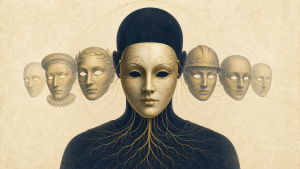
Persona
In Jungian psychology, the persona is the social identity or “mask” through which a person adapts to roles, expectations, and relationships.

Anima and Animus
Anima and animus are Jung’s historically gendered terms for inner otherness, relational projection, and qualities excluded from conscious identity.

Individuation
Individuation is Jung’s term for the lifelong process of becoming a more differentiated and integrated psychological whole.

Analytical Psychology
Analytical psychology, often called Jungian psychology, is Carl Jung’s approach to the psyche, unconscious life, symbols, and psychological development.

The Four Major Jungian Archetypes
The shadow, persona, anima or animus, and Self are often taught as four major Jungian archetypes, though Jung’s wider theory is not limited to four.
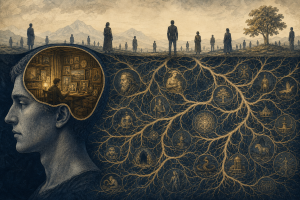
Personal Unconscious vs Collective Unconscious
The personal unconscious contains forgotten or repressed individual material, while the collective unconscious names inherited archetypal patterns shared across human life.

Carl Jung’s Philosophy
Carl Jung’s philosophy centers on psychological wholeness, symbols, opposites, meaning, and the relationship between conscious and unconscious life.

Carl Jung’s Theory of Personality
Carl Jung’s personality theory combines psychological attitudes and functions with a broader model of ego, persona, shadow, unconscious life, and individuation.

Carl Jung and MBTI
The Myers-Briggs Type Indicator was inspired by Carl Jung’s psychological types, but its four-letter system and assessment method were developed by Katharine Cook Briggs and Isabel Briggs Myers.
Related Psychologists
Carl Jung
Carl Gustav Jung was a Swiss psychiatrist who founded analytical psychology and developed influential ideas about complexes, archetypes, the collective unconscious, psychological types, and individuation.
Sigmund Freud
Sigmund Freud was an Austrian neurologist and the founder of psychoanalysis whose work on unconscious conflict, dreams, sexuality, and transference profoundly shaped Carl Jung’s early career.