Jungian Concept
The Four Major Jungian Archetypes
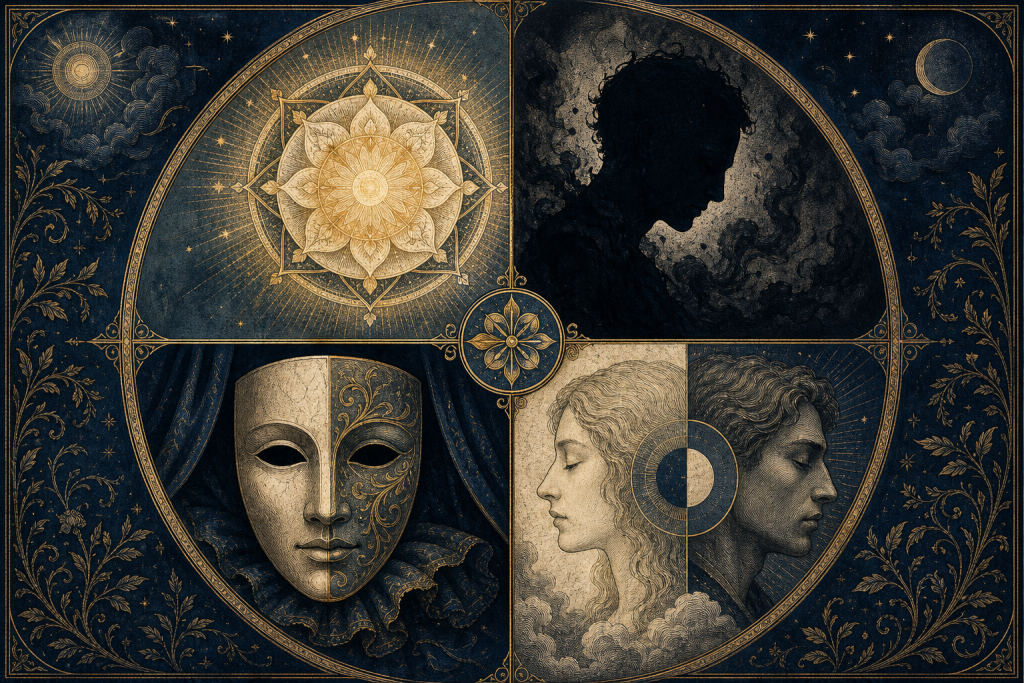
The shadow, persona, anima or animus, and Self are often taught as four major Jungian archetypes, though Jung’s wider theory is not limited to four.
Definition
Introductory accounts often group the persona, shadow, anima or animus, and Self as four major archetypal structures because they clarify central tensions in Jung’s model of psychological development.
Persona: adaptation to the social world
The persona organizes how a person meets roles, expectations, and institutions. It makes coordinated life possible. Trouble arises when the ego identifies completely with a role or when private experience has no legitimate place outside it.
Shadow: what conscious identity excludes
The shadow contains traits, impulses, vulnerabilities, and capacities that conflict with the preferred self-image. It includes destructive possibilities but can also contain vitality, assertiveness, creativity, and other qualities a person learned to disown.
Anima and animus: figures of inner otherness
Jung used anima and animus in ways shaped by the gender assumptions of his era. Contemporary readers often retain their value as symbolic accounts of inner otherness, projection, and relational imagination while revising rigid claims about sex and gender.
Self: an image of psychological totality
The Self refers to the ordering whole of conscious and unconscious life. Mandalas, unifying figures, and images of a center may symbolize it. The Self should not be confused with ego perfection or a claim to spiritual superiority.
Why the four belong together
Persona describes conscious adaptation; shadow marks what adaptation excludes; anima or animus often mediates encounters with unfamiliar inner life; and the Self symbolizes a wider order that relativizes the ego. Individuation involves an ongoing relationship among these patterns, not completion of a four-step test.
Origin and Development
The four-part grouping is a teaching convention, not a closed list declared by Jung. It brings together concepts that recur across his accounts of ego development, projection, relationship, symbolic experience, and individuation.
Examples
- Persona: the socially adapted face.
- Shadow: qualities excluded from conscious identity.
- Anima or animus: historically gendered terms for inner otherness and relational projection.
- Self: the archetype of wholeness and ordering totality.
Common Misconceptions
- They are not four personality types.
- The shadow is not only evil.
- The persona is necessary, not inherently false.
- The Self is not identical with the ego.
Continue your study
Recommended Reading
Books selected because they directly develop ideas discussed on this page.
Aion: Researches into the Phenomenology of the Self
Aion is Jung’s advanced study of the Self, the shadow, opposites, and the religious, astrological, Gnostic, and alchemical symbols of psychological totality.
Two Essays on Analytical Psychology
Two central essays in which Carl Jung explains the ego, personal and collective unconscious, persona, anima, and the movement toward individuation.
Man and His Symbols
Man and His Symbols is an illustrated introduction to dreams, symbols, archetypes, and individuation written by Carl Jung and four close collaborators for general readers.
Paid links. As an Amazon Associate I earn from qualifying purchases.
Related Concepts
Archetype
An archetype is an inherited organizing pattern in Jung’s theory that can shape recurring forms of imagery, emotion, perception, and behavior without prescribing one fixed image.

Shadow
In Jungian psychology, the shadow is the part of the personality containing qualities, impulses, and capacities that the conscious ego does not recognize or accept as its own.
Persona
In Jungian psychology, the persona is the social identity or “mask” through which a person adapts to roles, expectations, and relationships.

Anima
Anima is Jung’s historical term for an inner feminine archetypal figure in a man, associated with feeling, relationship, imagery, and mediation between consciousness and the unconscious.
Animus
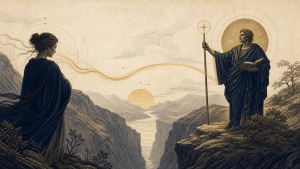
Animus is Jung’s historical term for an inner masculine archetypal figure in a woman, associated with opinion, agency, meaning, and mediation between consciousness and the unconscious.
Self
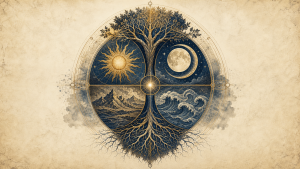
The Self is Jung’s concept of the whole psyche—conscious and unconscious—and the archetypal principle of its organization, development, and potential integration.

Individuation
Individuation is Jung’s term for the lifelong process of becoming a more differentiated and integrated psychological whole.
Related Books
Aion: Researches into the Phenomenology of the Self
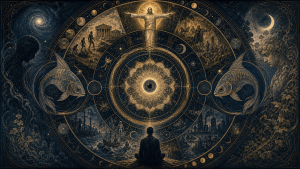
Aion is Jung’s advanced study of the Self, the shadow, opposites, and the religious, astrological, Gnostic, and alchemical symbols of psychological totality.
Two Essays on Analytical Psychology
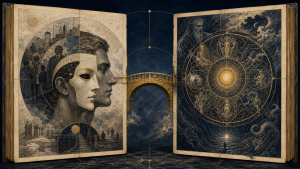
Two central essays in which Carl Jung explains the ego, personal and collective unconscious, persona, anima, and the movement toward individuation.

Man and His Symbols
Man and His Symbols is an illustrated introduction to dreams, symbols, archetypes, and individuation written by Carl Jung and four close collaborators for general readers.