Jungian Concept
Intuition
Intuition is the Jungian function that perceives possibilities, patterns, and implications through unconscious processes rather than direct sensory evidence.

Definition
Intuition is a perceiving function through which a possibility or pattern presents itself as a whole without the conscious mind being able to trace every step by which it arose.
What Is Intuition in Jungian Psychology?
In Jungian psychology, intuition is the function that perceives possibilities, patterns, and implications through unconscious processes. An intuitive perception may arrive as a whole before the person can explain each step that produced it.
Intuition does not guarantee truth. It supplies a perception that must still be evaluated, tested, and related to concrete reality.
Intuition vs. Sensation
Sensation attends to what is concretely present. Intuition attends to what is emerging, implied, absent, or possible. Jung treated them as opposite perceiving functions because sustained attention to one tends to reduce awareness of the other.
Why Intuition Is Called Irrational
Jung’s word “irrational” means beyond rational judgment, not illogical or unreasonable. Intuition perceives before thinking establishes meaning or feeling assigns value. Its origin may not be consciously available.
Introverted and Extraverted Intuition
Extraverted intuition is drawn toward possibilities in external situations, people, ventures, and changing conditions. Introverted intuition attends to inner images, symbolic patterns, and transformations arising from the unconscious.
Either can generate insight. Either can also become unreliable when it is insulated from facts, reflection, and feedback.
Intuition Is Not Prophecy
A hunch can feel certain and still be wrong. Memory bias, expectation, fear, wishful thinking, and incomplete information can all produce compelling impressions. Jungian intuition is a psychological mode of perception, not evidence of supernatural foresight.
Intuition as an Inferior Function
When sensation dominates, intuition may remain unconscious and appear as anxiety about hidden possibilities, suspicious interpretations, or sudden fascination with an unlikely future. Development involves tolerating possibility without abandoning present facts.
Developing Intuition Responsibly
Record an impression before acting on it, identify alternative explanations, compare it with later evidence, and distinguish symbolic meaning from factual prediction. Active imagination can explore inner images, but it should not be used to replace medical, legal, financial, or safety decisions.
Testing an Intuitive Perception
Turn a hunch into a testable statement before acting. Record what you expect, the evidence that would support it, what would count against it, and when you will review the result. This protects intuition from hindsight bias, in which a vague impression is remembered as precise after events unfold. The practice does not suppress possibility; it helps distinguish a useful perception from anxiety, wishful thinking, or a compelling but unfalsifiable story.
Sources and Further Reading
Origin and Development
Jung formalized intuition as one of four functions in Psychological Types. He treated it as the opposite of sensation and distinguished it from deliberate inference.
Examples
Intuition may register that a project has an unrealized direction, recognize a pattern before all details are assembled, or produce an image that suggests where a situation could lead. The impression still requires testing against reality.
Common Misconceptions
- Intuition is not supernatural prophecy.
- Conviction does not prove an intuition is correct.
- It is not identical to emotion or instinct.
- Intuition can be introverted or extraverted.
- Possibilities still require evidence and judgment.
Continue your study
Recommended Reading
Books selected because they directly develop ideas discussed on this page.
Man and His Symbols
Man and His Symbols is an illustrated introduction to dreams, symbols, archetypes, and individuation written by Carl Jung and four close collaborators for general readers.
Psychological Types
Carl Jung’s foundational study of introversion, extraversion, and the psychological functions of thinking, feeling, sensation, and intuition.
Paid links. As an Amazon Associate I earn from qualifying purchases.
Related Concepts
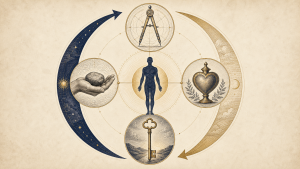
Psychological Types
Jung’s psychological types combine two attitudes—introversion and extraversion—with four functions: thinking, feeling, sensation, and intuition.

Introversion
Introversion is a Jungian attitude in which conscious energy and motivation give greater priority to the subject’s inner impressions, ideas, and standpoint.

Extraversion
Extraversion is a Jungian attitude in which conscious energy and motivation give greater priority to external people, events, objects, and shared conditions.

Sensation
Sensation is the Jungian function that perceives immediate concrete reality through the physical senses and awareness of bodily states.

Thinking
Thinking is the Jungian function that evaluates experience through concepts, logical relationships, and judgments about what something means.

Feeling
Feeling is the Jungian function that evaluates experience by assigning value: acceptable or unacceptable, important or unimportant, welcomed or rejected.

Dominant Function
The dominant function is the psychological function a person uses most habitually and has developed most fully under conscious control.

Auxiliary Function
The auxiliary function supports the dominant function by adding a different mode of perception or judgment and helping consciousness adapt more flexibly.

Inferior Function
The inferior function is the least differentiated function in a person's conscious typology and the opposite of the dominant function.

Carl Jung’s Theory of Personality
Carl Jung’s personality theory combines psychological attitudes and functions with a broader model of ego, persona, shadow, unconscious life, and individuation.
Carl Jung and MBTI
The Myers-Briggs Type Indicator was inspired by Carl Jung’s psychological types, but its four-letter system and assessment method were developed by Katharine Cook Briggs and Isabel Briggs Myers.
Related Dream Symbols

Related Practices

Active Imagination
Active imagination is Jung’s method of consciously engaging emerging images, emotions, or figures through sustained attention and expression while preserving awareness and judgment.

Jungian Dream Analysis
Jungian dream analysis explores a dream’s personal associations, structure, emotional context, and possible compensatory relationship to conscious life without using fixed symbol definitions.
Related Books

Man and His Symbols
Man and His Symbols is an illustrated introduction to dreams, symbols, archetypes, and individuation written by Carl Jung and four close collaborators for general readers.

Psychological Types
Carl Jung’s foundational study of introversion, extraversion, and the psychological functions of thinking, feeling, sensation, and intuition.
Related Psychologists
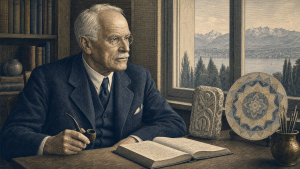
Carl Jung
Carl Gustav Jung was a Swiss psychiatrist who founded analytical psychology and developed influential ideas about complexes, archetypes, the collective unconscious, psychological types, and individuation.

Toni Wolff
Toni Wolff was a Swiss analyst, scholar, institutional leader, and close collaborator of Carl Jung who developed four structural forms of the feminine psyche.