Practice
Jungian Dream Analysis
Jungian dream analysis explores a dream’s personal associations, structure, emotional context, and possible compensatory relationship to conscious life without using fixed symbol definitions.

Purpose
To explore a dream as a contextual psychological experience by examining its structure, personal associations, emotional movement, and possible relationship to the dreamer’s conscious attitude.
Instructions
- Record the dream exactly and give it a neutral title.
- Identify setting, figures, actions, emotional changes, climax, and ending.
- List personal associations before consulting cultural parallels.
- Describe the current life context separately.
- Consider both objective and subjective levels.
- Form multiple tentative interpretations.
- Compare with later dreams rather than forcing certainty.
Reflection Questions
- What is the dream’s initial situation and what changes?
- Where does the strongest emotion appear?
- What do the central images mean in my own history?
- Which figure or quality might represent part of me?
- What waking attitude could the dream supplement or challenge?
- What remains unexplained if my preferred interpretation is wrong?
Cautions and Boundaries
Do not use fixed dictionaries, predictions, recovered-memory claims, or a dream alone as the basis for major decisions. Dream work is educational, not diagnosis. Seek qualified support for recurrent trauma nightmares, severe sleep disruption, dangerous impulses, or difficulty distinguishing dreams from waking reality.
What Is Jungian Dream Analysis?
Jungian dream analysis treats dreams as spontaneous expressions of unconscious psychological activity. Rather than decoding each image with a universal dictionary, it examines the dream’s structure, emotional tone, personal associations, and relationship to the dreamer’s current life.
Jung often understood dreams as compensatory: they may supplement, balance, or challenge a one-sided conscious attitude. Compensation does not mean that every dream states the opposite of waking belief.
Begin With the Exact Dream
Write the dream before interpreting it. Preserve sequence, setting, characters, changes, and the ending. A dream often has a dramatic form: an initial situation, development, climax, and result or unresolved stopping point.
Personal Associations First
For each important image, ask what it personally evokes. A snake may connect with a childhood encounter, a religious tradition, a medical symbol, fear, fascination, or nothing obvious. These associations matter before broad cultural comparisons.
Subjective and Objective Levels
On the objective level, a dream figure may concern the actual person represented. On the subjective level, the figure may personify an aspect of the dreamer’s own psyche. Both levels can be relevant, and neither should be forced.
Amplification
Amplification compares an image with parallels in myth, religion, folklore, art, or cultural history. It can expand meaning when personal associations are limited, especially with archetypal imagery. It should widen the field—not replace the individual dream with a preselected theory.
Why a Series Is Better Than One Dream
Jungian analysts often prefer a series of dreams because recurring themes become clearer and later dreams may correct an earlier interpretation. One dramatic dream can easily invite certainty that the available evidence does not support.
A Grounded Reflection Process
- Record the dream accurately and title it.
- Mark the main images, actions, emotional shifts, and ending.
- Write personal associations for each central image.
- Describe the current life situation without trying to make it fit.
- Consider objective and subjective readings.
- Ask what conscious attitude the dream might supplement or question.
- Keep several interpretations and watch later dreams for clarification.
Limits and Safety
Dream interpretation is not diagnosis, prediction, mind-reading, or proof of repressed events. Do not make major medical, legal, financial, or relationship decisions from a dream alone. Recurrent nightmares, trauma-related dreams, severe sleep disruption, or confusion between dreams and waking reality deserve appropriate professional assessment.
How to Test an Interpretation
A useful interpretation accounts for several details, fits the dreamer’s actual context, and produces a modest increase in understanding rather than absolute certainty. Ask what evidence in the dream contradicts it, whether a simpler explanation works, and what later dreams do with the same theme. An interpretation that requires ignoring the ending, assigning fixed meanings, or treating another person’s motives as known should remain weak or be rejected.
Sources and Further Reading
Continue your study
Recommended Reading
Books selected because they directly develop ideas discussed on this page.
Aion: Researches into the Phenomenology of the Self
Aion is Jung’s advanced study of the Self, the shadow, opposites, and the religious, astrological, Gnostic, and alchemical symbols of psychological totality.
Man and His Symbols
Man and His Symbols is an illustrated introduction to dreams, symbols, archetypes, and individuation written by Carl Jung and four close collaborators for general readers.
Memories, Dreams, Reflections
Memories, Dreams, Reflections is a semi-autobiographical account assembled from Carl Jung's recollections, manuscripts, and conversations with editor Aniela Jaffé.
Paid links. As an Amazon Associate I earn from qualifying purchases.
Related Concepts
Individuation
Individuation is Jung’s term for the lifelong process of becoming a more differentiated and integrated psychological whole.
Collective Unconscious
In Jungian psychology, the collective unconscious is a proposed inherited layer of the psyche expressed through universal patterns called archetypes.
Personal Unconscious
In Jungian psychology, the personal unconscious contains experiences, perceptions, and emotionally charged material outside an individual’s present awareness.
Complex
In Jungian psychology, a complex is an emotionally charged network of associations that can temporarily influence perception, emotion, and behavior.
Ego
In Jungian psychology, the ego is the central complex of consciousness: the organizing “I” that experiences identity, makes choices, and adapts to inner and outer life.
Self
The Self is Jung’s concept of the whole psyche—conscious and unconscious—and the archetypal principle of its organization, development, and potential integration.
Archetype
An archetype is an inherited organizing pattern in Jung’s theory that can shape recurring forms of imagery, emotion, perception, and behavior without prescribing one fixed image.

Intuition
Intuition is the Jungian function that perceives possibilities, patterns, and implications through unconscious processes rather than direct sensory evidence.
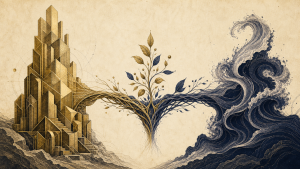
Transcendent Function
The transcendent function is the new psychological attitude or symbolic possibility that can emerge when conscious and unconscious positions are held in genuine dialogue.
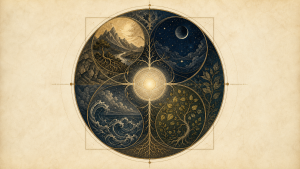
Mandala
A mandala is a centered, often circular symbolic form that Jung associated with psychic order, wholeness, containment, and the Self.
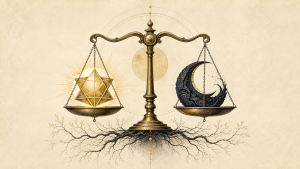
Compensation
Compensation is the psyche’s tendency to balance or supplement a one-sided conscious attitude through dreams, emotions, fantasies, symptoms, and neglected perspectives.

Imago
An imago is an internal, subjectively shaped image of another person that must be distinguished from the person’s objective reality.
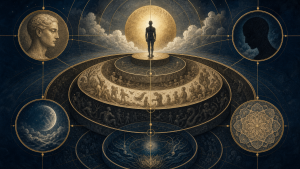
Analytical Psychology
Analytical psychology, often called Jungian psychology, is Carl Jung’s approach to the psyche, unconscious life, symbols, and psychological development.

Carl Jung’s Theory of Personality
Carl Jung’s personality theory combines psychological attitudes and functions with a broader model of ego, persona, shadow, unconscious life, and individuation.
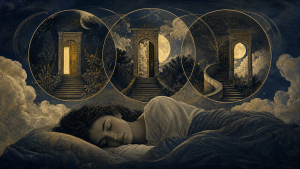
Recurring Dreams
Recurring dreams repeat a theme, setting, conflict, or emotional pattern and are best studied as a series rather than decoded from one symbol.
Related Archetypes
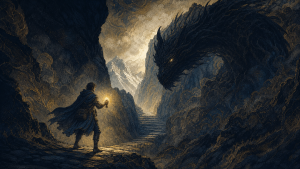
Hero
The Hero is an archetypal motif of confronting danger, overcoming an obstacle, and winning something that can contribute to greater consciousness or renewal.

Wise Old Person
The Wise Old Person is an archetypal guide figure associated with meaning, counsel, insight, and the danger of identifying with borrowed authority.
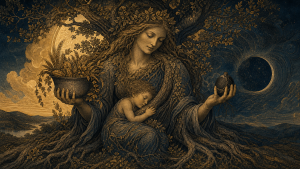
Great Mother
The Great Mother is an archetypal pattern of origin, nourishment, protection, fertility, containment, engulfment, and destructive power.
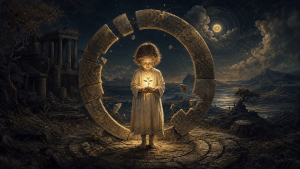
Child
The Child archetype represents vulnerable beginnings, unrealized potential, renewal, dependence, abandonment, and a future personality still developing.

Maiden (Kore)
The Maiden, or Kore, is an archetypal image of youth, potential, vulnerability, separation, descent, renewal, and an identity not yet fully differentiated.
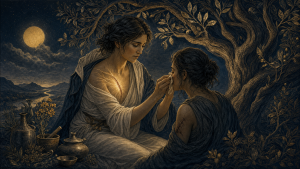
Wounded Healer
The Wounded Healer archetype holds vulnerability and the capacity to help in tension while requiring self-knowledge, competence, accountability, and clear boundaries.
Related Dream Symbols
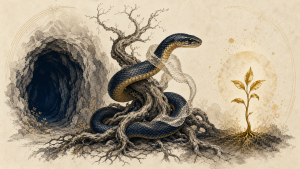
Snake
A snake in a dream can evoke danger, instinct, transformation, healing, sexuality, wisdom, or something unfamiliar—but its meaning depends on the dream’s details and the dreamer’s associations.

House
A house in a dream may represent the dreamer, a structure of personality, family life, memory, safety, or a psychological situation, depending on context.

Water
Water in a dream may relate to emotion, bodily life, the unconscious, renewal, danger, depth, or overwhelming experience, depending on its form and context.

Forest
A forest in a dream may suggest an unfamiliar psychological territory, instinctive life, concealment, danger, refuge, disorientation, or a path of discovery.

Door
A door in a dream may suggest access, exclusion, transition, opportunity, secrecy, protection, choice, or a boundary between psychological situations.

Mirror
A mirror in a dream may concern self-recognition, appearance, identity, reversal, duplication, self-judgment, projection, or the unsettling failure to recognize oneself.

Bird
A bird in a dream may raise questions about perspective, movement, voice, care, migration, territory, vulnerability, or confinement, depending on the species and complete context.

Mountain
A mountain dream may evoke challenge, perspective, endurance, isolation, boundary, permanence, sacred space, or a goal, depending on the mountain and the dreamer’s relationship to it.
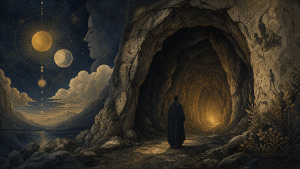
Cave
A cave in a dream may evoke concealment, shelter, descent, gestation, fear, burial, or contact with what lies outside ordinary awareness.

Bridge
A bridge in a dream may represent passage, connection, risk, separation, transition, or the practical means of moving between two conditions.

River
A river in a dream may evoke movement, time, emotion, direction, boundary, renewal, danger, or a process larger than conscious control.
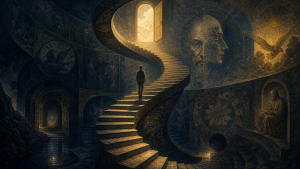
Stairs
Stairs in a dream may emphasize gradual movement between levels, effort, access, hierarchy, descent, ascent, repetition, or an interrupted transition.

Cat Dream Meaning
A cat in a dream may draw attention to autonomy, closeness, watchfulness, vulnerability, instinct, or a specific personal relationship with cats.
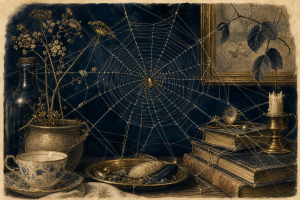
Spider Dream Meaning
A spider dream may involve creativity, patient construction, entanglement, fear, predation, attention to detail, or an ordinary encounter with spiders.
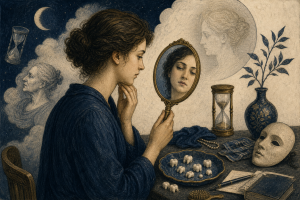
Teeth Falling Out Dream Meaning
Dreams of teeth falling out may involve appearance, speech, loss of control, aging, vulnerability, bodily sensation, or current dental concerns.
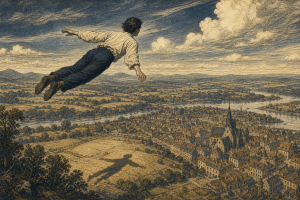
Flying Dream Meaning
Flying dreams may involve freedom, perspective, confidence, escape, inflation, instability, fear of falling, or the sensory qualities of sleep.
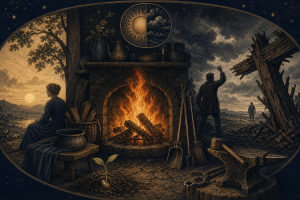
Fire Dream Meaning
Fire dreams may involve warmth, anger, danger, destruction, purification, energy, transformation, renewal, or a recent real-world concern.
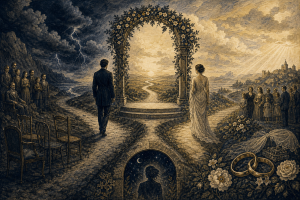
Wedding Dream Meaning
A wedding dream may concern union, commitment, transition, conflict, public expectation, identity, memory, or an actual relationship and upcoming event.

Fish Dream Meaning
Fish in dreams may involve vitality, nourishment, depth, adaptation, capture, abundance, vulnerability, spiritual imagery, or ordinary experience with water and food.

Owl Dream Meaning
An owl dream may involve perception, night awareness, vigilance, knowledge, predation, silence, fear, death imagery, or a recent encounter with birds.
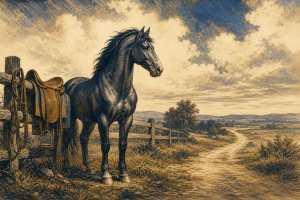
Horse Dream Meaning
A horse dream may concern vitality, movement, partnership, labor, status, control, freedom, fear, sexuality, or a specific history with horses.

Wolf Dream Meaning
A wolf dream may involve instinct, group belonging, threat, protection, isolation, pursuit, social order, wilderness, or learned cultural imagery.
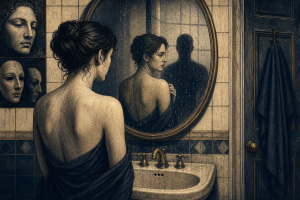
Bathroom Dream Meaning
A bathroom dream may organize concerns about privacy, exposure, bodily needs, relief, cleanliness, shame, or finding an acceptable place to deal with something personal.
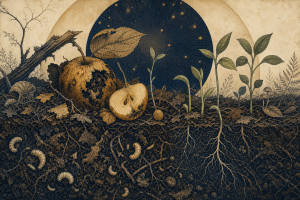
Maggots Dream Meaning
Maggots in a dream may focus attention on decay, disgust, neglected material, transformation, decomposition, contamination, or an organic process that continues outside conscious control.
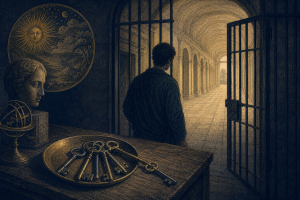
Going to Jail Dream Meaning
A jail dream may stage restriction, guilt, consequences, loss of choice, judgment, confinement, responsibility, or fear that a situation has become difficult to escape.
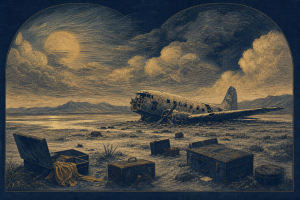
Plane Crash Dream Meaning
A plane-crash dream may dramatize disrupted plans, rapid loss of control, fear of failure, danger at a distance, an ambitious trajectory breaking down, or ordinary anxiety about travel.
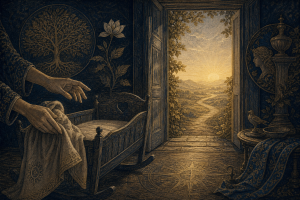
Childbirth Dream Meaning
A childbirth dream may concern creation, responsibility, vulnerability, transition, labor, bodily memory, a developing project, or anxiety about an irreversible new phase.

Funeral Dream Meaning
A funeral dream may organize grief, memory, social ritual, unfinished goodbye, fear of loss, or recognition that a role, relationship, expectation, or life phase has ended.

Finding Money Dream Meaning
Finding money in a dream may raise questions about value, opportunity, ownership, resources, luck, self-worth, obligation, or the discovery of something useful that was overlooked.

Black Bear Dream Meaning
A black-bear dream may involve strength, territorial boundaries, caution, protection, appetite, solitude, maternal defense, wilderness, or fear of a powerful presence.

Partner Cheating Dream Meaning
A dream about a partner cheating may express insecurity, fear of replacement, past betrayal, emotional distance, comparison, unmet needs, or ordinary relationship anxiety without proving actual infidelity.
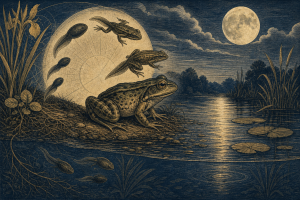
Frog Dream Meaning
A frog dream may organize themes of adaptation, transition between environments, sensitivity, sound, fertility, disgust, transformation, or attention to conditions that support life.
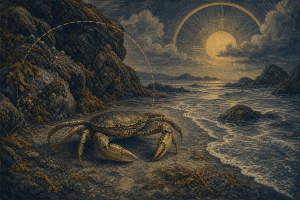
Crab Dream Meaning
A crab dream may concern protection, vulnerability beneath a hard exterior, indirect movement, defensiveness, grasping, tidal change, nourishment, or life at a boundary.

Turtle Dream Meaning
A turtle dream may involve protection, patience, pacing, withdrawal, endurance, vulnerability, home, age, or movement between water and land.
Cockroach Dream Meaning
A cockroach dream may involve disgust, persistence, contamination, neglected conditions, survival, intrusion, or a recent real-world encounter.
Tsunami Dream Meaning
A tsunami dream may involve overwhelming change, fear, helplessness, collective danger, emotional intensity, disaster imagery, or recent media exposure.
Tiger Dream Meaning
A tiger dream may concern power, beauty, predation, territoriality, fear, protection, captivity, cultural imagery, or a recent encounter with animal media.
Shoes Dream Meaning
Shoes in dreams may involve movement, readiness, identity, social presentation, protection, work, fit, loss, or an ordinary concern about clothing.
Cutting Hair Dream Meaning
A hair-cutting dream may involve appearance, identity, consent, change, control, loss, relief, ritual, or a recent real haircut or grooming concern.
Broken Glass Dream Meaning
Broken glass in a dream may involve danger, damaged boundaries, visibility, fragility, anger, cleanup, transition, or memory of an actual breakage.
Snake Bite Dream Meaning
A snake-bite dream may involve sudden threat, bodily alarm, conflict, transformation imagery, medical fear, betrayal concerns, or a recent snake-related stimulus.
Death Dream Meaning
A death dream may involve grief, fear, transition, separation, memory, identity change, health anxiety, or ordinary processing of loss and mortality.
Dream Within a Dream Meaning
A dream within a dream may involve false awakening, uncertainty, layered perspective, sleep disruption, reality checking, narrative complexity, or anxiety about being unable to wake.
Lion Dream Meaning
A lion dream may involve authority, courage, predation, pride, protection, status, family structure, captivity, or familiar cultural imagery.
Ant Dream Meaning
Ants in dreams may involve cooperation, repetitive labor, organization, intrusion, small accumulated problems, persistence, or a literal pest concern.
Crow Dream Meaning
A crow dream may involve intelligence, observation, social signaling, scavenging, death imagery, adaptation, noise, or an ordinary encounter with urban wildlife.
Train Dream Meaning
A train dream may concern direction, schedules, collective movement, missed opportunities, limited routes, transitions, work, travel, or an actual journey.
Falling Off a Cliff Dream Meaning
Falling from a cliff in a dream may involve loss of footing, risk, transition, helplessness, exhilaration, bodily sleep sensations, or fear of irreversible consequences.
Tornado Dream Meaning
A tornado dream may involve rapidly changing danger, loss of control, concentrated force, family safety, weather anxiety, conflict, or recent storm coverage.
Dog Bite Dream Meaning
A dog-bite dream may involve violated trust, defensive aggression, fear, boundaries, loyalty conflict, bodily alarm, or a real experience with dogs.
Snow Dream Meaning
Snow in dreams may involve quiet, cold, concealment, renewal, isolation, danger, play, seasonal memory, or an ordinary response to weather.
Elevator Dream Meaning
An elevator dream may involve rapid change, status, limited control, confinement, transition between levels, mechanical fear, or an ordinary building experience.
Drowning Dream Meaning
A drowning dream may involve panic, helplessness, emotional overwhelm, rescue, bodily breathing disturbance, grief, or a literal fear of water.
Blood Dream Meaning
Blood in a dream may involve injury, vitality, menstruation, kinship, sacrifice, fear, illness, violence, or a recent bodily concern.
Killer Whale Dream Meaning
A killer-whale dream may involve intelligence, family bonds, coordinated power, ocean depth, captivity, danger, awe, or recent marine media.
Keys Dream Meaning
Keys in dreams may involve access, responsibility, privacy, permission, security, solution seeking, loss, or an ordinary concern about misplaced keys.
Bee Dream Meaning
Bees in dreams may involve cooperation, labor, pollination, sweetness, danger, social organization, environmental concern, or a literal fear of stings.
Zombie Dream Meaning
A zombie dream may involve contagion fears, emotional numbness, crowd pressure, exhaustion, dehumanization, survival narratives, or recent horror media.
Bat Dream Meaning
A bat dream may involve navigation in darkness, fear, social roosting, illness associations, transformation stories, wildlife encounters, or recent media.
Ocean Dream Meaning
An ocean in a dream may evoke emotional scale, the unknown, collective life, origin, danger, freedom, or a boundary between conscious and unconscious experience.
Moon Dream Meaning
A moon in a dream may suggest changing visibility, rhythm, reflection, night consciousness, orientation, or something known indirectly.
Sun Dream Meaning
The sun in a dream may evoke consciousness, vitality, exposure, authority, clarity, heat, danger, or a powerful organizing center.
Tree Dream Meaning
A tree in a dream may represent growth, rootedness, ancestry, seasonal change, branching possibility, shelter, injury, or continuity.
Garden Dream Meaning
A garden in a dream may evoke cultivation, enclosure, care, pleasure, neglected potential, controlled nature, or a protected inner space.
Maze Dream Meaning
A maze in a dream may express disorientation, initiation, repeated choices, confinement, play, strategy, or a path toward an unknown center.
School Dream Meaning
A school in a dream may relate to evaluation, learning, social comparison, old identity, preparation, authority, or a lesson that feels unfinished.
Phone Dream Meaning
A phone in a dream may concern connection, interruption, missed communication, access, distance, identity, or dependence on a technological channel.
Baby Dream Meaning
A baby in a dream may evoke vulnerability, responsibility, new potential, dependency, neglected needs, literal family concerns, or an emerging development.
Storm Dream Meaning
A storm in a dream may represent emotional intensity, conflict, rapid change, danger, cleansing, disruption, or forces beyond conscious control.
Related Books
Aion: Researches into the Phenomenology of the Self
Aion is Jung’s advanced study of the Self, the shadow, opposites, and the religious, astrological, Gnostic, and alchemical symbols of psychological totality.

Man and His Symbols
Man and His Symbols is an illustrated introduction to dreams, symbols, archetypes, and individuation written by Carl Jung and four close collaborators for general readers.

Memories, Dreams, Reflections
Memories, Dreams, Reflections is a semi-autobiographical account assembled from Carl Jung's recollections, manuscripts, and conversations with editor Aniela Jaffé.
The Red Book: Liber Novus
The Red Book: Liber Novus records and artistically develops Carl Jung's confrontation with inner figures and images during a formative period of his psychology.
The Archetypes and the Collective Unconscious
The Archetypes and the Collective Unconscious collects major essays in which Carl Jung develops his accounts of archetypes, collective psychic patterns, rebirth, the mother, the child, and individuation.
The Origins and History of Consciousness
Erich Neumann’s The Origins and History of Consciousness uses mythic sequences to propose an archetypal model of ego development and the differentiation of consciousness.
Re-Visioning Psychology
Re-Visioning Psychology is James Hillman’s foundational statement of archetypal psychology and its imaginal approach to soul, symptoms, myth, and psychological plurality.

Ego and Archetype
Ego and Archetype is Edward F. Edinger’s influential Jungian study of individuation and the changing relationship between the conscious ego and the Self.
The Eternal Drama
The Eternal Drama is Edward F. Edinger’s Jungian exploration of major Greek myths and divine figures as recurring images of psychological conflict, development, and transformation.
Anatomy of the Psyche
Anatomy of the Psyche is Edward F. Edinger’s Jungian study of Western alchemical images and operations as symbolic parallels for psychological processes and psychotherapy.

The Sacred Psyche
The Sacred Psyche is Edward F. Edinger’s psychological interpretation of the Psalms, developed from lectures and focused on their continuing significance in individual experience.
The Mystery of the Coniunctio
The Mystery of the Coniunctio is Edward F. Edinger’s compact Jungian study of alchemical union as an image of the relationship and possible integration of psychological opposites.
Encounter with the Self
Encounter with the Self is Edward F. Edinger’s Jungian commentary on William Blake’s illustrations of the Book of Job and their imagery of psychic and religious transformation.
The Creation of Consciousness
The Creation of Consciousness is Edward F. Edinger’s concise proposal for a modern Jungian worldview joining the scientific pursuit of knowledge with the religious search for meaning.
The Christian Archetype
The Christian Archetype is Edward F. Edinger’s Jungian commentary on central episodes in the life of Christ and their possible psychological significance.

Transformation of the God-Image
Transformation of the God-Image is Edinger’s Jungian elucidation of Answer to Job, developed from seminars at the C. G. Jung Institute of Los Angeles.

Science of the Soul
Science of the Soul is a posthumous collection of five Edinger essays on psychotherapy, transference, vocation, the greater personality, and Jungian psychological method.

Goethe’s Faust: Notes for a Jungian Commentary
Goethe’s Faust is Edinger’s Jungian commentary on Goethe’s drama as a psychological portrait, symbolic analytic process, and bridge to alchemy.

Melville’s Moby-Dick: An American Nekyia
Melville’s Moby-Dick is Edinger’s Jungian interpretation of Melville’s novel as an American nekyia—a descent into dangerous and transformative psychic depths.
Ego and Self: The Old Testament Prophets
Ego and Self is Edinger’s psychological commentary on the prophetic books of the Hebrew Bible, continuing the work begun in The Bible and the Psyche.

The Mysterium Lectures
The Mysterium Lectures is Edinger’s extensive chapter-by-chapter guide to Jung’s Mysterium Coniunctionis and its relevance to dreams and psychological life.

The Bible and the Psyche
The Bible and the Psyche is Edinger’s Jungian commentary on individuation symbolism in biblical books from Genesis through Esther.
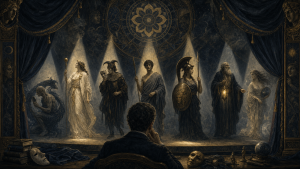
The Psyche on Stage
The Psyche on Stage is Edinger’s Jungian study of Measure for Measure, Romeo and Juliet, Oedipus the King, and Oedipus at Colonus.
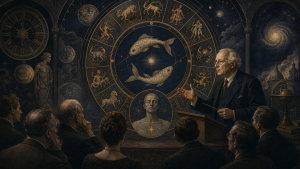
The Aion Lectures
The Aion Lectures is Edinger’s edited lecture companion to C. G. Jung’s Aion, originally delivered in Los Angeles in 1988–89.