Jungian Concept
Coniunctio
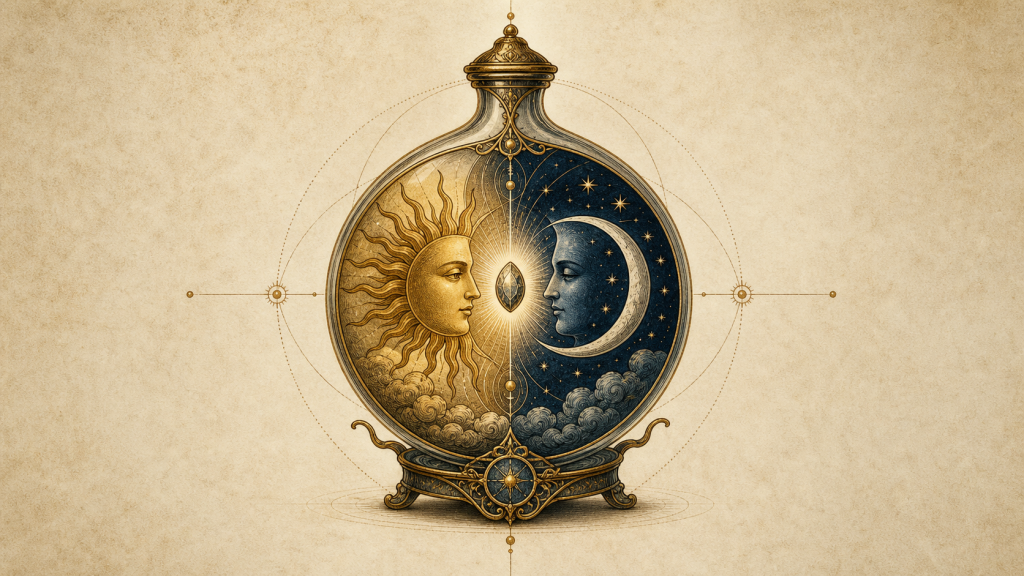
Coniunctio is an alchemical image Jung used to explore the psychological union of opposites and the possibility of a new, more inclusive attitude.
Definition
An alchemical conjunction interpreted psychologically as the encounter and potential union of differentiated opposites.
What Is the Coniunctio?
Coniunctio is Latin for conjunction or joining. In alchemical texts it referred to combinations represented through images such as the marriage of sun and moon. Jung treated these images psychologically, using them to examine encounters between opposites: conscious and unconscious, reason and feeling, spirit and matter, or competing positions within the personality.
Union Does Not Mean Sameness
A psychological union of opposites is not achieved by declaring the conflict solved or blending everything into a vague harmony. Each side must first become distinct enough to be recognized. A durable synthesis preserves tension and difference while making a broader standpoint possible.
Relationship to Individuation
Within individuation, coniunctio images may represent moments when previously divided aspects of life enter a new relationship. The resulting “third” is not necessarily a compromise. It may be a symbolic image, changed attitude, creative act, or practical arrangement that neither original position could produce alone.
Common Images
- Marriage, partnership, or paired figures
- Sun and moon
- King and queen
- Two substances joined in a vessel
- A child, stone, or new form emerging from union
Psychological Application
When a coniunctio motif appears, ask which opposites are actually present, whether both have been heard, and what new responsibility follows. Symbolic union is not a substitute for consent, boundaries, evidence, or real-world repair.
Historical Context and Caution
Jung’s interpretations drew heavily on European alchemy, Christianity, and gendered symbolism. Modern readers can study the structure of opposites without treating historical masculine–feminine assignments as fixed rules for identity or relationship.
Origin and Development
Jung’s extended engagement with alchemy led him to treat coniunctio imagery as a symbolic account of psychological transformation, especially in Psychology and Alchemy, The Psychology of the Transference, and Mysterium Coniunctionis.
Examples
- A dream marriage between contrasting figures
- A new attitude that holds duty and creativity together
- A symbol that connects bodily life with spiritual aspiration
Common Misconceptions
- Coniunctio is not literal romantic compatibility.
- Union does not erase difference or conflict.
- Historical gender symbolism is not a rule about modern identity.
Continue your study
Recommended Reading
Books selected because they directly develop ideas discussed on this page.
The Mystery of the Coniunctio
The Mystery of the Coniunctio is Edward F. Edinger’s compact Jungian study of alchemical union as an image of the relationship and possible integration of psychological…
Anatomy of the Psyche
Anatomy of the Psyche is Edward F. Edinger’s Jungian study of Western alchemical images and operations as symbolic parallels for psychological processes and psychotherapy.
Ego and Archetype
Ego and Archetype is Edward F. Edinger’s influential Jungian study of individuation and the changing relationship between the conscious ego and the Self.
Paid links. As an Amazon Associate I earn from qualifying purchases.
Related Concepts
Psychological Opposites
Psychological opposites are conflicting conscious and unconscious positions whose tension can reveal one-sidedness and support development.
Transcendent Function
The transcendent function is the new psychological attitude or symbolic possibility that can emerge when conscious and unconscious positions are held in genuine dialogue.
Individuation
Individuation is Jung’s term for the lifelong process of becoming a more differentiated and integrated psychological whole.
Self
The Self is Jung’s concept of the whole psyche—conscious and unconscious—and the archetypal principle of its organization, development, and potential integration.
Mandala
A mandala is a centered, often circular symbolic form that Jung associated with psychic order, wholeness, containment, and the Self.
Carl Jung’s Philosophy
Carl Jung’s philosophy centers on psychological wholeness, symbols, opposites, meaning, and the relationship between conscious and unconscious life.
Carl Jung, Psychology, and Alchemy
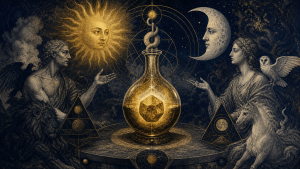
Carl Jung interpreted alchemical images as historical parallels to unconscious psychological processes, especially projection, transformation, opposites, and individuation.
Related Archetypes
Puer Aeternus
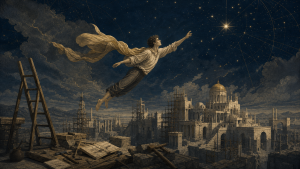
Puer aeternus, the eternal-youth archetype, carries possibility, freedom, renewal, and imagination but becomes one-sided when potential repeatedly replaces commitment and lived experience.

Senex
The Senex archetype carries time, structure, discipline, memory, authority, limit, and responsibility; one-sided, it may harden into rigidity, control, sterility, or punitive order.
Child
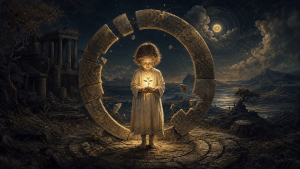
The Child archetype represents vulnerable beginnings, unrealized potential, renewal, dependence, abandonment, and a future personality still developing.
Related Dream Symbols
Water
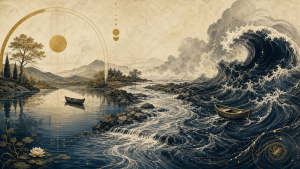
Water in a dream may relate to emotion, bodily life, the unconscious, renewal, danger, depth, or overwhelming experience, depending on its form and context.
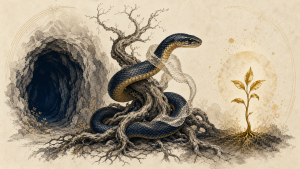
Snake
A snake in a dream can evoke danger, instinct, transformation, healing, sexuality, wisdom, or something unfamiliar—but its meaning depends on the dream’s details and the dreamer’s associations.
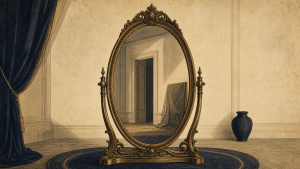
Mirror
A mirror in a dream may concern self-recognition, appearance, identity, reversal, duplication, self-judgment, projection, or the unsettling failure to recognize oneself.
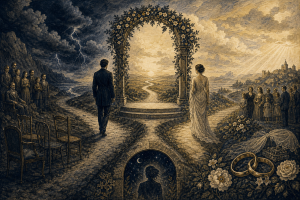
Wedding Dream Meaning
A wedding dream may concern union, commitment, transition, conflict, public expectation, identity, memory, or an actual relationship and upcoming event.
Related Practices
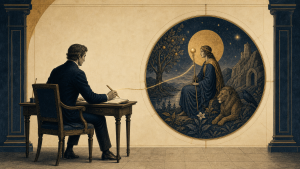
Active Imagination
Active imagination is Jung’s method of consciously engaging emerging images, emotions, or figures through sustained attention and expression while preserving awareness and judgment.
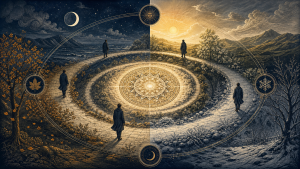
Circumambulation
Circumambulation is a Jungian method of staying close to one image while examining it repeatedly from different personal, emotional, symbolic, and practical viewpoints.
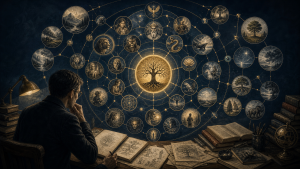
Symbol Amplification
Symbol amplification is a Jungian method of comparing an image with mythic, religious, artistic, historical, and cultural parallels while staying anchored to personal context.
Related Books
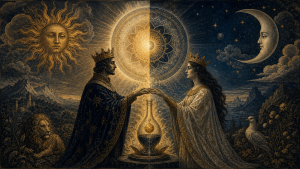
The Mystery of the Coniunctio
The Mystery of the Coniunctio is Edward F. Edinger’s compact Jungian study of alchemical union as an image of the relationship and possible integration of psychological opposites.
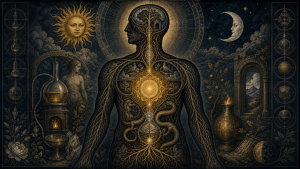
Anatomy of the Psyche
Anatomy of the Psyche is Edward F. Edinger’s Jungian study of Western alchemical images and operations as symbolic parallels for psychological processes and psychotherapy.

Ego and Archetype
Ego and Archetype is Edward F. Edinger’s influential Jungian study of individuation and the changing relationship between the conscious ego and the Self.
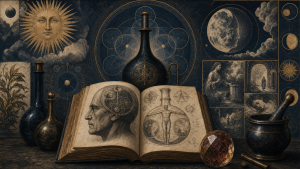
Psychology and Alchemy
Carl Jung’s major study connecting dream series, Christian symbolism, and Western alchemy with projection and the psychological process of individuation.
Related Psychologists
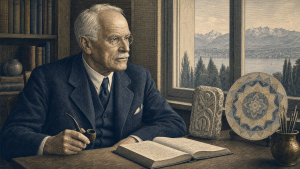
Carl Jung
Carl Gustav Jung was a Swiss psychiatrist who founded analytical psychology and developed influential ideas about complexes, archetypes, the collective unconscious, psychological types, and individuation.

Edward F. Edinger
Edward F. Edinger was an American psychiatrist, Jungian analyst, lecturer, and author who became a prominent interpreter of Jung’s work on the ego, Self, individuation, alchemy, and religious symbolism.