
Jungian Concept
Psychic Energy
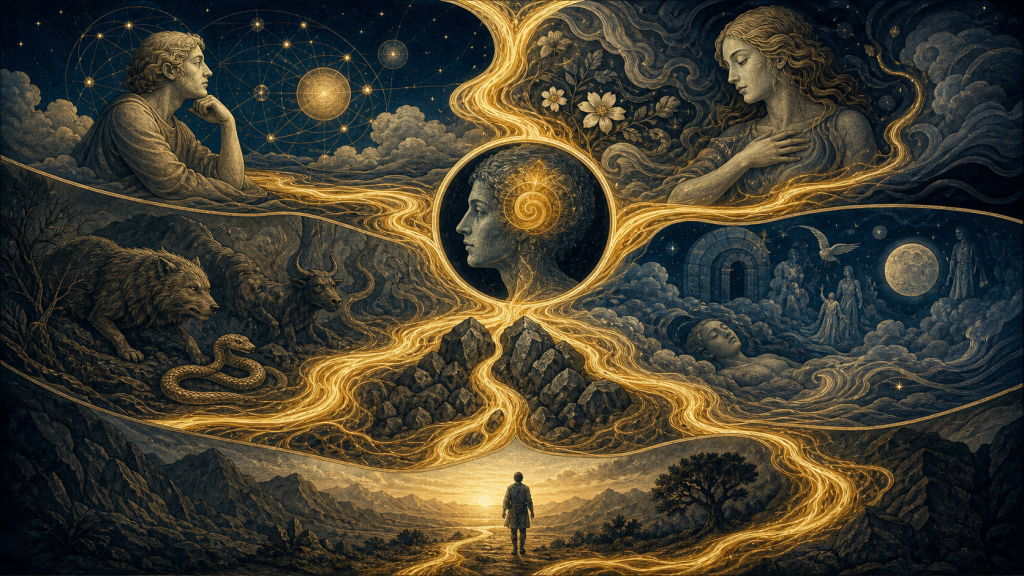
Psychic energy, often called libido by Jung, is a conceptual way of describing the intensity, direction, and movement of psychological interest and desire.
Definition
A conceptual description of the intensity, direction, and transformation of psychological desire, interest, and motivation.
What Is Psychic Energy?
Jung used libido in a broad sense to describe psychic energy: the intensity and direction of desire, interest, effort, fantasy, and psychological investment. This differed from definitions that treated libido primarily as sexual energy.
A Model, Not a Substance
Psychic energy is not a measurable fluid moving through the brain. It is a conceptual model for asking where attention and motivation are invested, where they have become unavailable, and what images or activities now carry unusual intensity.
Progression and Regression
Progression describes energy moving toward adaptation in current life. Regression describes a backward or inward movement when ordinary adaptation stalls. Regression can become avoidance, but Jung also believed it could activate memories, fantasies, and neglected capacities needed for a new response.
Where Energy Appears
- A project that suddenly feels compelling
- A role that consumes attention while other areas become lifeless
- Recurring dreams or fantasies charged with emotion
- Fatigue and loss of interest after prolonged one-sided effort
- A symbol that gathers conflicting feelings into one image
Questions for Reflection
Where is your attention repeatedly drawn? What activity feels overinvested? What has lost vitality? Which neglected task, relationship, bodily need, or creative interest may be asking for recognition? These questions can guide reflection without pretending that every change in motivation is symbolic.
Clinical and Practical Caution
Low energy, agitation, sleep disruption, or loss of interest can have medical, psychiatric, environmental, and practical causes. Jungian language should not replace appropriate evaluation or reduce illness to blocked psychic energy.
Origin and Development
Jung broadened the term libido beyond predominantly sexual energy and used an energic model to discuss progression, regression, symbols, and psychic transformation.
Examples
- Attention becoming concentrated on a role or conflict
- Motivation withdrawing from an outdated adaptation
- A symbol attracting previously divided interests
Common Misconceptions
- Psychic energy is not directly measurable like electricity.
- Regression is not always growth or always illness.
- Fatigue and depression require more than symbolic explanation.
Continue your study
Recommended Reading
Books selected because they directly develop ideas discussed on this page.
Man and His Symbols
Man and His Symbols is an illustrated introduction to dreams, symbols, archetypes, and individuation written by Carl Jung and four close collaborators for general readers.
Aion: Researches into the Phenomenology of the Self
Aion is Jung’s advanced study of the Self, the shadow, opposites, and the religious, astrological, Gnostic, and alchemical symbols of psychological totality.
The Archetypes and the Collective Unconscious
The Archetypes and the Collective Unconscious collects major essays in which Carl Jung develops his accounts of archetypes, collective psychic patterns, rebirth, the mother, the child,…
Paid links. As an Amazon Associate I earn from qualifying purchases.
Related Concepts
Compensation
Compensation is the psyche’s tendency to balance or supplement a one-sided conscious attitude through dreams, emotions, fantasies, symptoms, and neglected perspectives.
Psychological Opposites
Psychological opposites are conflicting conscious and unconscious positions whose tension can reveal one-sidedness and support development.

Transcendent Function
The transcendent function is the new psychological attitude or symbolic possibility that can emerge when conscious and unconscious positions are held in genuine dialogue.

Inferior Function
The inferior function is the least differentiated function in a person's conscious typology and the opposite of the dominant function.

Individuation
Individuation is Jung’s term for the lifelong process of becoming a more differentiated and integrated psychological whole.
Carl Jung vs. Sigmund Freud
Carl Jung and Sigmund Freud shared an early psychoanalytic alliance but diverged over libido, religion, symbols, the unconscious, and the aims of psychological development.
Related Archetypes

Hero
The Hero is an archetypal motif of confronting danger, overcoming an obstacle, and winning something that can contribute to greater consciousness or renewal.
Puer Aeternus
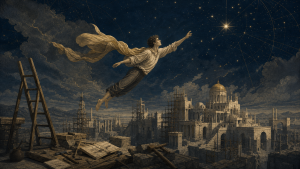
Puer aeternus, the eternal-youth archetype, carries possibility, freedom, renewal, and imagination but becomes one-sided when potential repeatedly replaces commitment and lived experience.

Senex
The Senex archetype carries time, structure, discipline, memory, authority, limit, and responsibility; one-sided, it may harden into rigidity, control, sterility, or punitive order.
Related Dream Symbols

Water
Water in a dream may relate to emotion, bodily life, the unconscious, renewal, danger, depth, or overwhelming experience, depending on its form and context.

Mountain
A mountain dream may evoke challenge, perspective, endurance, isolation, boundary, permanence, sacred space, or a goal, depending on the mountain and the dreamer’s relationship to it.

River
A river in a dream may evoke movement, time, emotion, direction, boundary, renewal, danger, or a process larger than conscious control.
Related Practices

Active Imagination
Active imagination is Jung’s method of consciously engaging emerging images, emotions, or figures through sustained attention and expression while preserving awareness and judgment.

Dream Journaling
Dream journaling is the practice of recording dreams promptly and preserving their sequence, atmosphere, images, emotions, and personal associations.
Circumambulation
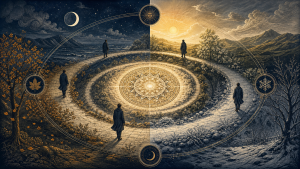
Circumambulation is a Jungian method of staying close to one image while examining it repeatedly from different personal, emotional, symbolic, and practical viewpoints.
Related Books

Man and His Symbols
Man and His Symbols is an illustrated introduction to dreams, symbols, archetypes, and individuation written by Carl Jung and four close collaborators for general readers.
Aion: Researches into the Phenomenology of the Self
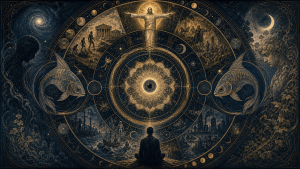
Aion is Jung’s advanced study of the Self, the shadow, opposites, and the religious, astrological, Gnostic, and alchemical symbols of psychological totality.

The Archetypes and the Collective Unconscious
The Archetypes and the Collective Unconscious collects major essays in which Carl Jung develops his accounts of archetypes, collective psychic patterns, rebirth, the mother, the child, and individuation.
Related Psychologists
Carl Jung
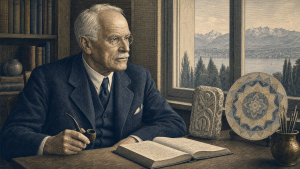
Carl Gustav Jung was a Swiss psychiatrist who founded analytical psychology and developed influential ideas about complexes, archetypes, the collective unconscious, psychological types, and individuation.

Jolande Jacobi
Jolande Jacobi was a Swiss psychologist, author, and early interpreter of C. G. Jung whose systematic introductions helped make analytical psychology accessible.