Psychologist
Jolande Jacobi
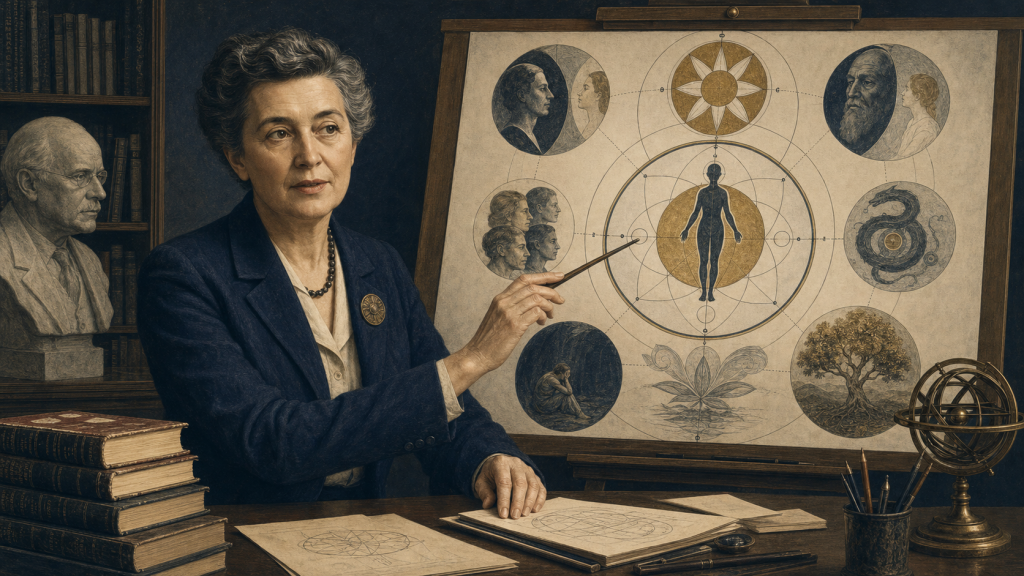
Jolande Jacobi was a Swiss psychologist, author, and early interpreter of C. G. Jung whose systematic introductions helped make analytical psychology accessible.
Known For
Systematic introductions to Jungian psychology, writing on complexes and archetypes, and teaching within the early Zürich Jungian community.
Biography
Born in Budapest, Jacobi later lived and worked in Zürich. She became a prominent early interpreter of analytical psychology and wrote accessible syntheses of Jung’s ideas.
Key Ideas
- The structure and dynamics of the psyche
- Complexes and archetypes
- Symbolic transformation
- Individuation as a developmental process
Who Was Jolande Jacobi?
Jolande Jacobi (1890–1973) was a Swiss psychologist and author closely associated with C. G. Jung. She became known for organizing Jung’s wide-ranging ideas into systematic introductions for students and general readers.
Work with Analytical Psychology
Jacobi studied psychology after an earlier career that included journalism and public life. She worked within the developing Jungian community in Zürich and became one of its prominent teachers and interpreters. Her writing helped readers approach concepts that are dispersed across Jung’s collected works.
Major Contributions
- Clear summaries of Jung’s model of the psyche
- Explanations of complexes, archetypes, symbols, and individuation
- Attention to the role of images in psychological transformation
- Teaching and institutional work within early analytical psychology
How to Read Jacobi
Jacobi is useful as a map, especially when Jung’s terminology feels fragmented. A map is not the territory: her orderly presentations can make a fluid and sometimes contradictory body of work appear more settled than it is. Readers should compare her summaries with Jung’s primary texts and later scholarship.
Historical Context
Jacobi wrote within the assumptions and language of twentieth-century European depth psychology. Some formulations about gender, development, culture, or normality require historical scrutiny rather than uncritical adoption.
Legacy
Her lasting importance lies in mediation. She offered generations of readers a structured entrance into analytical psychology and demonstrated how a secondary interpreter can clarify a complex tradition while also shaping how that tradition is understood.
What Books Did Jolande Jacobi Write?
Jacobi’s best-known introduction is The Psychology of C. G. Jung, a systematic guide to Jung’s model of consciousness, the personal and collective unconscious, psychological types, archetypes, symbols, and individuation. Her Complex/Archetype/Symbol in the Psychology of C. G. Jung examines three terms that are often blurred together in simplified accounts of Jungian psychology.
These books are secondary guides rather than substitutes for Jung’s primary texts. Their value lies in orientation: Jacobi gives readers a vocabulary and conceptual map that can make works such as Two Essays on Analytical Psychology easier to approach.
Jolande Jacobi’s Place in Early Jungian Psychology
Jacobi belonged to a wider Zürich network that included Toni Wolff, Emma Jung, and later Aniela Jaffé. Their roles were not interchangeable: Wolff developed an independent structural model, Emma Jung wrote on anima, animus, and Grail symbolism, Jaffé became an editor and biographical collaborator, and Jacobi became especially influential as a systematizer and teacher.
For a broader introduction, see analytical psychology or follow the Carl Jung reading order.
Continue your study
Recommended Reading
Books selected because they directly develop ideas discussed on this page.
Man and His Symbols
Man and His Symbols is an illustrated introduction to dreams, symbols, archetypes, and individuation written by Carl Jung and four close collaborators for general readers.
The Archetypes and the Collective Unconscious
The Archetypes and the Collective Unconscious collects major essays in which Carl Jung develops his accounts of archetypes, collective psychic patterns, rebirth, the mother, the child,…
Aion: Researches into the Phenomenology of the Self
Aion is Jung’s advanced study of the Self, the shadow, opposites, and the religious, astrological, Gnostic, and alchemical symbols of psychological totality.
Paid links. As an Amazon Associate I earn from qualifying purchases.
Related Concepts

Individuation
Individuation is Jung’s term for the lifelong process of becoming a more differentiated and integrated psychological whole.
Archetype
An archetype is an inherited organizing pattern in Jung’s theory that can shape recurring forms of imagery, emotion, perception, and behavior without prescribing one fixed image.
Complex
In Jungian psychology, a complex is an emotionally charged network of associations that can temporarily influence perception, emotion, and behavior.
Self
The Self is Jung’s concept of the whole psyche—conscious and unconscious—and the archetypal principle of its organization, development, and potential integration.

Imago
An imago is an internal, subjectively shaped image of another person that must be distinguished from the person’s objective reality.

Psychic Energy
Psychic energy, often called libido by Jung, is a conceptual way of describing the intensity, direction, and movement of psychological interest and desire.
Constellation
Constellation is the activation of a complex or archetypal pattern by a situation, causing connected emotions, memories, expectations, and behaviors to become unusually available.
Related Books

Man and His Symbols
Man and His Symbols is an illustrated introduction to dreams, symbols, archetypes, and individuation written by Carl Jung and four close collaborators for general readers.
The Archetypes and the Collective Unconscious
The Archetypes and the Collective Unconscious collects major essays in which Carl Jung develops his accounts of archetypes, collective psychic patterns, rebirth, the mother, the child, and individuation.
Aion: Researches into the Phenomenology of the Self
Aion is Jung’s advanced study of the Self, the shadow, opposites, and the religious, astrological, Gnostic, and alchemical symbols of psychological totality.
Related Practices

Jungian Dream Analysis
Jungian dream analysis explores a dream’s personal associations, structure, emotional context, and possible compensatory relationship to conscious life without using fixed symbol definitions.
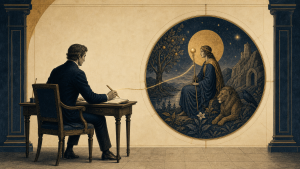
Active Imagination
Active imagination is Jung’s method of consciously engaging emerging images, emotions, or figures through sustained attention and expression while preserving awareness and judgment.
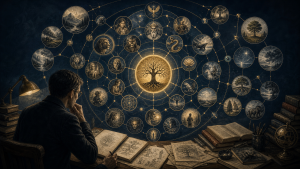
Symbol Amplification
Symbol amplification is a Jungian method of comparing an image with mythic, religious, artistic, historical, and cultural parallels while staying anchored to personal context.