Practice
Dream Journaling
Dream journaling is the practice of recording dreams promptly and preserving their sequence, atmosphere, images, emotions, and personal associations.

Purpose
To preserve dream material accurately enough for later personal reflection and responsible interpretation.
Instructions
- Recall before moving.
- Record the dream promptly.
- Preserve exact images and sequence.
- Note emotions and atmosphere.
- Add a title.
- Write personal associations separately.
- Review patterns only after several entries.
Reflection Questions
- What image carries the strongest charge?
- What personal memory does it evoke?
- What changed during the dream?
- How does the dream differ from your waking attitude?
Cautions and Boundaries
Protect private material. Do not treat dreams as diagnoses, commands, or predictions. Seek qualified support when nightmares, trauma symptoms, or sleep problems cause significant distress or impairment.
What Is Dream Journaling?
Dream journaling means recording a dream as soon as practical after waking, before ordinary activity and memory reshape it. The goal is accurate observation, not immediate interpretation.
A Simple Method
- Keep a notebook or private device within reach.
- On waking, remain still briefly and recall the final image first.
- Work backward through the dream, then record it in forward order.
- Write concrete details: people, setting, actions, dialogue, objects, and changes.
- Record the atmosphere and your emotions during the dream.
- Give the dream a short descriptive title.
- Add personal associations only after preserving the dream itself.
What to Avoid
Do not force an interpretation while half awake. Avoid replacing the dream’s exact images with conclusions such as “this was about work.” Do not assume a symbol has the same meaning it had in someone else’s dream.
Reflection Questions
- What is the central problem or movement?
- What differs from ordinary waking reality?
- Which image carries the strongest emotional charge?
- What personal memories arise around that image?
- Does the dream compensate for a one-sided waking attitude?
Privacy and Safety
Dream journals can contain intimate material. Store them securely and share selectively. Dreams are not diagnoses or predictions. Disturbing dreams, trauma symptoms, or serious sleep problems may deserve support from a qualified professional.
Continue Exploring
Use the record as raw material for Jungian dream analysis. When a recurring image appears, compare its personal context before consulting pages such as House or Snake.
Tracking a Dream Series
After several weeks, review dreams by date rather than selecting only memorable examples. Track recurring settings, figures, conflicts, endings, and changes in the dreamer’s agency. Note waking events and sleep conditions beside the sequence. Repetition can reveal a stable concern, while a changing image may show that the psyche is approaching the concern differently. Keep contradictions; they prevent the journal from becoming a story built only to confirm an interpretation.
Continue your study
Recommended Reading
Books selected because they directly develop ideas discussed on this page.
Man and His Symbols
Man and His Symbols is an illustrated introduction to dreams, symbols, archetypes, and individuation written by Carl Jung and four close collaborators for general readers.
Memories, Dreams, Reflections
Memories, Dreams, Reflections is a semi-autobiographical account assembled from Carl Jung's recollections, manuscripts, and conversations with editor Aniela Jaffé.
Re-Visioning Psychology
Re-Visioning Psychology is James Hillman’s foundational statement of archetypal psychology and its imaginal approach to soul, symptoms, myth, and psychological plurality.
Paid links. As an Amazon Associate I earn from qualifying purchases.
Related Concepts
Individuation
Individuation is Jung’s term for the lifelong process of becoming a more differentiated and integrated psychological whole.
Personal Unconscious
In Jungian psychology, the personal unconscious contains experiences, perceptions, and emotionally charged material outside an individual’s present awareness.
Complex
In Jungian psychology, a complex is an emotionally charged network of associations that can temporarily influence perception, emotion, and behavior.

Archetype
An archetype is an inherited organizing pattern in Jung’s theory that can shape recurring forms of imagery, emotion, perception, and behavior without prescribing one fixed image.
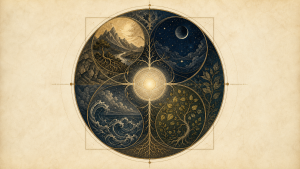
Mandala
A mandala is a centered, often circular symbolic form that Jung associated with psychic order, wholeness, containment, and the Self.
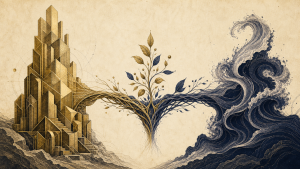
Transcendent Function
The transcendent function is the new psychological attitude or symbolic possibility that can emerge when conscious and unconscious positions are held in genuine dialogue.
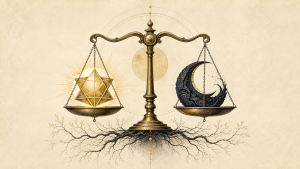
Compensation
Compensation is the psyche’s tendency to balance or supplement a one-sided conscious attitude through dreams, emotions, fantasies, symptoms, and neglected perspectives.
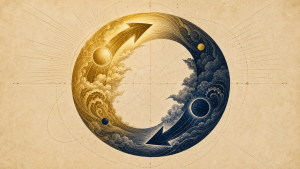
Enantiodromia
Enantiodromia is the emergence of an unconscious counter-position after a conscious attitude becomes rigid, extreme, or chronically one-sided.
Psychic Energy
Psychic energy, often called libido by Jung, is a conceptual way of describing the intensity, direction, and movement of psychological interest and desire.
Constellation
Constellation is the activation of a complex or archetypal pattern by a situation, causing connected emotions, memories, expectations, and behaviors to become unusually available.
Recurring Dreams
Recurring dreams repeat a theme, setting, conflict, or emotional pattern and are best studied as a series rather than decoded from one symbol.
Related Archetypes

Wise Old Person
The Wise Old Person is an archetypal guide figure associated with meaning, counsel, insight, and the danger of identifying with borrowed authority.
Great Mother
The Great Mother is an archetypal pattern of origin, nourishment, protection, fertility, containment, engulfment, and destructive power.
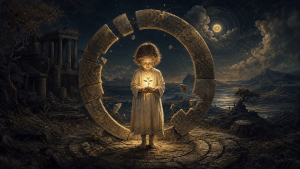
Child
The Child archetype represents vulnerable beginnings, unrealized potential, renewal, dependence, abandonment, and a future personality still developing.

Wounded Healer
The Wounded Healer archetype holds vulnerability and the capacity to help in tension while requiring self-knowledge, competence, accountability, and clear boundaries.
Related Dream Symbols
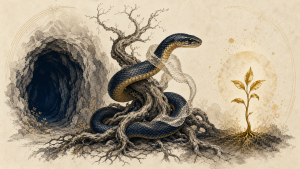
Snake
A snake in a dream can evoke danger, instinct, transformation, healing, sexuality, wisdom, or something unfamiliar—but its meaning depends on the dream’s details and the dreamer’s associations.
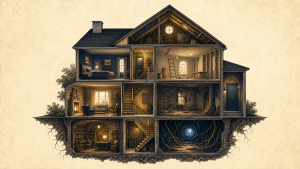
House
A house in a dream may represent the dreamer, a structure of personality, family life, memory, safety, or a psychological situation, depending on context.
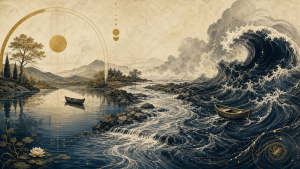
Water
Water in a dream may relate to emotion, bodily life, the unconscious, renewal, danger, depth, or overwhelming experience, depending on its form and context.

Forest
A forest in a dream may suggest an unfamiliar psychological territory, instinctive life, concealment, danger, refuge, disorientation, or a path of discovery.

Door
A door in a dream may suggest access, exclusion, transition, opportunity, secrecy, protection, choice, or a boundary between psychological situations.

Mirror
A mirror in a dream may concern self-recognition, appearance, identity, reversal, duplication, self-judgment, projection, or the unsettling failure to recognize oneself.

Bird
A bird in a dream may raise questions about perspective, movement, voice, care, migration, territory, vulnerability, or confinement, depending on the species and complete context.

Mountain
A mountain dream may evoke challenge, perspective, endurance, isolation, boundary, permanence, sacred space, or a goal, depending on the mountain and the dreamer’s relationship to it.
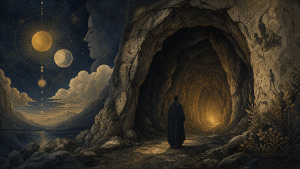
Cave
A cave in a dream may evoke concealment, shelter, descent, gestation, fear, burial, or contact with what lies outside ordinary awareness.

Bridge
A bridge in a dream may represent passage, connection, risk, separation, transition, or the practical means of moving between two conditions.

River
A river in a dream may evoke movement, time, emotion, direction, boundary, renewal, danger, or a process larger than conscious control.
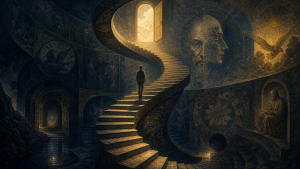
Stairs
Stairs in a dream may emphasize gradual movement between levels, effort, access, hierarchy, descent, ascent, repetition, or an interrupted transition.

Cat Dream Meaning
A cat in a dream may draw attention to autonomy, closeness, watchfulness, vulnerability, instinct, or a specific personal relationship with cats.
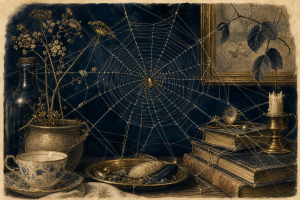
Spider Dream Meaning
A spider dream may involve creativity, patient construction, entanglement, fear, predation, attention to detail, or an ordinary encounter with spiders.
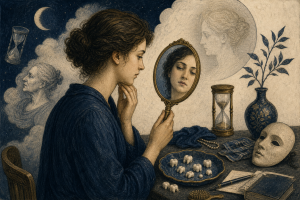
Teeth Falling Out Dream Meaning
Dreams of teeth falling out may involve appearance, speech, loss of control, aging, vulnerability, bodily sensation, or current dental concerns.
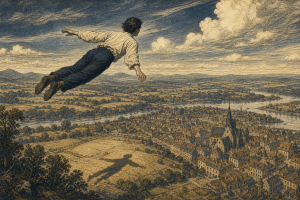
Flying Dream Meaning
Flying dreams may involve freedom, perspective, confidence, escape, inflation, instability, fear of falling, or the sensory qualities of sleep.
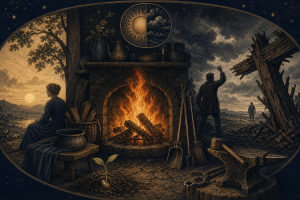
Fire Dream Meaning
Fire dreams may involve warmth, anger, danger, destruction, purification, energy, transformation, renewal, or a recent real-world concern.
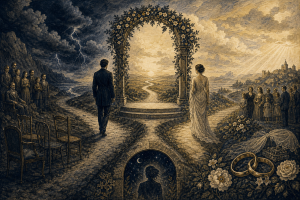
Wedding Dream Meaning
A wedding dream may concern union, commitment, transition, conflict, public expectation, identity, memory, or an actual relationship and upcoming event.

Fish Dream Meaning
Fish in dreams may involve vitality, nourishment, depth, adaptation, capture, abundance, vulnerability, spiritual imagery, or ordinary experience with water and food.
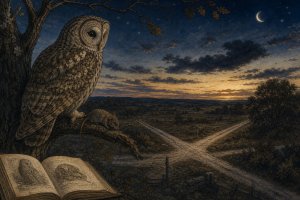
Owl Dream Meaning
An owl dream may involve perception, night awareness, vigilance, knowledge, predation, silence, fear, death imagery, or a recent encounter with birds.
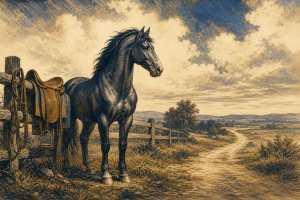
Horse Dream Meaning
A horse dream may concern vitality, movement, partnership, labor, status, control, freedom, fear, sexuality, or a specific history with horses.

Wolf Dream Meaning
A wolf dream may involve instinct, group belonging, threat, protection, isolation, pursuit, social order, wilderness, or learned cultural imagery.

Bathroom Dream Meaning
A bathroom dream may organize concerns about privacy, exposure, bodily needs, relief, cleanliness, shame, or finding an acceptable place to deal with something personal.
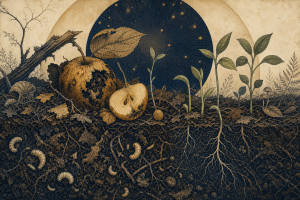
Maggots Dream Meaning
Maggots in a dream may focus attention on decay, disgust, neglected material, transformation, decomposition, contamination, or an organic process that continues outside conscious control.
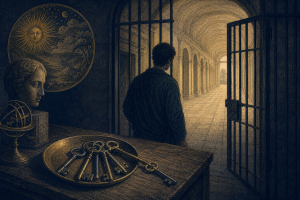
Going to Jail Dream Meaning
A jail dream may stage restriction, guilt, consequences, loss of choice, judgment, confinement, responsibility, or fear that a situation has become difficult to escape.
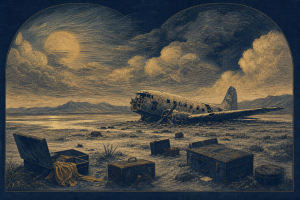
Plane Crash Dream Meaning
A plane-crash dream may dramatize disrupted plans, rapid loss of control, fear of failure, danger at a distance, an ambitious trajectory breaking down, or ordinary anxiety about travel.

Childbirth Dream Meaning
A childbirth dream may concern creation, responsibility, vulnerability, transition, labor, bodily memory, a developing project, or anxiety about an irreversible new phase.

Funeral Dream Meaning
A funeral dream may organize grief, memory, social ritual, unfinished goodbye, fear of loss, or recognition that a role, relationship, expectation, or life phase has ended.

Finding Money Dream Meaning
Finding money in a dream may raise questions about value, opportunity, ownership, resources, luck, self-worth, obligation, or the discovery of something useful that was overlooked.

Black Bear Dream Meaning
A black-bear dream may involve strength, territorial boundaries, caution, protection, appetite, solitude, maternal defense, wilderness, or fear of a powerful presence.

Partner Cheating Dream Meaning
A dream about a partner cheating may express insecurity, fear of replacement, past betrayal, emotional distance, comparison, unmet needs, or ordinary relationship anxiety without proving actual infidelity.
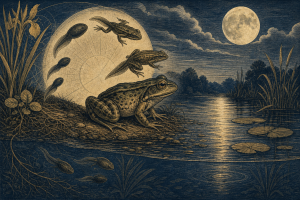
Frog Dream Meaning
A frog dream may organize themes of adaptation, transition between environments, sensitivity, sound, fertility, disgust, transformation, or attention to conditions that support life.
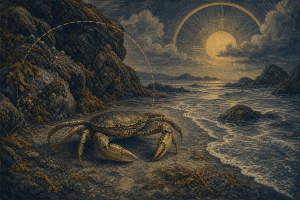
Crab Dream Meaning
A crab dream may concern protection, vulnerability beneath a hard exterior, indirect movement, defensiveness, grasping, tidal change, nourishment, or life at a boundary.

Turtle Dream Meaning
A turtle dream may involve protection, patience, pacing, withdrawal, endurance, vulnerability, home, age, or movement between water and land.
Cockroach Dream Meaning
A cockroach dream may involve disgust, persistence, contamination, neglected conditions, survival, intrusion, or a recent real-world encounter.
Tsunami Dream Meaning
A tsunami dream may involve overwhelming change, fear, helplessness, collective danger, emotional intensity, disaster imagery, or recent media exposure.
Tiger Dream Meaning
A tiger dream may concern power, beauty, predation, territoriality, fear, protection, captivity, cultural imagery, or a recent encounter with animal media.
Shoes Dream Meaning
Shoes in dreams may involve movement, readiness, identity, social presentation, protection, work, fit, loss, or an ordinary concern about clothing.
Cutting Hair Dream Meaning
A hair-cutting dream may involve appearance, identity, consent, change, control, loss, relief, ritual, or a recent real haircut or grooming concern.
Broken Glass Dream Meaning
Broken glass in a dream may involve danger, damaged boundaries, visibility, fragility, anger, cleanup, transition, or memory of an actual breakage.
Snake Bite Dream Meaning
A snake-bite dream may involve sudden threat, bodily alarm, conflict, transformation imagery, medical fear, betrayal concerns, or a recent snake-related stimulus.
Death Dream Meaning
A death dream may involve grief, fear, transition, separation, memory, identity change, health anxiety, or ordinary processing of loss and mortality.
Dream Within a Dream Meaning
A dream within a dream may involve false awakening, uncertainty, layered perspective, sleep disruption, reality checking, narrative complexity, or anxiety about being unable to wake.
Lion Dream Meaning
A lion dream may involve authority, courage, predation, pride, protection, status, family structure, captivity, or familiar cultural imagery.
Ant Dream Meaning
Ants in dreams may involve cooperation, repetitive labor, organization, intrusion, small accumulated problems, persistence, or a literal pest concern.
Crow Dream Meaning
A crow dream may involve intelligence, observation, social signaling, scavenging, death imagery, adaptation, noise, or an ordinary encounter with urban wildlife.
Train Dream Meaning
A train dream may concern direction, schedules, collective movement, missed opportunities, limited routes, transitions, work, travel, or an actual journey.
Falling Off a Cliff Dream Meaning
Falling from a cliff in a dream may involve loss of footing, risk, transition, helplessness, exhilaration, bodily sleep sensations, or fear of irreversible consequences.
Tornado Dream Meaning
A tornado dream may involve rapidly changing danger, loss of control, concentrated force, family safety, weather anxiety, conflict, or recent storm coverage.
Dog Bite Dream Meaning
A dog-bite dream may involve violated trust, defensive aggression, fear, boundaries, loyalty conflict, bodily alarm, or a real experience with dogs.
Snow Dream Meaning
Snow in dreams may involve quiet, cold, concealment, renewal, isolation, danger, play, seasonal memory, or an ordinary response to weather.
Elevator Dream Meaning
An elevator dream may involve rapid change, status, limited control, confinement, transition between levels, mechanical fear, or an ordinary building experience.
Drowning Dream Meaning
A drowning dream may involve panic, helplessness, emotional overwhelm, rescue, bodily breathing disturbance, grief, or a literal fear of water.
Blood Dream Meaning
Blood in a dream may involve injury, vitality, menstruation, kinship, sacrifice, fear, illness, violence, or a recent bodily concern.
Killer Whale Dream Meaning
A killer-whale dream may involve intelligence, family bonds, coordinated power, ocean depth, captivity, danger, awe, or recent marine media.
Keys Dream Meaning
Keys in dreams may involve access, responsibility, privacy, permission, security, solution seeking, loss, or an ordinary concern about misplaced keys.
Bee Dream Meaning
Bees in dreams may involve cooperation, labor, pollination, sweetness, danger, social organization, environmental concern, or a literal fear of stings.
Zombie Dream Meaning
A zombie dream may involve contagion fears, emotional numbness, crowd pressure, exhaustion, dehumanization, survival narratives, or recent horror media.
Bat Dream Meaning
A bat dream may involve navigation in darkness, fear, social roosting, illness associations, transformation stories, wildlife encounters, or recent media.
Ocean Dream Meaning
An ocean in a dream may evoke emotional scale, the unknown, collective life, origin, danger, freedom, or a boundary between conscious and unconscious experience.
Moon Dream Meaning
A moon in a dream may suggest changing visibility, rhythm, reflection, night consciousness, orientation, or something known indirectly.
Sun Dream Meaning
The sun in a dream may evoke consciousness, vitality, exposure, authority, clarity, heat, danger, or a powerful organizing center.
Tree Dream Meaning
A tree in a dream may represent growth, rootedness, ancestry, seasonal change, branching possibility, shelter, injury, or continuity.
Garden Dream Meaning
A garden in a dream may evoke cultivation, enclosure, care, pleasure, neglected potential, controlled nature, or a protected inner space.
Maze Dream Meaning
A maze in a dream may express disorientation, initiation, repeated choices, confinement, play, strategy, or a path toward an unknown center.
School Dream Meaning
A school in a dream may relate to evaluation, learning, social comparison, old identity, preparation, authority, or a lesson that feels unfinished.
Phone Dream Meaning
A phone in a dream may concern connection, interruption, missed communication, access, distance, identity, or dependence on a technological channel.
Baby Dream Meaning
A baby in a dream may evoke vulnerability, responsibility, new potential, dependency, neglected needs, literal family concerns, or an emerging development.
Storm Dream Meaning
A storm in a dream may represent emotional intensity, conflict, rapid change, danger, cleansing, disruption, or forces beyond conscious control.
Related Books

Man and His Symbols
Man and His Symbols is an illustrated introduction to dreams, symbols, archetypes, and individuation written by Carl Jung and four close collaborators for general readers.

Memories, Dreams, Reflections
Memories, Dreams, Reflections is a semi-autobiographical account assembled from Carl Jung's recollections, manuscripts, and conversations with editor Aniela Jaffé.

Re-Visioning Psychology
Re-Visioning Psychology is James Hillman’s foundational statement of archetypal psychology and its imaginal approach to soul, symptoms, myth, and psychological plurality.