Dream Symbol
Wolf Dream Meaning
A wolf dream may involve instinct, group belonging, threat, protection, isolation, pursuit, social order, wilderness, or learned cultural imagery.
Symbol Overview
A lone wolf, pack, pursuing animal, protective wolf, caged wolf, injured animal, or distant howl organizes different questions about relationship, boundary, fear, and belonging.
Possible Contexts
- Pack: belonging, hierarchy, cooperation, exclusion, family, or social pressure.
- Pursuit: threat, avoidance, fear, urgency, or recent media.
- Protection or guidance: trust, instinct, idealization, companionship, or borrowed story imagery.
- Caged or injured wolf: constrained vitality, care, danger management, grief, or ethical conflict.
Questions for Reflection
- Was the wolf alone or part of a pack?
- Did it cross a boundary, defend one, or remain distant?
- What was your relationship to it—prey, companion, observer, rival, caretaker?
- Which stories and cultural beliefs shape your image of wolves?
Interpretation Caution
This image has no universal meaning. Interpret the whole dream through its sequence, emotion, personal associations, culture, current circumstances, recent media, sleep conditions, and bodily experience. Treat every symbolic reading as a hypothesis—not a diagnosis, prediction, recovered memory, or fact about another person. Avoid romanticizing wolves as pure spiritual guides or reducing them to symbols of evil; both erase the animal and the dream’s actual context.
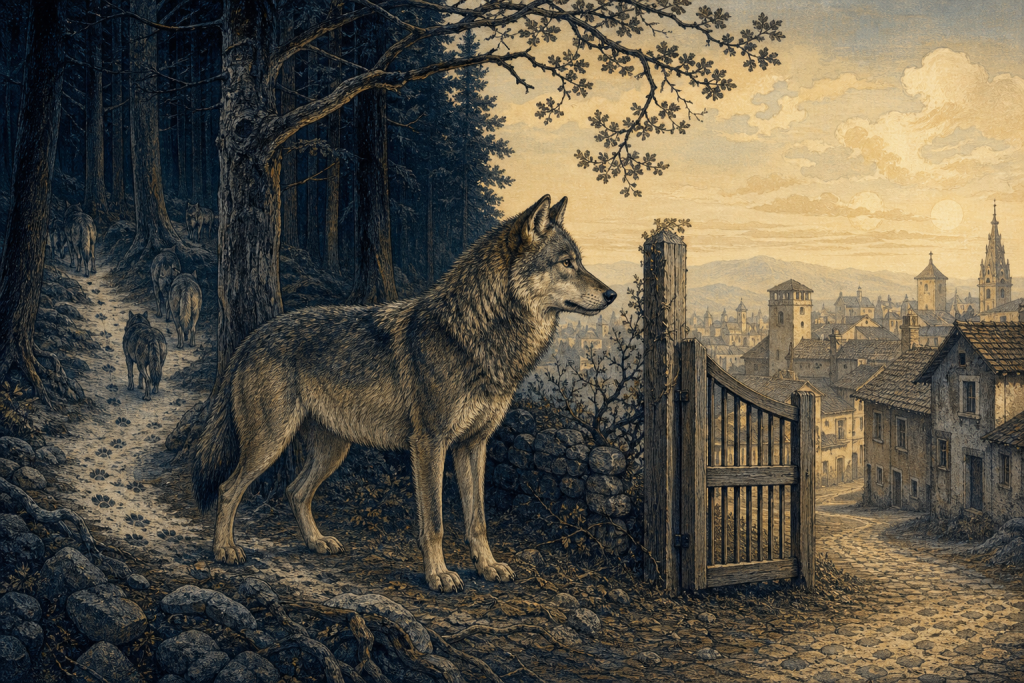
The boundary between wild and domestic
Wolf imagery often appears near forests, fences, settlements, roads, or dogs. These boundaries can raise questions about what belongs inside social order, what remains outside, and whether the dreamer experiences the boundary as protection, imprisonment, invitation, or danger.
Pack and solitary life
Popular language idealizes the “lone wolf,” but wolves are highly social animals. A solitary wolf in a dream may concern isolation, independence, exclusion, scouting, or a specific story. A pack may be supportive, coordinated, threatening, competitive, or simply present.
Fear and projection
The wolf has carried intense cultural projections. Fear may be personally appropriate, culturally learned, or amplified by folklore and media. Jungian inquiry can ask what instinctive quality is projected onto the animal without denying literal fear or treating danger as secretly benevolent.
Compare the wolf with nearby figures
Dogs, hunters, children, livestock, roads, gates, and houses can clarify the dream’s relational field. Ask what each figure needs and what action the dreamer takes. The answer is often found in the interaction rather than the animal alone.
Continue your study
Recommended Reading
Books selected because they directly develop ideas discussed on this page.
Man and His Symbols
Man and His Symbols is an illustrated introduction to dreams, symbols, archetypes, and individuation written by Carl Jung and four close collaborators for general readers.
Memories, Dreams, Reflections
Memories, Dreams, Reflections is a semi-autobiographical account assembled from Carl Jung's recollections, manuscripts, and conversations with editor Aniela Jaffé.
The Archetypes and the Collective Unconscious
The Archetypes and the Collective Unconscious collects major essays in which Carl Jung develops his accounts of archetypes, collective psychic patterns, rebirth, the mother, the child,…
Paid links. As an Amazon Associate I earn from qualifying purchases.
Related Concepts
Shadow
In Jungian psychology, the shadow is the part of the personality containing qualities, impulses, and capacities that the conscious ego does not recognize or accept as its own.
Collective Unconscious
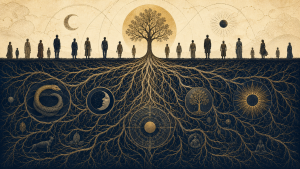
In Jungian psychology, the collective unconscious is a proposed inherited layer of the psyche expressed through universal patterns called archetypes.
Projection
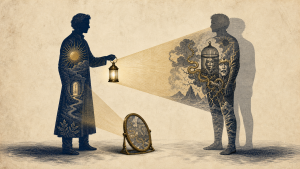
Projection is the largely unconscious process of experiencing one’s own psychological content as if it belonged primarily or entirely to another person, group, or object.
Related Practices

Jungian Dream Analysis
Jungian dream analysis explores a dream’s personal associations, structure, emotional context, and possible compensatory relationship to conscious life without using fixed symbol definitions.
Personal Association in Dream Work
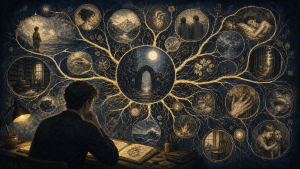
Personal association explores the dreamer’s own memories, feelings, language, culture, sensory responses, and current circumstances around a specific dream image.

Dream Journaling
Dream journaling is the practice of recording dreams promptly and preserving their sequence, atmosphere, images, emotions, and personal associations.
Related Books
Man and His Symbols
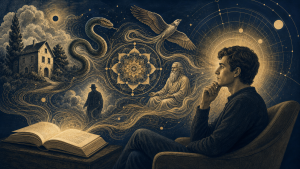
Man and His Symbols is an illustrated introduction to dreams, symbols, archetypes, and individuation written by Carl Jung and four close collaborators for general readers.

Memories, Dreams, Reflections
Memories, Dreams, Reflections is a semi-autobiographical account assembled from Carl Jung's recollections, manuscripts, and conversations with editor Aniela Jaffé.
The Archetypes and the Collective Unconscious
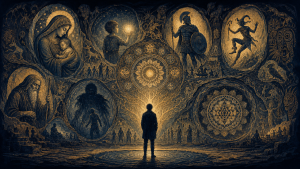
The Archetypes and the Collective Unconscious collects major essays in which Carl Jung develops his accounts of archetypes, collective psychic patterns, rebirth, the mother, the child, and individuation.