
Jungian Concept
Carl Jung’s Theory of Personality
Carl Jung’s personality theory combines psychological attitudes and functions with a broader model of ego, persona, shadow, unconscious life, and individuation.

Definition
Jung’s theory of personality describes both characteristic ways of orienting to experience and the development of the whole psyche. It includes introversion, extraversion, four psychological functions, complexes, persona, shadow, anima and animus, the Self, and individuation.
Two levels of Jung’s personality theory
The first level concerns typology: where psychological energy tends to be directed and which functions a person habitually trusts. The second concerns development: how the conscious personality relates to unconscious qualities that it has ignored, rejected, or not yet differentiated.
Attitudes and functions
Introversion and extraversion are attitudes, not rigid social categories. Thinking and feeling are rational functions because they make judgments. Sensation and intuition are irrational functions in Jung’s technical sense because they receive or perceive rather than judge.
Persona, shadow, and Self
The persona supports social adaptation but becomes restrictive when mistaken for the whole personality. The shadow contains qualities incompatible with the conscious self-image. The Self refers to the totality and organizing center of the psyche. Growth requires dialogue among these aspects, not the victory of one over all others.
Personality development
Jung called the broader developmental process individuation. It asks a person to become more differentiated, recognize projections, tolerate opposites, and assume responsibility for previously unconscious patterns. It is not a score, diagnosis, or fixed developmental ladder.
The structure of Jung’s personality theory
Carl Jung’s theory of personality combines two attitudes—introversion and extraversion—with four functions: thinking, feeling, sensation, and intuition. The model describes habitual orientations of consciousness, not permanent boxes that explain everything about a person.
The attitudes concern where psychological interest and energy tend to be directed. Extraversion emphasizes engagement with objects and the surrounding world; introversion emphasizes the subject’s inner response. Neither attitude is identical to confidence, shyness, sociability, or isolation.
The four psychological functions
- Thinking evaluates through concepts, connections, and logical judgment.
- Feeling evaluates value, acceptance, rejection, and importance. Jung did not use “feeling” as a synonym for raw emotion.
- Sensation registers what is present through concrete perception.
- Intuition perceives possibilities, patterns, implications, and emerging directions.
Jung grouped thinking and feeling as rational functions because both make judgments. Sensation and intuition are irrational functions in his technical vocabulary because they concern perception rather than judgment; “irrational” here does not mean foolish.
Dominant and less-developed functions
A person usually relies more consciously on one function while another remains comparatively undeveloped. Jung’s developmental interest lies partly in how neglected capacities appear in conflict, projection, relationships, and unconscious material. The goal is not to make every function numerically equal, but to reduce one-sidedness and build a more flexible personality.
Personality type is not destiny
Jung warned that a type description is a navigational aid, not a complete portrait. Culture, development, relationships, complexes, and circumstances shape behavior. Modern questionnaires can encourage reflection, but they should not be treated as diagnoses or excuses for avoidable behavior.
Common mistakes when applying Jung’s type theory
- Typing from one behavior: a preference cannot be inferred reliably from a single social habit.
- Confusing feeling with emotion: feeling is a value-judging function in Jung’s terminology.
- Treating the inferior function as worthless: it is less consciously differentiated, not inherently bad.
- Using type as an excuse: a preference does not remove responsibility for developing skills.
- Assuming permanent certainty: self-reports and behavior can shift with context and development.
How type relates to individuation
Type theory becomes developmentally useful when it reveals one-sided adaptation. A highly practiced function can organize work and identity while less-developed capacities appear through stress, fascination, mistakes, or projection. Individuation does not erase type, but it may make a person less captive to habitual ways of perceiving and judging.
Origin and Development
Jung presented his mature typology in Psychological Types in 1921. The type model emerged from clinical observation, intellectual disagreements, and Jung’s effort to explain why thoughtful people could interpret the same evidence in radically different ways.
Later instruments such as the Myers-Briggs Type Indicator adapted Jung’s attitudes and functions into questionnaire-based systems. Those systems should not be treated as exact reproductions of Jung’s theory.
Examples
An introverted orientation tends to give greater weight to the subject’s inner response; an extraverted orientation tends to give greater weight to the object and outer conditions. Thinking asks what follows logically, feeling evaluates worth, sensation registers concrete actuality, and intuition perceives possibilities or emerging patterns.
Common Misconceptions
- Jung did not reduce a person to one permanent four-letter code.
- Feeling in Jung’s model is evaluation, not emotional intensity.
- Introversion does not simply mean shyness, and extraversion does not simply mean sociability.
- The persona is necessary; the problem is complete identification with it.
- Individuation does not eliminate conflict or produce a perfect personality.
Continue your study
Recommended Reading
Books selected because they directly develop ideas discussed on this page.
Man and His Symbols
Man and His Symbols is an illustrated introduction to dreams, symbols, archetypes, and individuation written by Carl Jung and four close collaborators for general readers.
Aion: Researches into the Phenomenology of the Self
Aion is Jung’s advanced study of the Self, the shadow, opposites, and the religious, astrological, Gnostic, and alchemical symbols of psychological totality.
Psychological Types
Carl Jung’s foundational study of introversion, extraversion, and the psychological functions of thinking, feeling, sensation, and intuition.
Paid links. As an Amazon Associate I earn from qualifying purchases.
Related Concepts
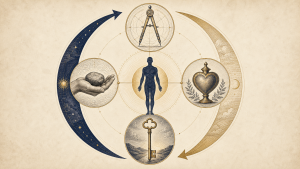
Psychological Types
Jung’s psychological types combine two attitudes—introversion and extraversion—with four functions: thinking, feeling, sensation, and intuition.

Introversion
Introversion is a Jungian attitude in which conscious energy and motivation give greater priority to the subject’s inner impressions, ideas, and standpoint.

Extraversion
Extraversion is a Jungian attitude in which conscious energy and motivation give greater priority to external people, events, objects, and shared conditions.

Thinking
Thinking is the Jungian function that evaluates experience through concepts, logical relationships, and judgments about what something means.

Feeling
Feeling is the Jungian function that evaluates experience by assigning value: acceptable or unacceptable, important or unimportant, welcomed or rejected.

Sensation
Sensation is the Jungian function that perceives immediate concrete reality through the physical senses and awareness of bodily states.

Intuition
Intuition is the Jungian function that perceives possibilities, patterns, and implications through unconscious processes rather than direct sensory evidence.
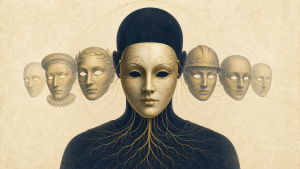
Persona
In Jungian psychology, the persona is the social identity or “mask” through which a person adapts to roles, expectations, and relationships.
Shadow
In Jungian psychology, the shadow is the part of the personality containing qualities, impulses, and capacities that the conscious ego does not recognize or accept as its own.

Self
The Self is Jung’s concept of the whole psyche—conscious and unconscious—and the archetypal principle of its organization, development, and potential integration.

Individuation
Individuation is Jung’s term for the lifelong process of becoming a more differentiated and integrated psychological whole.
Related Practices

Active Imagination
Active imagination is Jung’s method of consciously engaging emerging images, emotions, or figures through sustained attention and expression while preserving awareness and judgment.

Jungian Dream Analysis
Jungian dream analysis explores a dream’s personal associations, structure, emotional context, and possible compensatory relationship to conscious life without using fixed symbol definitions.
Related Books

Man and His Symbols
Man and His Symbols is an illustrated introduction to dreams, symbols, archetypes, and individuation written by Carl Jung and four close collaborators for general readers.

Aion: Researches into the Phenomenology of the Self
Aion is Jung’s advanced study of the Self, the shadow, opposites, and the religious, astrological, Gnostic, and alchemical symbols of psychological totality.

Psychological Types
Carl Jung’s foundational study of introversion, extraversion, and the psychological functions of thinking, feeling, sensation, and intuition.

Two Essays on Analytical Psychology
Two central essays in which Carl Jung explains the ego, personal and collective unconscious, persona, anima, and the movement toward individuation.