Jungian Concept
Carl Jung’s Philosophy
Carl Jung’s philosophy centers on psychological wholeness, symbols, opposites, meaning, and the relationship between conscious and unconscious life.
Definition
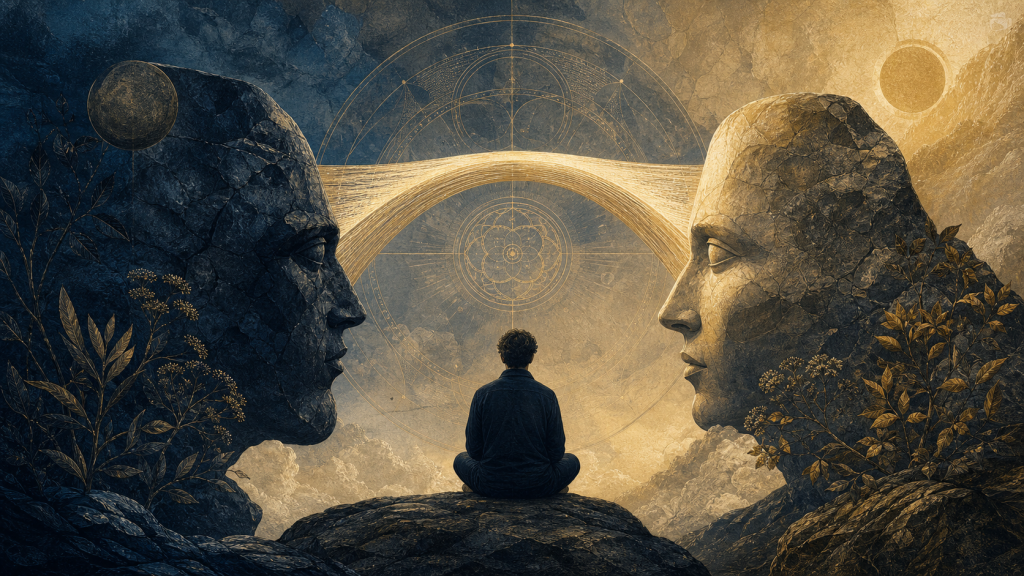
Jung did not present a single formal philosophical system. His work offers a psychological outlook in which the psyche is real in experience, symbols mediate meaning, opposites generate tension, and greater wholeness requires a continuing relationship with unconscious life.
Psyche as experienced reality
Jung argued that psychic events deserve study in their own terms. An image, belief, or dream can have real psychological effects regardless of whether its object can be demonstrated outside experience. This allowed him to study religious and mythological material without reducing it to either literal truth or meaningless error.
Opposites and transformation
Conscious positions generate excluded alternatives. When a person can hold a genuine conflict without prematurely choosing one side, a new symbolic possibility may emerge. Jung called this mediating movement the transcendent function.
Meaning and individuation
Meaning is not a pleasant story pasted over experience. In Jung’s work it develops through sustained attention to patterns, conflicts, responsibilities, and symbols. Individuation therefore involves differentiation from collective expectations while remaining answerable to relationships and society.
Science, metaphysics, and restraint
Jung sometimes used speculative language, and readers disagree about where his psychology ends and metaphysics begins. A careful account distinguishes clinical observations, interpretive hypotheses, historical comparisons, and claims that cannot be empirically tested.
Was Carl Jung a philosopher?
Carl Gustav Jung was trained as a physician and psychiatrist, not as an academic philosopher. Even so, his psychology repeatedly addresses philosophical questions: What makes a life meaningful? How should a person relate to uncertainty? What is the status of symbolic experience? Can apparently opposed values be held without prematurely choosing one side?
Calling Jung a philosopher is therefore useful only with qualification. His central claims were presented as psychology, but his work draws on Kant, Nietzsche, German Romanticism, Christianity, Gnosticism, alchemy, mythology, and comparative religion. Readers should ask whether a passage is reporting clinical observation, proposing a psychological model, interpreting a symbol, or advancing a philosophical position.
Five recurring philosophical ideas
- The psyche is not exhausted by conscious intention. Conscious identity is only part of psychological life.
- Meaning is mediated by symbols. A living symbol points beyond what a fixed definition can contain.
- Opposites require relationship. Growth often involves sustaining tension between competing claims instead of eliminating one.
- Development includes ethical responsibility. Individuation is not permission to ignore relationships or social duties.
- Certainty has limits. Jung frequently used cautious language when discussing metaphysical questions, even when his symbolic interpretations were bold.
Jung, Kant, and the limits of knowledge
Jung’s distinction between an archetype and an archetypal image partly reflects a Kantian problem: we encounter patterns through their effects and representations, not as things fully known in themselves. This does not prove every archetypal claim, but it explains why Jung treated images as historically variable expressions rather than exact photographs of universal structures.
How to read Jung philosophically
Read primary passages in context, distinguish psychological usefulness from literal truth, and compare Jung’s claims with philosophy, history, theology, and contemporary psychology. That approach preserves the richness of his questions without granting every interpretation automatic authority.
Where Jung’s philosophy is strongest—and most debatable
Jung is strongest when he describes the practical consequences of psychological one-sidedness: ignored motives return indirectly, rigid identities become fragile, and rejected qualities are projected onto other people. His symbolic method can also help readers notice assumptions that purely literal analysis overlooks.
His broader claims are more debatable. Comparisons across religions and cultures sometimes rely on sources or generalizations that later scholarship would handle differently. Archetypal explanations can become difficult to test, and psychological interpretations can overreach when they replace historical evidence. A serious reading should preserve both the generative questions and the limits of the answers.
Philosophy versus self-help
Jung’s thought is often converted into motivational phrases about becoming your “true self.” His actual model is less comfortable. Individuation includes conflict, responsibility, limits, and correction by unconscious material. It does not guarantee exceptional status, constant certainty, or freedom from social obligation.
Origin and Development
Jung drew on psychiatry, philosophy, religion, mythology, anthropology, literature, and natural science. Kant’s limits on human knowledge helped shape his distinction between psychological images and claims about ultimate reality. Nietzsche, Schopenhauer, Romanticism, Christian thought, alchemy, and Asian traditions also entered his comparative work.
Examples
Jung often approached a religious image by asking what psychological experience it expresses rather than deciding whether its theological claim is objectively true. He approached alchemical images as symbolic records of transformation and dreams as productions that may compensate for a one-sided conscious attitude.
Common Misconceptions
- Jung was not simply a philosopher, mystic, or experimental scientist.
- Psychological reality does not automatically prove metaphysical reality.
- Wholeness does not mean moral perfection or the removal of opposites.
- Meaningful interpretation still requires evidence, context, and restraint.
Continue your study
Recommended Reading
Books selected because they directly develop ideas discussed on this page.
Aion: Researches into the Phenomenology of the Self
Aion is Jung’s advanced study of the Self, the shadow, opposites, and the religious, astrological, Gnostic, and alchemical symbols of psychological totality.
The Red Book: Liber Novus
The Red Book: Liber Novus records and artistically develops Carl Jung's confrontation with inner figures and images during a formative period of his psychology.
Man and His Symbols
Man and His Symbols is an illustrated introduction to dreams, symbols, archetypes, and individuation written by Carl Jung and four close collaborators for general readers.
Paid links. As an Amazon Associate I earn from qualifying purchases.
Related Concepts
Self
The Self is Jung’s concept of the whole psyche—conscious and unconscious—and the archetypal principle of its organization, development, and potential integration.

Individuation
Individuation is Jung’s term for the lifelong process of becoming a more differentiated and integrated psychological whole.
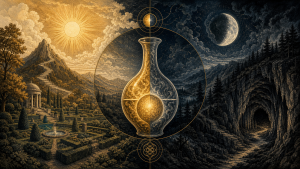
Psychological Opposites
Psychological opposites are conflicting conscious and unconscious positions whose tension can reveal one-sidedness and support development.

Transcendent Function
The transcendent function is the new psychological attitude or symbolic possibility that can emerge when conscious and unconscious positions are held in genuine dialogue.
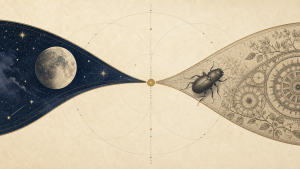
Synchronicity
Synchronicity is Jung’s term for a meaningful coincidence between an inner psychological state and an external event when no adequate causal connection is apparent.
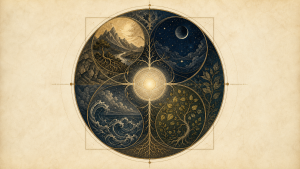
Mandala
A mandala is a centered, often circular symbolic form that Jung associated with psychic order, wholeness, containment, and the Self.
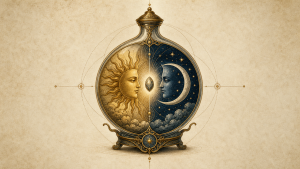
Coniunctio
Coniunctio is an alchemical image Jung used to explore the psychological union of opposites and the possibility of a new, more inclusive attitude.
Related Practices

Active Imagination
Active imagination is Jung’s method of consciously engaging emerging images, emotions, or figures through sustained attention and expression while preserving awareness and judgment.

Symbol Amplification
Symbol amplification is a Jungian method of comparing an image with mythic, religious, artistic, historical, and cultural parallels while staying anchored to personal context.
Related Books
Aion: Researches into the Phenomenology of the Self
Aion is Jung’s advanced study of the Self, the shadow, opposites, and the religious, astrological, Gnostic, and alchemical symbols of psychological totality.
The Red Book: Liber Novus
The Red Book: Liber Novus records and artistically develops Carl Jung's confrontation with inner figures and images during a formative period of his psychology.

Man and His Symbols
Man and His Symbols is an illustrated introduction to dreams, symbols, archetypes, and individuation written by Carl Jung and four close collaborators for general readers.

Memories, Dreams, Reflections
Memories, Dreams, Reflections is a semi-autobiographical account assembled from Carl Jung's recollections, manuscripts, and conversations with editor Aniela Jaffé.
Two Essays on Analytical Psychology
Two central essays in which Carl Jung explains the ego, personal and collective unconscious, persona, anima, and the movement toward individuation.