Jungian Concept
Ego
In Jungian psychology, the ego is the central complex of consciousness: the organizing “I” that experiences identity, makes choices, and adapts to inner and outer life.
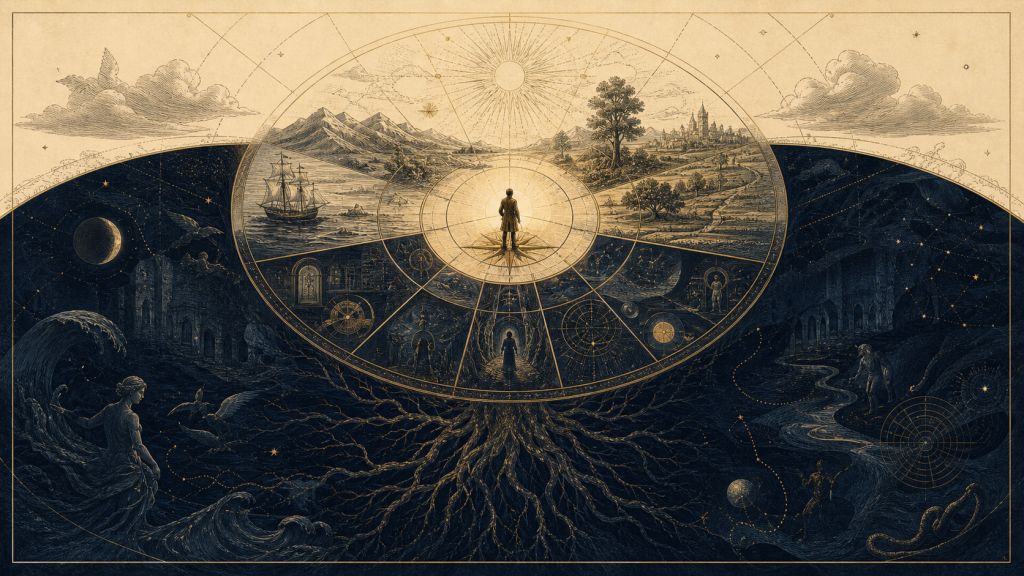
Definition
The ego is the central complex in the field of consciousness. It organizes conscious identity and supports continuity, choice, adaptation, and responsibility, but it does not encompass the whole psyche.
What Is the Ego?
In Jungian psychology, the ego is the organizing center of consciousness. It gives continuity to the experience of “I”: the person who remembers, decides, plans, evaluates, and responds to the world.
Jung called the ego a complex because it is an organized group of perceptions, memories, emotions, and attitudes rather than an independent controller standing outside the psyche. It is necessary for ordinary functioning, judgment, responsibility, and a stable sense of identity.
Ego Is Not the Same as Egotism
In everyday speech, “ego” often means vanity or self-importance. That is not its basic technical meaning. A person can have a functioning ego without being arrogant, and healthy development does not require destroying the ego.
Problems arise when ego-consciousness becomes rigid, inflated, fragmented, or identified with a single role. An ego that assumes it is the whole personality may ignore unconscious motives and compensate by projecting them onto others.
Ego and the Unconscious
The ego knows only what reaches consciousness. Forgotten experience, disowned qualities, autonomous complexes, and archetypal patterns can affect behavior without being recognized as “mine.” This is why Jung distinguished ego-knowledge from complete self-knowledge.
A capable ego can examine unconscious material without automatically obeying it or denying it. Dreams, strong emotions, and symbolic images may provide information, but conscious judgment remains responsible for deciding what to do.
Ego, Persona, and Shadow
The ego may identify with the persona, treating a social role or preferred self-image as the entire personality. Qualities that contradict that identity may then collect in the shadow.
Differentiating the ego from both persona and shadow allows greater flexibility. A person can perform a role without believing they are nothing else, and acknowledge an impulse without being compelled to act it out.
Ego and the Self
Jung distinguished the ego—the center of consciousness—from the Self, which represents the conscious and unconscious personality as a whole. The ego is therefore essential but partial.
A healthy relationship does not require the ego to disappear. It requires the ego to recognize its limits while maintaining enough stability to engage unconscious material, reality, relationships, and ethical responsibility.
Role in Individuation
During individuation, the ego gradually becomes less identified with collective expectations and more capable of relating to the wider psyche. This is not ego-centeredness. It is a movement toward a more realistic and responsible place for the conscious “I” within the whole personality.
Ego Strength vs. Ego Inflation
A strong ego can tolerate uncertainty, revise a judgment, maintain boundaries, and remain responsible during emotional pressure. Inflation looks powerful but loses proportion: correction becomes humiliation, symbolic experience becomes private authority, and dependence on others disappears from awareness. Jungian development does not aim to weaken consciousness. It asks the ego to become stable enough to relate to unconscious material without either dismissing it or claiming its power as personal greatness.
Sources and Further Reading
Origin and Development
Jung developed his account from earlier depth psychology while giving the ego a distinct place within a psyche that also includes personal and collective unconscious dimensions. Key definitions appear throughout his Collected Works, including Volumes 6, 9ii, 11, and 17.
Examples
A person may be consciously identified as calm and rational while an unrecognized complex produces disproportionate anger under criticism. The ego’s task is neither to deny the reaction nor surrender to it, but to recognize it, investigate its sources, and choose a responsible response.
Common Misconceptions
- The ego is not simply arrogance.
- Psychological growth does not require “killing” the ego.
- The ego is not identical to the persona.
- The ego is not the whole Self.
- An unconscious impulse is not automatically wiser than conscious judgment.
Continue your study
Recommended Reading
Books selected because they directly develop ideas discussed on this page.
Aion: Researches into the Phenomenology of the Self
Aion is Jung’s advanced study of the Self, the shadow, opposites, and the religious, astrological, Gnostic, and alchemical symbols of psychological totality.
The Origins and History of Consciousness
Erich Neumann’s The Origins and History of Consciousness uses mythic sequences to propose an archetypal model of ego development and the differentiation of consciousness.
Re-Visioning Psychology
Re-Visioning Psychology is James Hillman’s foundational statement of archetypal psychology and its imaginal approach to soul, symptoms, myth, and psychological plurality.
Paid links. As an Amazon Associate I earn from qualifying purchases.
Related Concepts
Shadow
In Jungian psychology, the shadow is the part of the personality containing qualities, impulses, and capacities that the conscious ego does not recognize or accept as its own.
Persona
In Jungian psychology, the persona is the social identity or “mask” through which a person adapts to roles, expectations, and relationships.

Individuation
Individuation is Jung’s term for the lifelong process of becoming a more differentiated and integrated psychological whole.

Personal Unconscious
In Jungian psychology, the personal unconscious contains experiences, perceptions, and emotionally charged material outside an individual’s present awareness.

Complex
In Jungian psychology, a complex is an emotionally charged network of associations that can temporarily influence perception, emotion, and behavior.

Self
The Self is Jung’s concept of the whole psyche—conscious and unconscious—and the archetypal principle of its organization, development, and potential integration.

Projection
Projection is the largely unconscious process of experiencing one’s own psychological content as if it belonged primarily or entirely to another person, group, or object.

Anima
Anima is Jung’s historical term for an inner feminine archetypal figure in a man, associated with feeling, relationship, imagery, and mediation between consciousness and the unconscious.

Animus
Animus is Jung’s historical term for an inner masculine archetypal figure in a woman, associated with opinion, agency, meaning, and mediation between consciousness and the unconscious.
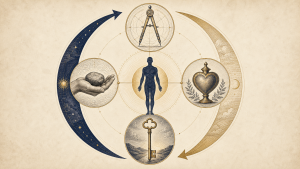
Psychological Types
Jung’s psychological types combine two attitudes—introversion and extraversion—with four functions: thinking, feeling, sensation, and intuition.

Introversion
Introversion is a Jungian attitude in which conscious energy and motivation give greater priority to the subject’s inner impressions, ideas, and standpoint.

Extraversion
Extraversion is a Jungian attitude in which conscious energy and motivation give greater priority to external people, events, objects, and shared conditions.

Psychological Opposites
Psychological opposites are conflicting conscious and unconscious positions whose tension can reveal one-sidedness and support development.

Psychological Inflation
Psychological inflation is an expanded or diminished self-estimate caused by identifying the ego with an archetype, role, group, insight, or unconscious content.

Participation Mystique
Participation mystique is a Jungian term for an unconscious state of identity in which the boundary between subject and object, self and other, is insufficiently differentiated.

Analytical Psychology
Analytical psychology, often called Jungian psychology, is Carl Jung’s approach to the psyche, unconscious life, symbols, and psychological development.
Related Archetypes

Trickster
The Trickster is an archetypal boundary-breaker whose humor, appetite, deception, mistakes, and reversals can expose rigidity while also causing real harm.

Puer Aeternus
Puer aeternus, the eternal-youth archetype, carries possibility, freedom, renewal, and imagination but becomes one-sided when potential repeatedly replaces commitment and lived experience.

Senex
The Senex archetype carries time, structure, discipline, memory, authority, limit, and responsibility; one-sided, it may harden into rigidity, control, sterility, or punitive order.

Wounded Healer
The Wounded Healer archetype holds vulnerability and the capacity to help in tension while requiring self-knowledge, competence, accountability, and clear boundaries.
Related Dream Symbols

Mirror
A mirror in a dream may concern self-recognition, appearance, identity, reversal, duplication, self-judgment, projection, or the unsettling failure to recognize oneself.

Mountain
A mountain dream may evoke challenge, perspective, endurance, isolation, boundary, permanence, sacred space, or a goal, depending on the mountain and the dreamer’s relationship to it.

Flying Dream Meaning
Flying dreams may involve freedom, perspective, confidence, escape, inflation, instability, fear of falling, or the sensory qualities of sleep.

Horse Dream Meaning
A horse dream may concern vitality, movement, partnership, labor, status, control, freedom, fear, sexuality, or a specific history with horses.
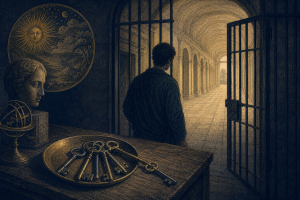
Going to Jail Dream Meaning
A jail dream may stage restriction, guilt, consequences, loss of choice, judgment, confinement, responsibility, or fear that a situation has become difficult to escape.
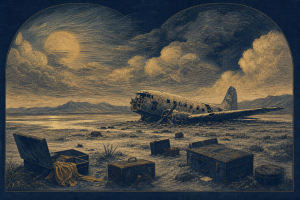
Plane Crash Dream Meaning
A plane-crash dream may dramatize disrupted plans, rapid loss of control, fear of failure, danger at a distance, an ambitious trajectory breaking down, or ordinary anxiety about travel.
Tsunami Dream Meaning
A tsunami dream may involve overwhelming change, fear, helplessness, collective danger, emotional intensity, disaster imagery, or recent media exposure.
Shoes Dream Meaning
Shoes in dreams may involve movement, readiness, identity, social presentation, protection, work, fit, loss, or an ordinary concern about clothing.
Broken Glass Dream Meaning
Broken glass in a dream may involve danger, damaged boundaries, visibility, fragility, anger, cleanup, transition, or memory of an actual breakage.
Dream Within a Dream Meaning
A dream within a dream may involve false awakening, uncertainty, layered perspective, sleep disruption, reality checking, narrative complexity, or anxiety about being unable to wake.
Ant Dream Meaning
Ants in dreams may involve cooperation, repetitive labor, organization, intrusion, small accumulated problems, persistence, or a literal pest concern.
Train Dream Meaning
A train dream may concern direction, schedules, collective movement, missed opportunities, limited routes, transitions, work, travel, or an actual journey.

Falling Off a Cliff Dream Meaning
Falling from a cliff in a dream may involve loss of footing, risk, transition, helplessness, exhilaration, bodily sleep sensations, or fear of irreversible consequences.
Tornado Dream Meaning
A tornado dream may involve rapidly changing danger, loss of control, concentrated force, family safety, weather anxiety, conflict, or recent storm coverage.
Elevator Dream Meaning
An elevator dream may involve rapid change, status, limited control, confinement, transition between levels, mechanical fear, or an ordinary building experience.
Drowning Dream Meaning
A drowning dream may involve panic, helplessness, emotional overwhelm, rescue, bodily breathing disturbance, grief, or a literal fear of water.
Keys Dream Meaning
Keys in dreams may involve access, responsibility, privacy, permission, security, solution seeking, loss, or an ordinary concern about misplaced keys.
Related Practices

Active Imagination
Active imagination is Jung’s method of consciously engaging emerging images, emotions, or figures through sustained attention and expression while preserving awareness and judgment.

Jungian Dream Analysis
Jungian dream analysis explores a dream’s personal associations, structure, emotional context, and possible compensatory relationship to conscious life without using fixed symbol definitions.
Related Books

Aion: Researches into the Phenomenology of the Self
Aion is Jung’s advanced study of the Self, the shadow, opposites, and the religious, astrological, Gnostic, and alchemical symbols of psychological totality.

The Origins and History of Consciousness
Erich Neumann’s The Origins and History of Consciousness uses mythic sequences to propose an archetypal model of ego development and the differentiation of consciousness.

Re-Visioning Psychology
Re-Visioning Psychology is James Hillman’s foundational statement of archetypal psychology and its imaginal approach to soul, symptoms, myth, and psychological plurality.

Senex & Puer
Senex & Puer collects James Hillman’s essays on the archetypal polarity between time, structure, authority, and the youthful forces of possibility, freedom, and renewal.

Ego and Archetype
Ego and Archetype is Edward F. Edinger’s influential Jungian study of individuation and the changing relationship between the conscious ego and the Self.

Anatomy of the Psyche
Anatomy of the Psyche is Edward F. Edinger’s Jungian study of Western alchemical images and operations as symbolic parallels for psychological processes and psychotherapy.

The Sacred Psyche
The Sacred Psyche is Edward F. Edinger’s psychological interpretation of the Psalms, developed from lectures and focused on their continuing significance in individual experience.

The Mystery of the Coniunctio
The Mystery of the Coniunctio is Edward F. Edinger’s compact Jungian study of alchemical union as an image of the relationship and possible integration of psychological opposites.

Encounter with the Self
Encounter with the Self is Edward F. Edinger’s Jungian commentary on William Blake’s illustrations of the Book of Job and their imagery of psychic and religious transformation.

The Creation of Consciousness
The Creation of Consciousness is Edward F. Edinger’s concise proposal for a modern Jungian worldview joining the scientific pursuit of knowledge with the religious search for meaning.

The Christian Archetype
The Christian Archetype is Edward F. Edinger’s Jungian commentary on central episodes in the life of Christ and their possible psychological significance.

Transformation of the God-Image
Transformation of the God-Image is Edinger’s Jungian elucidation of Answer to Job, developed from seminars at the C. G. Jung Institute of Los Angeles.

Science of the Soul
Science of the Soul is a posthumous collection of five Edinger essays on psychotherapy, transference, vocation, the greater personality, and Jungian psychological method.

Goethe’s Faust: Notes for a Jungian Commentary
Goethe’s Faust is Edinger’s Jungian commentary on Goethe’s drama as a psychological portrait, symbolic analytic process, and bridge to alchemy.

Melville’s Moby-Dick: An American Nekyia
Melville’s Moby-Dick is Edinger’s Jungian interpretation of Melville’s novel as an American nekyia—a descent into dangerous and transformative psychic depths.

Ego and Self: The Old Testament Prophets
Ego and Self is Edinger’s psychological commentary on the prophetic books of the Hebrew Bible, continuing the work begun in The Bible and the Psyche.

The Mysterium Lectures
The Mysterium Lectures is Edinger’s extensive chapter-by-chapter guide to Jung’s Mysterium Coniunctionis and its relevance to dreams and psychological life.

The Bible and the Psyche
The Bible and the Psyche is Edinger’s Jungian commentary on individuation symbolism in biblical books from Genesis through Esther.

The Psyche in Antiquity, Book One
The Psyche in Antiquity, Book One is Edinger’s psychological tour of early Greek philosophy from the Milesians through Plotinus.

The Psyche on Stage
The Psyche on Stage is Edinger’s Jungian study of Measure for Measure, Romeo and Juliet, Oedipus the King, and Oedipus at Colonus.
The Aion Lectures
The Aion Lectures is Edinger’s edited lecture companion to C. G. Jung’s Aion, originally delivered in Los Angeles in 1988–89.

Two Essays on Analytical Psychology
Two central essays in which Carl Jung explains the ego, personal and collective unconscious, persona, anima, and the movement toward individuation.
Related Psychologists

Carl Jung
Carl Gustav Jung was a Swiss psychiatrist who founded analytical psychology and developed influential ideas about complexes, archetypes, the collective unconscious, psychological types, and individuation.

James Hillman
James Hillman was an American post-Jungian psychologist and writer who founded archetypal psychology, an imaginal approach centered on soul, myth, plurality, and close attention to images.

Edward F. Edinger
Edward F. Edinger was an American psychiatrist, Jungian analyst, lecturer, and author who became a prominent interpreter of Jung’s work on the ego, Self, individuation, alchemy, and religious symbolism.

Sigmund Freud
Sigmund Freud was an Austrian neurologist and the founder of psychoanalysis whose work on unconscious conflict, dreams, sexuality, and transference profoundly shaped Carl Jung’s early career.