Jungian Concept
Analytical Psychology
Analytical psychology, often called Jungian psychology, is Carl Jung’s approach to the psyche, unconscious life, symbols, and psychological development.
Definition
Analytical psychology is the school of psychology founded by Carl Gustav Jung. It studies conscious and unconscious processes, complexes, symbols, dreams, archetypal patterns, and the lifelong movement toward greater psychological integration.
Why “analytical psychology” and “Jungian psychology” mean the same school
Analytical psychology is Jung’s formal name for his approach. Jungian psychology is the more familiar descriptive name. Both refer to the tradition that grew from Jung’s work, although later Jungian thinkers often disagree with one another and with Jung.
The basic map of the psyche
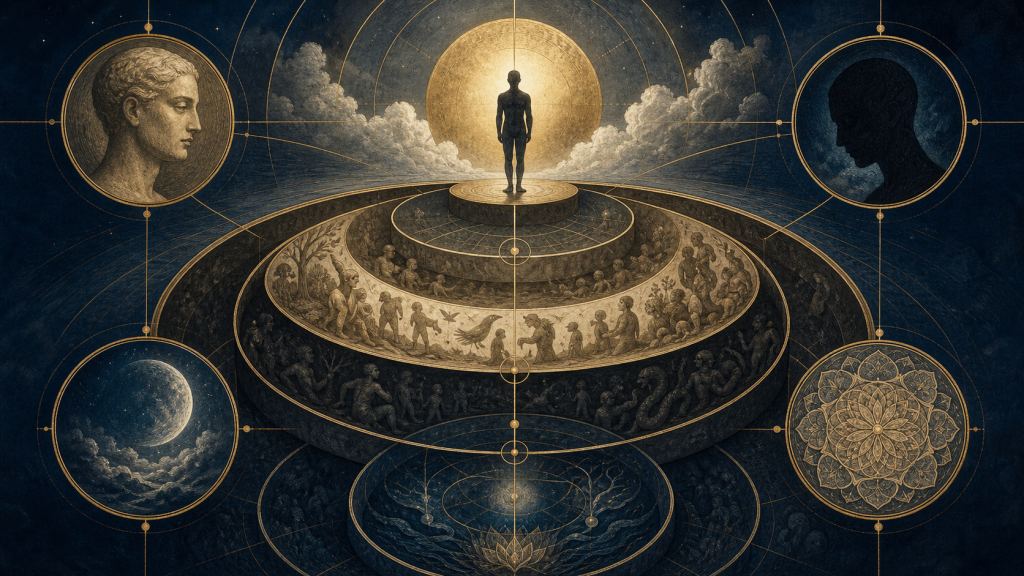
The ego organizes ordinary conscious identity. The personal unconscious includes forgotten, repressed, subliminal, and emotionally organized material shaped by individual experience. Jung proposed a collective unconscious beneath this personal layer: inherited or universal conditions that make recurring archetypal patterns possible.
The persona helps a person meet social roles. The shadow names qualities excluded from the conscious self-image. The Self represents the psyche as a whole rather than the everyday ego alone. Individuation describes the difficult, unfinished process of developing a more differentiated relationship among these parts.
How the approach works in practice
Analytical work attends to dreams, fantasies, symptoms, relationships, creative activity, and the therapeutic relationship. Interpretation is not supposed to impose a ready-made meaning. It compares personal associations with broader symbolic parallels while testing every interpretation against the person’s actual life.
What remains debated
Jung’s historical influence is substantial, but many claims are difficult to test empirically. Critics question universal archetypes, cultural generalizations, gendered formulations, and metaphysical ambiguity. Responsible study presents those limits alongside the ideas rather than treating analytical psychology as settled science.
Early Interpreters and Collaborators
The history of analytical psychology includes independent analysts, teachers, editors, and institutional organizers. Continue with Toni Wolff, Emma Jung, Jolande Jacobi, and Aniela Jaffé, or examine the major criticisms of Jung’s theories.
Origin and Development
Jung developed analytical psychology after his break with Sigmund Freud in the early twentieth century. The term distinguished his approach from Freud’s psychoanalysis and Alfred Adler’s individual psychology. Jung retained the importance of unconscious conflict but argued that unconscious life also has compensatory, creative, and prospective functions.
Later analytical psychologists revised and debated Jung’s ideas rather than preserving a single unchanged system. Contemporary schools differ in how literally they understand archetypes, how closely they connect them to biology or culture, and how they integrate developmental, relational, and clinical research.
Examples
An analytical psychologist might examine a recurring dream alongside the dreamer’s personal associations, current conflicts, emotional history, and recurring symbolic patterns. A persistent public role may be explored as a persona; an intense reaction to another person may raise questions about projection; a repeated relational pattern may be understood through a complex.
Common Misconceptions
- It is not a fixed symbol dictionary. Context and personal association matter.
- It is not identical to MBTI. Later type systems adapt only part of Jung’s model.
- Archetypes are not a canonical list of twelve characters.
- Individuation is not self-improvement or radical individualism. It concerns a more responsible relationship between conscious and unconscious life.
Continue your study
Recommended Reading
Books selected because they directly develop ideas discussed on this page.
Man and His Symbols
Man and His Symbols is an illustrated introduction to dreams, symbols, archetypes, and individuation written by Carl Jung and four close collaborators for general readers.
The Archetypes and the Collective Unconscious
The Archetypes and the Collective Unconscious collects major essays in which Carl Jung develops his accounts of archetypes, collective psychic patterns, rebirth, the mother, the child,…
Aion: Researches into the Phenomenology of the Self
Aion is Jung’s advanced study of the Self, the shadow, opposites, and the religious, astrological, Gnostic, and alchemical symbols of psychological totality.
Paid links. As an Amazon Associate I earn from qualifying purchases.
Related Concepts
Ego
In Jungian psychology, the ego is the central complex of consciousness: the organizing “I” that experiences identity, makes choices, and adapts to inner and outer life.
Personal Unconscious
In Jungian psychology, the personal unconscious contains experiences, perceptions, and emotionally charged material outside an individual’s present awareness.

Collective Unconscious
In Jungian psychology, the collective unconscious is a proposed inherited layer of the psyche expressed through universal patterns called archetypes.
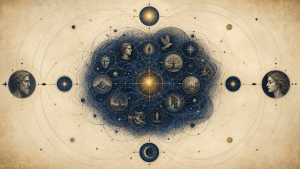
Complex
In Jungian psychology, a complex is an emotionally charged network of associations that can temporarily influence perception, emotion, and behavior.
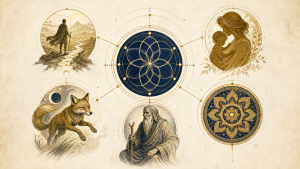
Archetype
An archetype is an inherited organizing pattern in Jung’s theory that can shape recurring forms of imagery, emotion, perception, and behavior without prescribing one fixed image.

Shadow
In Jungian psychology, the shadow is the part of the personality containing qualities, impulses, and capacities that the conscious ego does not recognize or accept as its own.
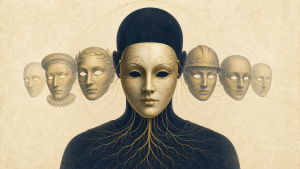
Persona
In Jungian psychology, the persona is the social identity or “mask” through which a person adapts to roles, expectations, and relationships.
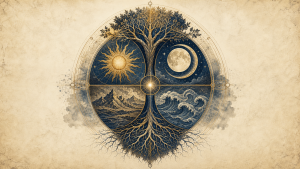
Self
The Self is Jung’s concept of the whole psyche—conscious and unconscious—and the archetypal principle of its organization, development, and potential integration.

Individuation
Individuation is Jung’s term for the lifelong process of becoming a more differentiated and integrated psychological whole.
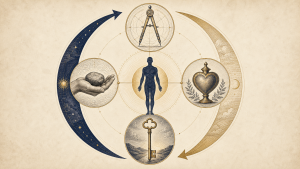
Psychological Types
Jung’s psychological types combine two attitudes—introversion and extraversion—with four functions: thinking, feeling, sensation, and intuition.
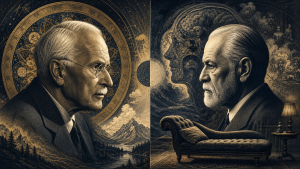
Carl Jung vs. Sigmund Freud
Carl Jung and Sigmund Freud shared an early psychoanalytic alliance but diverged over libido, religion, symbols, the unconscious, and the aims of psychological development.
Related Practices

Jungian Dream Analysis
Jungian dream analysis explores a dream’s personal associations, structure, emotional context, and possible compensatory relationship to conscious life without using fixed symbol definitions.
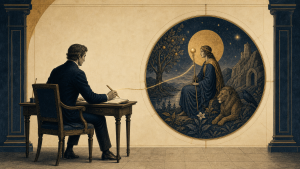
Active Imagination
Active imagination is Jung’s method of consciously engaging emerging images, emotions, or figures through sustained attention and expression while preserving awareness and judgment.
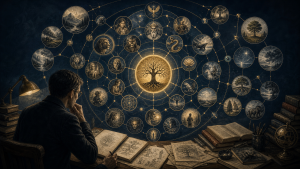
Symbol Amplification
Symbol amplification is a Jungian method of comparing an image with mythic, religious, artistic, historical, and cultural parallels while staying anchored to personal context.
Jungian Therapy
Jungian therapy is a depth-oriented form of psychotherapy that explores conscious and unconscious patterns through relationships, dreams, symbols, and personal history.
Related Books

Man and His Symbols
Man and His Symbols is an illustrated introduction to dreams, symbols, archetypes, and individuation written by Carl Jung and four close collaborators for general readers.
The Archetypes and the Collective Unconscious
The Archetypes and the Collective Unconscious collects major essays in which Carl Jung develops his accounts of archetypes, collective psychic patterns, rebirth, the mother, the child, and individuation.
Aion: Researches into the Phenomenology of the Self
Aion is Jung’s advanced study of the Self, the shadow, opposites, and the religious, astrological, Gnostic, and alchemical symbols of psychological totality.
Two Essays on Analytical Psychology
Two central essays in which Carl Jung explains the ego, personal and collective unconscious, persona, anima, and the movement toward individuation.
Related Psychologists
Carl Jung
Carl Gustav Jung was a Swiss psychiatrist who founded analytical psychology and developed influential ideas about complexes, archetypes, the collective unconscious, psychological types, and individuation.
Marie-Louise von Franz
Marie-Louise von Franz was a Swiss Jungian analyst and scholar known for her work on dreams, fairy tales, alchemy, and the process of individuation.
Edward F. Edinger
Edward F. Edinger was an American psychiatrist, Jungian analyst, lecturer, and author who became a prominent interpreter of Jung’s work on the ego, Self, individuation, alchemy, and religious symbolism.
James Hillman
James Hillman was an American post-Jungian psychologist and writer who founded archetypal psychology, an imaginal approach centered on soul, myth, plurality, and close attention to images.
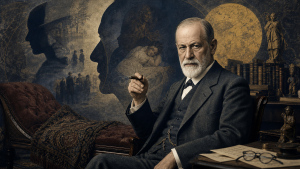
Sigmund Freud
Sigmund Freud was an Austrian neurologist and the founder of psychoanalysis whose work on unconscious conflict, dreams, sexuality, and transference profoundly shaped Carl Jung’s early career.