
Book
The Eternal Drama
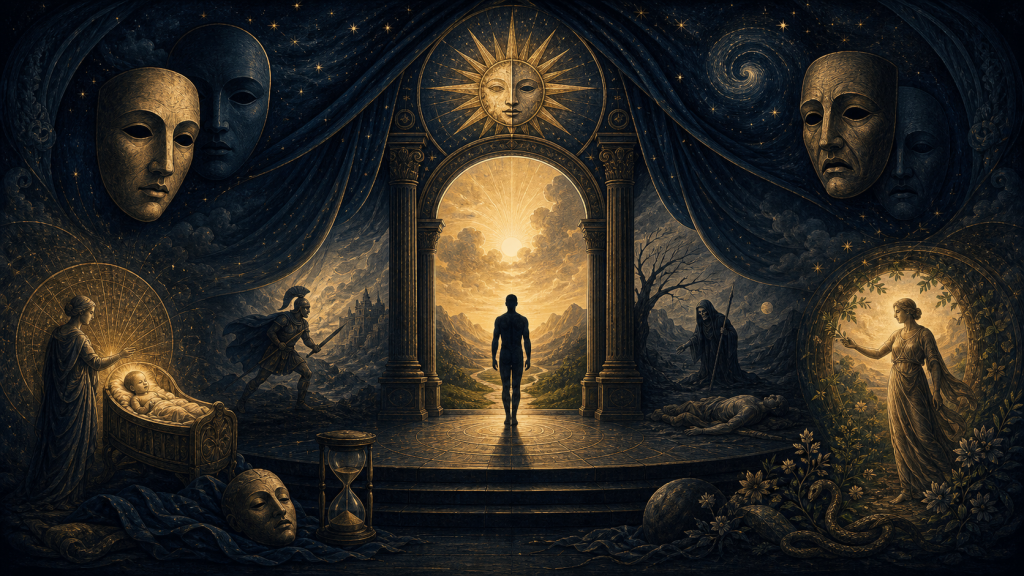
The Eternal Drama is Edward F. Edinger’s Jungian exploration of major Greek myths and divine figures as recurring images of psychological conflict, development, and transformation.
Summary
Based on lectures by Edward F. Edinger, the book surveys Greek divine figures, heroes, monsters, myths, and oracles as symbolic expressions that can illuminate recurring psychological conflicts and possibilities.
Key Topics
- Greek gods and goddesses
- Heroes and monsters
- Myth and collective imagery
- Archetypal conflict
- Transformation and descent
- Myth in modern literature and life
- Cultural limits of psychological interpretation
Reader Guidance
Intermediate. Read as a Jungian interpretation of Greek mythology, not as a substitute for classical scholarship, ancient history, archaeology, religious studies, or the diversity of Greek and Mediterranean traditions.
What Is The Eternal Drama?
The Eternal Drama: The Inner Meaning of Greek Mythology is Edward F. Edinger’s Jungian interpretation of major Greek gods, goddesses, heroes, monsters, myths, and oracles. Based on a lecture series and edited by Deborah A. Wesley, it asks why these stories continue to carry psychological force.
Edinger treats mythology as an expression of recurring patterns of imagination and conflict associated with the collective unconscious. His approach is interpretive rather than historical.
What the Book Covers
The discussion includes figures such as Zeus, Hera, Aphrodite, Apollo, Artemis, Athena, Dionysus, Heracles, Perseus, Medusa, Theseus, the Minotaur, Demeter, and Persephone. Edinger follows their stories into later literature and modern psychological life.
Each myth provides a structure through which readers can examine power, desire, rivalry, descent, sacrifice, transformation, creativity, violence, separation, and renewal.
Myth as Psychological Image
A myth is not reduced to a diagnosis or one fixed meaning. In a Jungian reading, it can function as an archetypal image that organizes tensions larger than a single personal memory.
That does not make every Greek figure a universal personality type. A psychological parallel is useful only when it clarifies a specific situation without erasing history, culture, or personal context.
Heroes, Monsters, and Conflict
Hero myths can portray the development of consciousness, confrontation with danger, and the recovery of something valuable. They can also expose conquest, pride, violence, and identification with exceptional status.
Monsters may represent feared or excluded material, but they must not automatically be equated with the Shadow. The narrative role, cultural setting, and dreamer’s associations remain essential.
Descent and Transformation
Stories such as Persephone’s descent can illuminate separation, grief, captivity, seasonal change, and return. Psychological use should never romanticize coercion or turn another person’s suffering into a convenient metaphor.
Edinger’s strongest readings preserve tension: transformation may involve loss and conflict without making harm necessary or sacred.
Using the Book with Dreams
When a Greek figure or mythic scene appears in a dream, begin with the exact dream and the dreamer’s own associations. Use Personal Association in Dream Work before consulting mythological parallels.
Symbol amplification can then compare the image with several reliable sources. The parallel is a hypothesis, not proof that the dream has one ancient meaning.
Important Cultural Limits
- Edinger’s framework represents a modern Jungian interpretation, not ancient Greek self-understanding.
- Greek religion and mythology changed across places and periods.
- Literary versions are not interchangeable with ritual, archaeology, visual art, or local cult practice.
- Psychological interpretation must not erase gender, slavery, war, colonization, class, or political power.
- A mythic parallel cannot establish facts about another person or predict events.
Who Should Read It?
The book suits readers who know basic Jungian terms and want an accessible tour through Greek myth. It is especially relevant to students of archetypes, dreams, literature, and symbolic interpretation.
Pair it with historical and classical sources. The psychological reading becomes more useful—not less—when its disciplinary boundaries are clear.
Edition and Purchase Information
The represented Shambhala paperback was published May 1, 2001, contains 224 pages, and carries ISBN 9781570626739. The exact Amazon edition was verified before publication.
Sources
Related Concepts

Individuation
Individuation is Jung’s term for the lifelong process of becoming a more differentiated and integrated psychological whole.
Collective Unconscious
In Jungian psychology, the collective unconscious is a proposed inherited layer of the psyche expressed through universal patterns called archetypes.
Complex
In Jungian psychology, a complex is an emotionally charged network of associations that can temporarily influence perception, emotion, and behavior.

Self
The Self is Jung’s concept of the whole psyche—conscious and unconscious—and the archetypal principle of its organization, development, and potential integration.
Archetype
An archetype is an inherited organizing pattern in Jung’s theory that can shape recurring forms of imagery, emotion, perception, and behavior without prescribing one fixed image.

Projection
Projection is the largely unconscious process of experiencing one’s own psychological content as if it belonged primarily or entirely to another person, group, or object.
Synchronicity
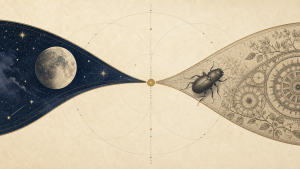
Synchronicity is Jung’s term for a meaningful coincidence between an inner psychological state and an external event when no adequate causal connection is apparent.
Psychological Opposites
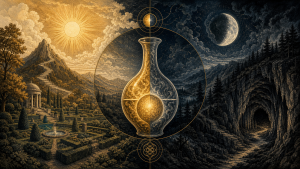
Psychological opposites are conflicting conscious and unconscious positions whose tension can reveal one-sidedness and support development.
Psychological Inflation
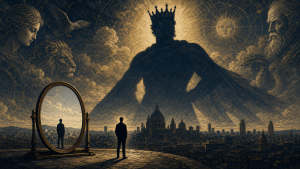
Psychological inflation is an expanded or diminished self-estimate caused by identifying the ego with an archetype, role, group, insight, or unconscious content.

Participation Mystique
Participation mystique is a Jungian term for an unconscious state of identity in which the boundary between subject and object, self and other, is insufficiently differentiated.
Related Practices

Active Imagination
Active imagination is Jung’s method of consciously engaging emerging images, emotions, or figures through sustained attention and expression while preserving awareness and judgment.

Jungian Dream Analysis
Jungian dream analysis explores a dream’s personal associations, structure, emotional context, and possible compensatory relationship to conscious life without using fixed symbol definitions.

Symbol Amplification
Symbol amplification is a Jungian method of comparing an image with mythic, religious, artistic, historical, and cultural parallels while staying anchored to personal context.

Circumambulation
Circumambulation is a Jungian method of staying close to one image while examining it repeatedly from different personal, emotional, symbolic, and practical viewpoints.
Personal Association in Dream Work
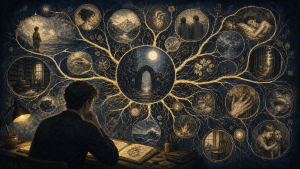
Personal association explores the dreamer’s own memories, feelings, language, culture, sensory responses, and current circumstances around a specific dream image.
Related Psychologists

Carl Jung
Carl Gustav Jung was a Swiss psychiatrist who founded analytical psychology and developed influential ideas about complexes, archetypes, the collective unconscious, psychological types, and individuation.

Edward F. Edinger
Edward F. Edinger was an American psychiatrist, Jungian analyst, lecturer, and author who became a prominent interpreter of Jung’s work on the ego, Self, individuation, alchemy, and religious symbolism.