Jungian Concept
Carl Jung, Psychology, and Alchemy
Carl Jung interpreted alchemical images as historical parallels to unconscious psychological processes, especially projection, transformation, opposites, and individuation.
Definition
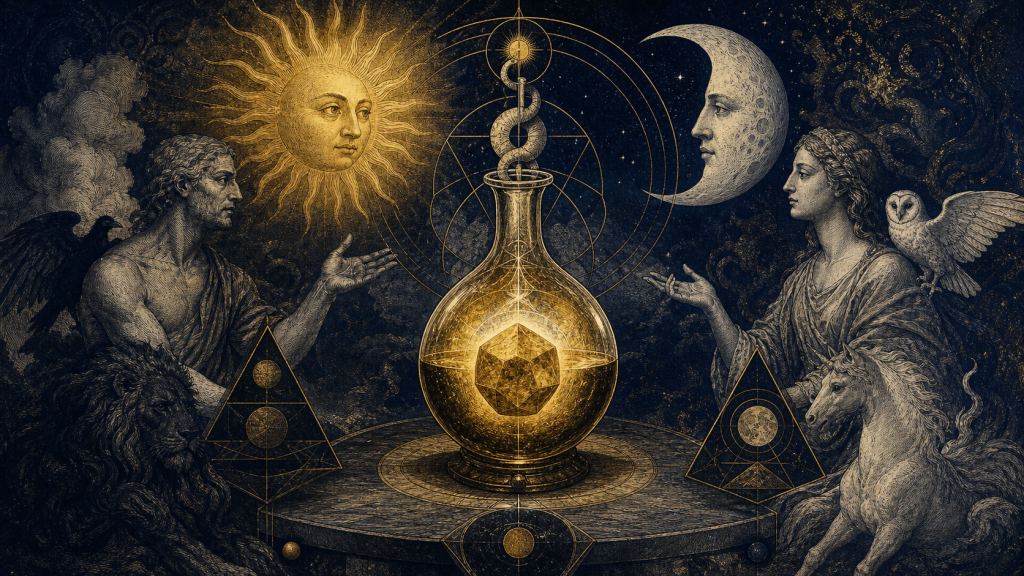
Jungian alchemy is a psychological interpretation of alchemical texts and images as symbolic records that parallel processes of unconscious projection and psychic transformation.
Why Jung turned to alchemy
Jung believed alchemical practitioners sometimes projected unconscious contents into matter and then described those encounters through chemical, religious, mythic, and visionary images. Alchemy therefore offered him a historical comparison for modern symbolic material.
Transformation, not a fixed ladder
Terms such as nigredo, albedo, and rubedo are often presented online as a neat self-help sequence. Historical sources are more varied, and Jung’s own interpretations changed across works. The images are best treated as patterns for inquiry, not guaranteed stages.
The union of opposites
The coniunctio symbolizes a union that does not erase difference. Psychologically, it can represent sustained engagement with opposed attitudes, values, functions, or identifications rather than a quick compromise.
How to read Jung on alchemy
Begin with an accessible overview, then use Psychology and Alchemy or Aion alongside historical commentary. Distinguish the original alchemical source, Jung’s interpretation, and later popular adaptations.
Origin and Development
Jung’s intensive study of Western alchemy helped him place the private imagery of The Red Book within a historical symbolic tradition. Major treatments appear in Psychology and Alchemy, Aion, and Mysterium Coniunctionis.
Examples
- The vessel as a bounded place of transformation
- Sol and Luna as symbolic opposites
- Nigredo as darkness, breakdown, or undifferentiated material
- Coniunctio as an image of difficult union
- The philosopher’s stone as an image of wholeness or value
Common Misconceptions
- Jung did not reduce historical alchemy to one psychological code.
- Alchemy is not a scientifically validated recipe for personality change.
- Symbolic stages are not a universal timetable.
- Psychological interpretation does not replace historical study.
Continue your study
Recommended Reading
Books selected because they directly develop ideas discussed on this page.
Anatomy of the Psyche
Anatomy of the Psyche is Edward F. Edinger’s Jungian study of Western alchemical images and operations as symbolic parallels for psychological processes and psychotherapy.
The Mystery of the Coniunctio
The Mystery of the Coniunctio is Edward F. Edinger’s compact Jungian study of alchemical union as an image of the relationship and possible integration of psychological…
The Mysterium Lectures
The Mysterium Lectures is Edinger’s extensive chapter-by-chapter guide to Jung’s Mysterium Coniunctionis and its relevance to dreams and psychological life.
Paid links. As an Amazon Associate I earn from qualifying purchases.
Related Concepts

Coniunctio
Coniunctio is an alchemical image Jung used to explore the psychological union of opposites and the possibility of a new, more inclusive attitude.
Psychological Opposites
Psychological opposites are conflicting conscious and unconscious positions whose tension can reveal one-sidedness and support development.

Projection
Projection is the largely unconscious process of experiencing one’s own psychological content as if it belonged primarily or entirely to another person, group, or object.

Individuation
Individuation is Jung’s term for the lifelong process of becoming a more differentiated and integrated psychological whole.
Self
The Self is Jung’s concept of the whole psyche—conscious and unconscious—and the archetypal principle of its organization, development, and potential integration.
Related Books
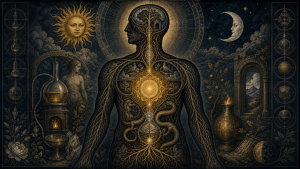
Anatomy of the Psyche
Anatomy of the Psyche is Edward F. Edinger’s Jungian study of Western alchemical images and operations as symbolic parallels for psychological processes and psychotherapy.
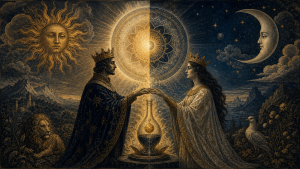
The Mystery of the Coniunctio
The Mystery of the Coniunctio is Edward F. Edinger’s compact Jungian study of alchemical union as an image of the relationship and possible integration of psychological opposites.
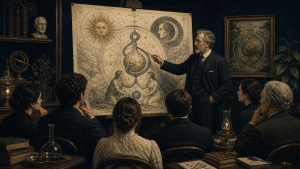
The Mysterium Lectures
The Mysterium Lectures is Edinger’s extensive chapter-by-chapter guide to Jung’s Mysterium Coniunctionis and its relevance to dreams and psychological life.
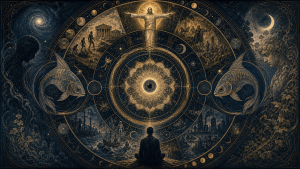
Aion: Researches into the Phenomenology of the Self
Aion is Jung’s advanced study of the Self, the shadow, opposites, and the religious, astrological, Gnostic, and alchemical symbols of psychological totality.
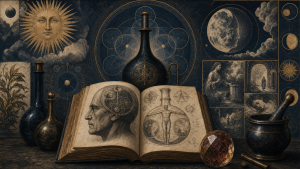
Psychology and Alchemy
Carl Jung’s major study connecting dream series, Christian symbolism, and Western alchemy with projection and the psychological process of individuation.
Related Psychologists
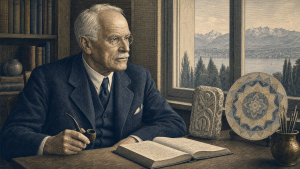
Carl Jung
Carl Gustav Jung was a Swiss psychiatrist who founded analytical psychology and developed influential ideas about complexes, archetypes, the collective unconscious, psychological types, and individuation.

Edward F. Edinger
Edward F. Edinger was an American psychiatrist, Jungian analyst, lecturer, and author who became a prominent interpreter of Jung’s work on the ego, Self, individuation, alchemy, and religious symbolism.

Marie-Louise von Franz
Marie-Louise von Franz was a Swiss Jungian analyst and scholar known for her work on dreams, fairy tales, alchemy, and the process of individuation.