Book
The Mystery of the Coniunctio
The Mystery of the Coniunctio is Edward F. Edinger’s compact Jungian study of alchemical union as an image of the relationship and possible integration of psychological opposites.
Summary
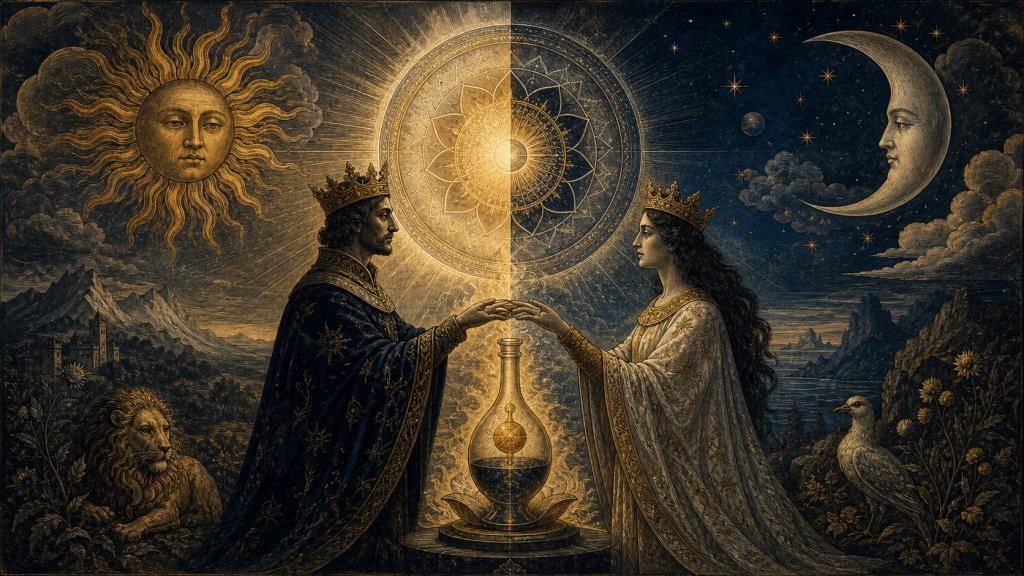
Two essays explore the coniunctio—the alchemical union of differentiated opposites—through Jung’s Mysterium Coniunctionis and images from the Rosarium Philosophorum. Edinger presents union as difficult psychological work rather than effortless harmony.
Key Topics
- Coniunctio and alchemical union
- Psychological opposites
- Ego and Self
- Individuation
- Rosarium Philosophorum
- Mysterium Coniunctionis
- Symbolic integration
Reader Guidance
Advanced. Read after a basic introduction to Jungian psychology. The alchemical material is interpretive and historically situated; it is not chemistry, a universal sequence, relationship advice, diagnosis, or proof of spiritual attainment.
What Is the Coniunctio?
The Mystery of the Coniunctio: Alchemical Image of Individuation examines one of the central images in Jung’s engagement with alchemy: the conjunction or union of differentiated opposites.
Edinger’s compact volume contains two essays and draws on Jung’s Mysterium Coniunctionis and images associated with the Rosarium Philosophorum.
Union Is Not Fusion
The coniunctio does not mean that every conflict disappears or that differences should be collapsed. Psychological integration requires distinction before relationship. Without differentiation, “union” may become confusion, dependence, conformity, or inflation.
This is why the book belongs beside the site’s guide to psychological opposites.
The Ego and the Self
Edinger connects alchemical union with changes in the relationship between the conscious ego and the larger Self. The ego is neither abolished nor made omnipotent. It must remain capable of judgment, responsibility, and ordinary life.
Coniunctio and Individuation
The subtitle identifies the coniunctio as an image of individuation. It can portray the difficult encounter between conscious attitudes and previously excluded material, including aspects associated with the Shadow.
Edinger’s image should not be turned into a fixed stage chart. Development is uneven, and symbolic intensity does not certify psychological maturity.
Images from the Rosarium
The illustrated sequence provides material for reflection on encounter, immersion, death, transformation, and renewed relation. Historical images must be identified and studied in context before they are used as psychological shorthand.
Relationship Misuses to Avoid
- Do not call an unhealthy or coercive relationship a sacred union.
- Do not use anima, animus, or coniunctio language to impose gender stereotypes.
- Do not assume conflict itself guarantees growth.
- Do not treat another person as a missing half required for wholeness.
- Do not replace consent, boundaries, and evidence with symbolic claims.
Using the Book with Dreams
Paired figures, weddings, vessels, kings and queens, death-and-rebirth scenes, or merging substances may invite comparison with coniunctio imagery. Begin with personal association, then use symbol amplification cautiously.
The parallel remains one possible interpretation, never a prediction or command.
Who Should Read It?
This is an advanced companion for readers of Jung, Edinger, analytical psychology, alchemy, and individuation. Readers seeking a broad introduction should begin with foundational concept pages before approaching the specialized imagery.
Edition Information
Inner City Books lists Title 65 as a 1994 volume of 112 pages with 48 illustrations and ISBN 9780919123670. The linked Amazon edition is ASIN 0919123678.
Sources
Related Concepts
Shadow
In Jungian psychology, the shadow is the part of the personality containing qualities, impulses, and capacities that the conscious ego does not recognize or accept as its own.

Individuation
Individuation is Jung’s term for the lifelong process of becoming a more differentiated and integrated psychological whole.

Collective Unconscious
In Jungian psychology, the collective unconscious is a proposed inherited layer of the psyche expressed through universal patterns called archetypes.
Ego
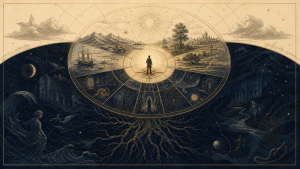
In Jungian psychology, the ego is the central complex of consciousness: the organizing “I” that experiences identity, makes choices, and adapts to inner and outer life.

Self
The Self is Jung’s concept of the whole psyche—conscious and unconscious—and the archetypal principle of its organization, development, and potential integration.
Archetype
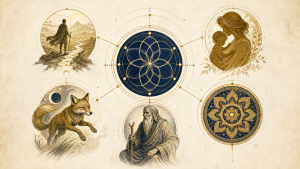
An archetype is an inherited organizing pattern in Jung’s theory that can shape recurring forms of imagery, emotion, perception, and behavior without prescribing one fixed image.

Anima
Anima is Jung’s historical term for an inner feminine archetypal figure in a man, associated with feeling, relationship, imagery, and mediation between consciousness and the unconscious.
Animus
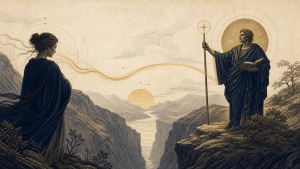
Animus is Jung’s historical term for an inner masculine archetypal figure in a woman, associated with opinion, agency, meaning, and mediation between consciousness and the unconscious.

Transcendent Function
The transcendent function is the new psychological attitude or symbolic possibility that can emerge when conscious and unconscious positions are held in genuine dialogue.
Psychological Opposites
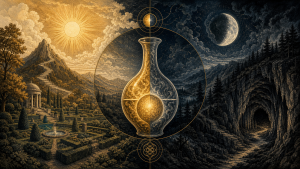
Psychological opposites are conflicting conscious and unconscious positions whose tension can reveal one-sidedness and support development.

Psychological Inflation
Psychological inflation is an expanded or diminished self-estimate caused by identifying the ego with an archetype, role, group, insight, or unconscious content.

Coniunctio
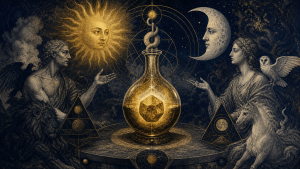
Coniunctio is an alchemical image Jung used to explore the psychological union of opposites and the possibility of a new, more inclusive attitude.
Carl Jung, Psychology, and Alchemy
Carl Jung interpreted alchemical images as historical parallels to unconscious psychological processes, especially projection, transformation, opposites, and individuation.
Related Practices

Shadow Work
Shadow work is a modern term for reflective practices that explore qualities, emotions, and patterns a person habitually rejects, hides, or fails to recognize in themselves.
Active Imagination
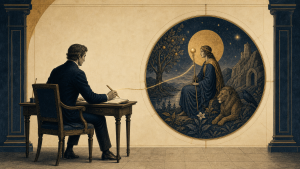
Active imagination is Jung’s method of consciously engaging emerging images, emotions, or figures through sustained attention and expression while preserving awareness and judgment.

Jungian Dream Analysis
Jungian dream analysis explores a dream’s personal associations, structure, emotional context, and possible compensatory relationship to conscious life without using fixed symbol definitions.

Symbol Amplification
Symbol amplification is a Jungian method of comparing an image with mythic, religious, artistic, historical, and cultural parallels while staying anchored to personal context.

Circumambulation
Circumambulation is a Jungian method of staying close to one image while examining it repeatedly from different personal, emotional, symbolic, and practical viewpoints.
Related Psychologists
Carl Jung
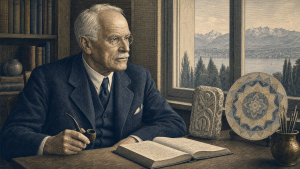
Carl Gustav Jung was a Swiss psychiatrist who founded analytical psychology and developed influential ideas about complexes, archetypes, the collective unconscious, psychological types, and individuation.

Edward F. Edinger
Edward F. Edinger was an American psychiatrist, Jungian analyst, lecturer, and author who became a prominent interpreter of Jung’s work on the ego, Self, individuation, alchemy, and religious symbolism.