
Book
Re-Visioning Psychology
Re-Visioning Psychology is James Hillman’s foundational statement of archetypal psychology and its imaginal approach to soul, symptoms, myth, and psychological plurality.

Summary
Hillman outlines an imaginal psychology through personifying, pathologizing, psychologizing, and dehumanizing. The book challenges literal, ego-centered accounts and argues for myth, image, metaphor, and soul as central psychological concerns.
Key Topics
- Archetypal psychology
- Soul-making and the poetic basis of mind
- Personifying psychic figures
- Pathologizing and the meaning of symptoms
- Psychologizing and seeing through literal claims
- Decentering the heroic ego
- Myth, image, and psychological plurality
Reader Guidance
Advanced. Read as a philosophical and imaginal reorientation of psychology, not as a diagnostic system, empirically validated treatment model, universal mythology, or reason to delay appropriate care.
What Is Re-Visioning Psychology?
Re-Visioning Psychology is James Hillman’s foundational statement of archetypal psychology. First published in 1975, the book argues that psychology should recover its connection with imagination, myth, metaphor, art, and what Hillman calls soul.
It is not a general introduction to psychology or a practical self-help manual. It is a dense, polemical work that challenges literalism, ego-centered explanations, and the assumption that psychological health means adaptation to ordinary social expectations.
The Book’s Central Proposal
Hillman proposes a “re-visioning” rather than a new technical system. He wants readers to see psychological events differently: symptoms, fantasies, dreams, emotions, and conflicts can be approached as images with their own texture and intelligence, not merely as problems to eliminate or coded messages to translate.
The book develops four broad movements—personifying, pathologizing, psychologizing, and dehumanizing—which overlap throughout the text. Together they shift attention from a single heroic ego toward a plural and imaginal psyche.
Personifying: Meeting the Figures of Psyche
Personifying means recognizing that psychic life often presents itself through figures, voices, characters, and presences. Dreams naturally do this: an unknown child, judge, animal, rival, ancestor, or guide may appear with a viewpoint different from the dreamer’s waking identity.
Hillman does not treat these figures simply as disguises for one personal cause. Attending to them can preserve the plurality of the psyche. Yet personification remains an interpretive practice; it does not prove that an image is an external being or authorize abandoning reality testing.
Pathologizing: The Meaning in Disturbance
Hillman uses pathologizing for the psyche’s capacity to suffer, imagine illness, become stuck, and generate disturbing states. He argues that psychology loses depth when it treats every symptom only as an error to erase.
This is one of the book’s most provocative ideas and one that requires careful boundaries. A symptom may carry personal and cultural meaning while also requiring assessment or treatment. Meaning does not make danger harmless, and poetic attention must never replace crisis support, medical care, protection from abuse, or evidence-based treatment.
Psychologizing: Seeing Through Literal Claims
Psychologizing is Hillman’s practice of “seeing through” a literal statement to the fantasies and images that shape it. A claim of pure objectivity, heroic independence, total control, or perfect innocence may conceal a governing myth.
This perspective is useful when it creates humility about one’s own viewpoint. It becomes unhelpful when used to dismiss facts, explain away another person’s boundaries, or pretend that every concrete problem is merely symbolic. Psychological interpretation should deepen factual understanding, not cancel it.
Dehumanizing: Decentering the Heroic Ego
Hillman’s term dehumanizing does not recommend cruelty or loss of dignity. It challenges a human-centered psychology that reduces animals, gods, landscapes, dreams, and the nonhuman world to reflections of personal needs.
He asks psychology to recognize powers and perspectives that exceed the everyday ego. This can loosen psychological inflation and widen ecological or cultural attention. The term remains deliberately unsettling and can easily be misunderstood outside its philosophical context.
Soul-Making and the Poetic Basis of Mind
For Hillman, soul is less an object than a perspective that deepens events through memory, fantasy, metaphor, mortality, and emotional resonance. Soul-making does not mean manufacturing a better personality. It means cultivating the capacity to perceive depth.
His claim that mind has a poetic basis elevates image and metaphor within psychology. It does not imply that empirical research, history, social structure, or literal accuracy are irrelevant. A responsible reader holds imaginal insight and factual accountability together.
Relationship to Jungian Psychology
The book develops themes inherited from Carl Jung: archetypes, symbolic images, mythology, dreams, and the autonomy of psychic processes. Hillman nevertheless resists making the Self the final organizing answer or treating individuation as one ascending path.
His psychology is deliberately plural. Myths and figures provide multiple perspectives rather than steps in a single hierarchy. Readers should not exaggerate the split: Hillman’s departures remain a sustained conversation with Jung’s large and internally varied body of work.
Myth, Culture, and the Risk of Universalizing
Hillman draws heavily on Greek mythology, Renaissance Platonism, poetry, and European art. These sources give his writing richness and precision within its lineage. They do not provide a universal dictionary of human experience.
Mythological comparison should retain cultural ownership, history, language, ritual function, and power differences. A Greek figure can illuminate one perspective without becoming a label imposed on every person or tradition.
Why the Book Matters
- It established a recognizable program for archetypal psychology.
- It challenged psychology to attend to images before reducing them to explanations.
- It returned myth, poetry, art, and rhetoric to psychological discussion.
- It questioned models centered exclusively on ego strength, adjustment, or personal biography.
- It widened later depth psychology toward culture, ecology, politics, and the built world.
Major Criticisms and Limitations
- Difficulty: the book assumes familiarity with psychology, mythology, philosophy, literature, and intellectual history.
- Polemical contrasts: Hillman’s rhetorical force sometimes makes opposing approaches appear narrower than they are.
- Clinical uncertainty: evocative attention to symptoms does not establish treatment effectiveness or safety.
- Cultural concentration: Greek and European materials dominate and should not be universalized.
- Empirical limits: the book offers a philosophical and imaginal orientation, not a validated scientific model.
How to Read It Well
- Read slowly and track Hillman’s key terms in their immediate context.
- Notice when an argument is metaphorical, clinical, historical, or rhetorical.
- Use symbol amplification to explore references without turning them into fixed meanings.
- Compare Hillman’s claims with Jung, contemporary psychology, and culturally grounded scholarship.
- Keep ethical, medical, and reality-based limits intact when applying imaginal ideas.
Who Should Read This Book?
This is an advanced book for readers interested in post-Jungian thought, archetypal psychology, mythology, imagination, and criticism of modern psychological assumptions. Beginners may find it easier to read the James Hillman overview and core concept pages first.
Edition Represented Here
This page represents the William Morrow Paperbacks reissue published July 10, 1997: ISBN 978-0-06-090563-7, ASIN 0060905638. Edition details and the Amazon purchase link were verified against the exact paperback listing.
Sources and Further Reading
Related Concepts
Shadow
In Jungian psychology, the shadow is the part of the personality containing qualities, impulses, and capacities that the conscious ego does not recognize or accept as its own.

Individuation
Individuation is Jung’s term for the lifelong process of becoming a more differentiated and integrated psychological whole.

Collective Unconscious
In Jungian psychology, the collective unconscious is a proposed inherited layer of the psyche expressed through universal patterns called archetypes.
Ego
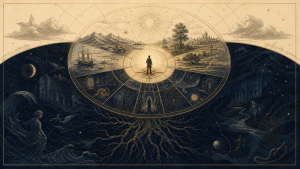
In Jungian psychology, the ego is the central complex of consciousness: the organizing “I” that experiences identity, makes choices, and adapts to inner and outer life.

Self
The Self is Jung’s concept of the whole psyche—conscious and unconscious—and the archetypal principle of its organization, development, and potential integration.

Archetype
An archetype is an inherited organizing pattern in Jung’s theory that can shape recurring forms of imagery, emotion, perception, and behavior without prescribing one fixed image.
Projection
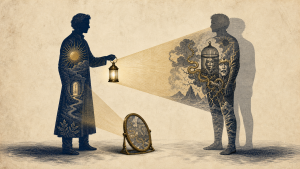
Projection is the largely unconscious process of experiencing one’s own psychological content as if it belonged primarily or entirely to another person, group, or object.

Psychological Opposites
Psychological opposites are conflicting conscious and unconscious positions whose tension can reveal one-sidedness and support development.
Related Practices

Jungian Dream Analysis
Jungian dream analysis explores a dream’s personal associations, structure, emotional context, and possible compensatory relationship to conscious life without using fixed symbol definitions.

Dream Journaling
Dream journaling is the practice of recording dreams promptly and preserving their sequence, atmosphere, images, emotions, and personal associations.

Symbol Amplification
Symbol amplification is a Jungian method of comparing an image with mythic, religious, artistic, historical, and cultural parallels while staying anchored to personal context.
Related Psychologists
Carl Jung
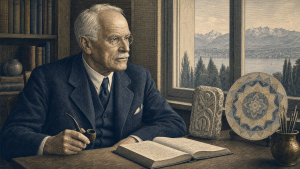
Carl Gustav Jung was a Swiss psychiatrist who founded analytical psychology and developed influential ideas about complexes, archetypes, the collective unconscious, psychological types, and individuation.

James Hillman
James Hillman was an American post-Jungian psychologist and writer who founded archetypal psychology, an imaginal approach centered on soul, myth, plurality, and close attention to images.