Dream Symbol
Bird
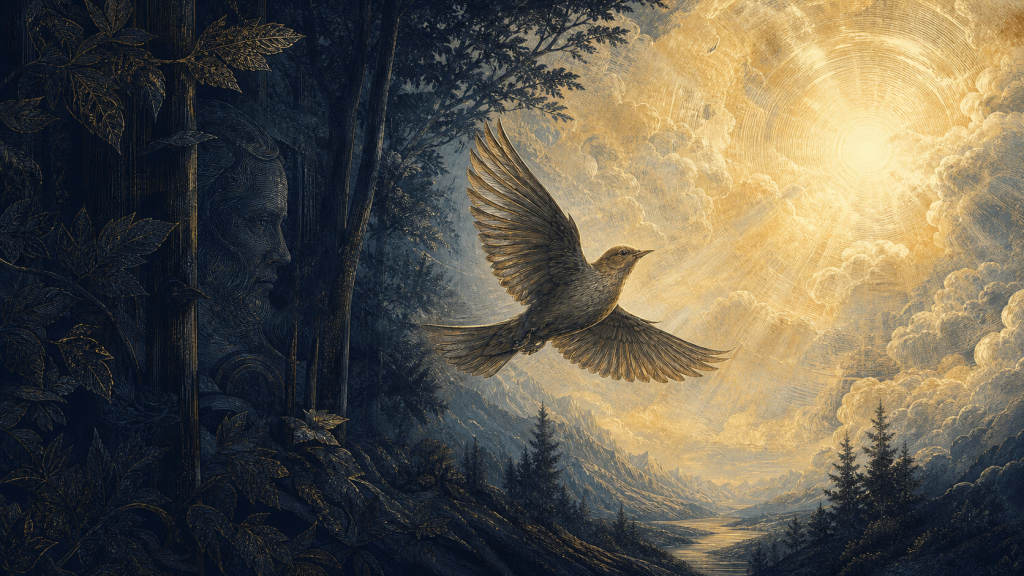
A bird in a dream may raise questions about perspective, movement, voice, care, migration, territory, vulnerability, or confinement, depending on the species and complete context.
Symbol Overview
Bird imagery is highly variable. Species, movement, sound, condition, setting, relationship, and emotional tone matter more than a generic association with freedom or spirit.
Possible Contexts
- Flight: perspective, release, escape, aspiration, instability, or distance from ordinary life.
- Song or call: expression, warning, courtship, recognition, repetition, or imitation.
- Nest or young: care, territory, vulnerability, timing, labor, or developmental transition.
- Cage: protection, restriction, dependency, safety, or a conflict about release.
- Flock or migration: belonging, collective movement, orientation, departure, return, or adaptation.
- Predation: focus, power, danger, surveillance, vulnerability, or coordinated defense.
Questions for Reflection
- What species appeared, and what do you actually know about it?
- What was the bird doing, and how did the dreamer respond?
- What personal memories, phrases, places, or recent events connect to it?
- How do ground, sky, shelter, danger, and direction function in the scene?
- What ordinary explanation and competing symbolic reading also fit?
- What remains uncertain?
Interpretation Caution
Birds do not have one universal dream meaning. A bird does not automatically signify freedom, spirituality, transformation, prophecy, death, pregnancy, travel, or success. Keep every interpretation provisional and grounded in the full dream, personal associations, species behavior, ordinary causes, and cultural context.
What Can a Bird Mean in a Dream?
A bird in a dream has no single universal meaning. The species, behavior, condition, setting, relationship to the dreamer, and emotional atmosphere all matter. A circling hawk, trapped sparrow, nesting robin, attacking crow, migrating flock, silent owl, and injured fledgling are not interchangeable images.
Birds may invite reflection on perspective, movement, voice, vulnerability, predation, migration, territory, courtship, care, confinement, or the relation between ground and sky. These are possibilities to test—not dictionary answers.
Begin With the Actual Bird
Record everything the dream provides before translating the image:
- Was the bird identifiable, unfamiliar, or fantastical?
- Was it flying, walking, swimming, nesting, hunting, singing, molting, injured, caged, or dead?
- Was it alone, paired, in a family group, or part of a flock?
- Where was it—in a room, forest, city, nest, cage, shoreline, darkness, or open sky?
- What did it do to you, and what did you do to it?
- What feeling remained: wonder, fear, grief, irritation, freedom, responsibility, or distance?
Species-specific behavior can matter. A nocturnal hunter, scavenger, seabird, songbird, domestic fowl, and long-distance migrant carry different real-world associations. Basic observation reduces the temptation to force every bird into “freedom” or “spirit.”
Flight, Height, and Perspective
Flight can suggest distance from ordinary conditions, a wider view, release, aspiration, escape, or loss of contact with the ground. The dream’s emotional tone distinguishes a liberating ascent from frightening drift, grandiosity, avoidance, or instability.
A bird that cannot land may be as important as one that cannot fly. Ask whether movement connects different places or prevents commitment to either one. This question may be especially relevant beside the Puer Aeternus pattern, but the image should not be reduced to that archetype automatically.
Song, Call, and Silence
Bird vocalization may draw attention to expression, warning, courtship, recognition, imitation, or communication across distance. The exact sound matters: melody, alarm, chatter, repetition, mimicry, or an unnatural human voice suggest different questions.
A silent bird can indicate nothing more than the dream scene itself. In context, however, silence may focus attention on withheld speech, listening, disappearance, watchfulness, or an expected message that never arrives.
Nests, Eggs, and Young Birds
A nest may involve shelter, labor, territory, reproduction, dependence, or a temporary structure built for a particular stage. It is not simply a symbol of “home.” Is the nest protected, abandoned, invaded, overcrowded, hidden, unfinished, or falling?
Eggs and fledglings can raise questions about potential, fragility, timing, care, and the risks of leaving protection. Actual birds vary greatly in nesting and fledging behavior, so personal observation and species knowledge can sharpen the reflection.
Caged, Injured, or Dead Birds
A caged bird may invite questions about protection and confinement, but the dreamer must examine who built the cage, whether the door is open, what exists outside it, and whether the bird can survive release. “Freedom” is not the only possible value.
An injured or dead bird can evoke grief, lost possibility, ecological concern, a silenced capacity, ordinary memory, or a transition in the dream’s story. It does not predict a death. Distressing images deserve emotional care without being converted into prophecy.
Flocks, Migration, and Direction
A flock can suggest coordination, social belonging, anonymity, collective movement, alarm, or many small forces acting together. Notice whether the dreamer joins, watches, follows, disrupts, or is threatened by the group.
Migration is a real biological response to changing resources, breeding conditions, daylight, and inherited or learned navigation. In a dream it may provide a useful analogy for timing, orientation, recurring departure, return, or adaptation—but only when the dream’s details support it.
Predatory Birds and Prey
Hawks, eagles, owls, and other predators may be admired, feared, pursued, mobbed, or wounded. Their hunting capacities can relate to focus and power, but also exposure, surveillance, vulnerability, and danger.
Small birds are not merely helpless. In nature, some collectively mob larger predators. A dream of many small birds driving away a large one may therefore concern coordinated defense rather than weakness.
Personal Associations Come First
Ask about lived experience before consulting symbolic traditions:
- Which birds were present in childhood, family stories, work, hobbies, losses, or meaningful places?
- Did a bird appear recently in media, conversation, travel, or waking life?
- Do you feed birds, fear them, study them, hunt them, rescue them, or barely notice them?
- Does the species name carry a personal phrase, nickname, song, team, brand, or memory?
The Personal Association Worksheet helps preserve these connections before general interpretation takes over.
Cultural Context Is Not a Universal Dictionary
Birds appear in religious practices, political emblems, art, mythology, trade, subsistence, and local ecology across many cultures. The same species may hold very different meanings in different periods and communities.
Use symbol amplification carefully: identify the exact tradition, source, historical setting, and function of an image. A cultural parallel can widen reflection; it does not prove what one person’s dream means.
Questions for Reflection
- What is the most literal description of the bird and its behavior?
- What real characteristics of this species matter in the dream?
- What changes when you imagine the scene from the bird’s perspective?
- Where are ground, sky, shelter, danger, food, and direction located?
- What does the bird permit or prevent in the dream’s sequence?
- Which interpretation best fits the whole dream, and what evidence argues against it?
Interpretation Caution
A bird dream does not automatically mean freedom, spirituality, a message from beyond, transformation, or coming news. It does not predict death, pregnancy, travel, or success. Treat every reading as a revisable hypothesis grounded in the full dream, the dreamer’s associations, ordinary influences, cultural context, and current life.
Direction, Distance, and Flock
A bird flying toward, away from, above, into, or out of confinement creates different relationships to the dreamer. Note whether it is solitary, paired, flocking, injured, nesting, hunting, or being watched. Height may involve perspective or escape, but flight can also mean migration, threat, ordinary memory, or loss of contact. Species and local cultural knowledge matter more than a generic “freedom” interpretation.
Sources and Further Reading
Continue your study
Recommended Reading
Books selected because they directly develop ideas discussed on this page.
Man and His Symbols
Man and His Symbols is an illustrated introduction to dreams, symbols, archetypes, and individuation written by Carl Jung and four close collaborators for general readers.
Memories, Dreams, Reflections
Memories, Dreams, Reflections is a semi-autobiographical account assembled from Carl Jung's recollections, manuscripts, and conversations with editor Aniela Jaffé.
Paid links. As an Amazon Associate I earn from qualifying purchases.
Related Concepts

Individuation
Individuation is Jung’s term for the lifelong process of becoming a more differentiated and integrated psychological whole.
Collective Unconscious
In Jungian psychology, the collective unconscious is a proposed inherited layer of the psyche expressed through universal patterns called archetypes.
Archetype
An archetype is an inherited organizing pattern in Jung’s theory that can shape recurring forms of imagery, emotion, perception, and behavior without prescribing one fixed image.
Projection
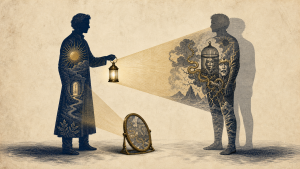
Projection is the largely unconscious process of experiencing one’s own psychological content as if it belonged primarily or entirely to another person, group, or object.

Intuition
Intuition is the Jungian function that perceives possibilities, patterns, and implications through unconscious processes rather than direct sensory evidence.

Psychological Opposites
Psychological opposites are conflicting conscious and unconscious positions whose tension can reveal one-sidedness and support development.
Related Archetypes

Hero
The Hero is an archetypal motif of confronting danger, overcoming an obstacle, and winning something that can contribute to greater consciousness or renewal.

Wise Old Person
The Wise Old Person is an archetypal guide figure associated with meaning, counsel, insight, and the danger of identifying with borrowed authority.

Child
The Child archetype represents vulnerable beginnings, unrealized potential, renewal, dependence, abandonment, and a future personality still developing.

Maiden (Kore)
The Maiden, or Kore, is an archetypal image of youth, potential, vulnerability, separation, descent, renewal, and an identity not yet fully differentiated.
Puer Aeternus
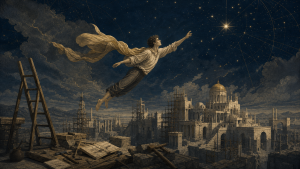
Puer aeternus, the eternal-youth archetype, carries possibility, freedom, renewal, and imagination but becomes one-sided when potential repeatedly replaces commitment and lived experience.

Senex
The Senex archetype carries time, structure, discipline, memory, authority, limit, and responsibility; one-sided, it may harden into rigidity, control, sterility, or punitive order.
Wounded Healer
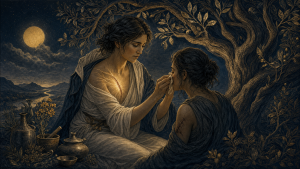
The Wounded Healer archetype holds vulnerability and the capacity to help in tension while requiring self-knowledge, competence, accountability, and clear boundaries.
Related Practices

Jungian Dream Analysis
Jungian dream analysis explores a dream’s personal associations, structure, emotional context, and possible compensatory relationship to conscious life without using fixed symbol definitions.

Dream Journaling
Dream journaling is the practice of recording dreams promptly and preserving their sequence, atmosphere, images, emotions, and personal associations.

Symbol Amplification
Symbol amplification is a Jungian method of comparing an image with mythic, religious, artistic, historical, and cultural parallels while staying anchored to personal context.

Personal Association in Dream Work
Personal association explores the dreamer’s own memories, feelings, language, culture, sensory responses, and current circumstances around a specific dream image.
Related Books

Man and His Symbols
Man and His Symbols is an illustrated introduction to dreams, symbols, archetypes, and individuation written by Carl Jung and four close collaborators for general readers.

Memories, Dreams, Reflections
Memories, Dreams, Reflections is a semi-autobiographical account assembled from Carl Jung's recollections, manuscripts, and conversations with editor Aniela Jaffé.