Archetype
Maiden (Kore)
The Maiden, or Kore, is an archetypal image of youth, potential, vulnerability, separation, descent, renewal, and an identity not yet fully differentiated.
Definition
In Jungian psychology, the Kore is an ambivalent archetypal figure associated with potential renewal and the mother–maiden polarity; its meaning depends on the person and context in which it appears.
Core Characteristics
- Youth, beginnings, and unrealized potential
- Vulnerability, receptivity, and dependence
- Separation from a mother or established identity
- Descent, transformation, return, and renewal
- Ambivalence between protection and restriction
Constructive Expression
Constructively, the Kore can symbolize openness to development, recovery of vitality, a more differentiated identity, and the capacity to enter a new stage without denying vulnerability.
Shadow Expression
- Permanent helplessness or dependence
- Idealization of purity and passivity
- Rescue fantasies and avoidance of responsibility
- Fear of experience, sexuality, anger, or agency
- Contempt for vulnerability and new beginnings
Associated Symbols
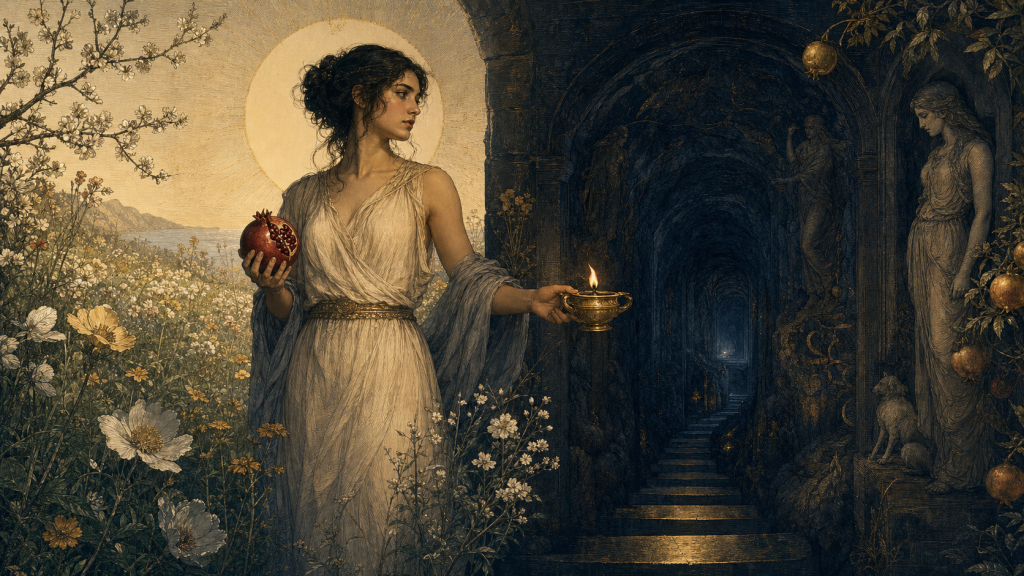
Unknown girl, daughter, bride, flower, seed, spring growth, enclosed garden, doorway, descent, return, mother–daughter pair, moon, pomegranate, torch, and underground treasure. These are possibilities, not a fixed symbol dictionary.
What Is the Maiden, or Kore, Archetype?
The Maiden archetype, which Jung discussed under the Greek name Kore, is an archetypal image of youth, potential, vulnerability, renewal, and an identity not yet fully differentiated. The Greek word kore means “maiden” or “daughter” and is associated especially with Persephone.
In analytical psychology, the Kore is not a personality type, a prescription for women, or a synonym for literal innocence. It is a symbolic figure whose meaning changes with the dream, story, relationship, culture, and person encountering it.
Mythic Background: Persephone and Demeter
The best-known Kore story belongs to the myth of Demeter and Persephone. Persephone’s movement between the upper world and the underworld brings together separation, loss, descent, return, seasonal renewal, and a transformed relationship between mother and daughter.
These themes make the figure psychologically rich, but a Jungian reading should not erase the myth’s religious, historical, or cultural specificity. “Kore” is a Greek designation before it is a modern psychological label.
How Jung Used the Kore Image
Jung treated the Kore as a recurring archetypal image rather than an inherited fixed picture. In his account, its psychological role is bipolar and depends partly on who experiences it. In a woman’s unconscious material, he associated the Kore with images of a more encompassing personality or Self. In a man’s material, he related it to aspects of the anima.
Those formulations reflect Jung’s historical gender model. They can be studied without assuming that every contemporary person’s inner life follows a male/female binary. The more durable questions concern potential, dependence, separation, renewal, vulnerability, and the development of a more distinct identity.
The Mother–Maiden Polarity
The Kore frequently appears in a mother–daughter or mother–maiden pattern. Psychologically, this can express tension between belonging and separation, protection and restriction, continuity and change, or an established identity and an emerging one.
The polarity is not a verdict about someone’s actual mother. A dream figure may draw on personal family history, an archetypal pattern, current circumstances, cultural stories, or several layers at once. Personal associations must come before a universal interpretation.
Constructive Expressions
- Potential: openness to a life direction that has not yet taken final form.
- Renewal: return of vitality after stagnation, grief, or psychological descent.
- Receptivity: willingness to encounter an unfamiliar feeling, relationship, or inner image.
- Differentiation: movement from an inherited role toward a more conscious identity.
- Continuity through change: the capacity to preserve connection while entering a new stage of life.
Shadow and Distorted Expressions
Every archetypal image is ambivalent. The Maiden can be idealized into permanent purity, passivity, helplessness, or exemption from adult responsibility. It may also appear through fantasies of rescue, fear of ordinary experience, dependence on approval, or refusal to recognize anger, sexuality, agency, and consequence.
The opposite distortion is cynical contempt for vulnerability or beginnings. Treating tenderness, uncertainty, or inexperience as weakness can repress the very capacity for renewal that the figure may represent.
Common Images and Motifs
Possible Kore-related imagery includes a young woman or unknown girl, daughter, bride, flower, seed, spring growth, enclosed garden, threshold, doorway, descent, abduction, return, paired mother and daughter, moon, pomegranate, torch, or a treasure found below ground.
No object proves that the Kore archetype is present. A flower may refer to a remembered garden; a daughter may represent an actual relationship; a descent may reflect depression, travel, illness, fear, or a story encountered recently. Context decides which possibilities deserve attention.
Working With the Image in Dreams
- Describe the figure and events without interpreting them.
- Record your personal associations with age, daughterhood, beginnings, dependence, and separation.
- Notice who protects, controls, threatens, accompanies, or abandons the figure.
- Ask what is emerging and what has not yet developed enough to stand alone.
- Compare at least two interpretations, including an ordinary personal explanation.
- Revisit the image if it returns rather than forcing a final meaning from one dream.
Questions for Reflection
- What new possibility appears vulnerable, unformed, or dependent?
- Where is protection helping development, and where might it prevent separation?
- What does the figure want, refuse, fear, or choose?
- Does the story move toward descent, return, differentiation, or repetition?
- What personal or cultural assumptions am I placing on youth and femininity?
- What evidence would challenge my first interpretation?
Agency Beyond Innocence
Kore imagery should not confine a person to purity, passivity, youth, or permanent daughterhood. In myth and psychological interpretation, descent, separation, choice, sexuality, grief, power, and return may complicate the maiden image. Ask how the figure’s agency changes across the story and who controls the transition. The archetype is most useful when it reveals development rather than idealizing dependence or innocence.
Sources and Further Reading
- C. G. Jung, “The Psychological Aspects of the Kore,” collected in The Archetypes and the Collective Unconscious.
- Daryl Sharp, Jung Lexicon: Kore.
- Abstracts of the Collected Works of C. G. Jung, summary of “The Psychological Aspects of the Kore.”
Continue your study
Recommended Reading
Books selected because they directly develop ideas discussed on this page.
Man and His Symbols
Man and His Symbols is an illustrated introduction to dreams, symbols, archetypes, and individuation written by Carl Jung and four close collaborators for general readers.
The Archetypes and the Collective Unconscious
The Archetypes and the Collective Unconscious collects major essays in which Carl Jung develops his accounts of archetypes, collective psychic patterns, rebirth, the mother, the child,…
Paid links. As an Amazon Associate I earn from qualifying purchases.
Related Concepts
Shadow
In Jungian psychology, the shadow is the part of the personality containing qualities, impulses, and capacities that the conscious ego does not recognize or accept as its own.

Individuation
Individuation is Jung’s term for the lifelong process of becoming a more differentiated and integrated psychological whole.
Collective Unconscious
In Jungian psychology, the collective unconscious is a proposed inherited layer of the psyche expressed through universal patterns called archetypes.
Self
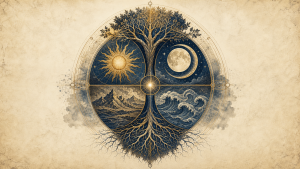
The Self is Jung’s concept of the whole psyche—conscious and unconscious—and the archetypal principle of its organization, development, and potential integration.
Archetype
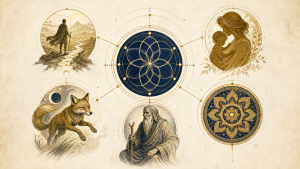
An archetype is an inherited organizing pattern in Jung’s theory that can shape recurring forms of imagery, emotion, perception, and behavior without prescribing one fixed image.
Anima
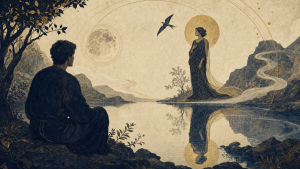
Anima is Jung’s historical term for an inner feminine archetypal figure in a man, associated with feeling, relationship, imagery, and mediation between consciousness and the unconscious.
Psychological Opposites
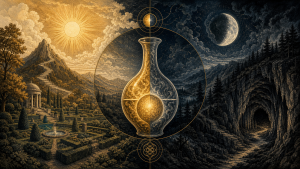
Psychological opposites are conflicting conscious and unconscious positions whose tension can reveal one-sidedness and support development.
Related Dream Symbols
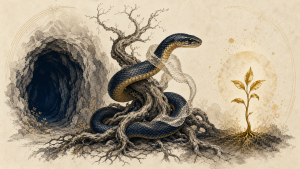
Snake
A snake in a dream can evoke danger, instinct, transformation, healing, sexuality, wisdom, or something unfamiliar—but its meaning depends on the dream’s details and the dreamer’s associations.

Water
Water in a dream may relate to emotion, bodily life, the unconscious, renewal, danger, depth, or overwhelming experience, depending on its form and context.

Forest
A forest in a dream may suggest an unfamiliar psychological territory, instinctive life, concealment, danger, refuge, disorientation, or a path of discovery.

Door
A door in a dream may suggest access, exclusion, transition, opportunity, secrecy, protection, choice, or a boundary between psychological situations.

Bird
A bird in a dream may raise questions about perspective, movement, voice, care, migration, territory, vulnerability, or confinement, depending on the species and complete context.
Related Practices

Active Imagination
Active imagination is Jung’s method of consciously engaging emerging images, emotions, or figures through sustained attention and expression while preserving awareness and judgment.

Jungian Dream Analysis
Jungian dream analysis explores a dream’s personal associations, structure, emotional context, and possible compensatory relationship to conscious life without using fixed symbol definitions.

Symbol Amplification
Symbol amplification is a Jungian method of comparing an image with mythic, religious, artistic, historical, and cultural parallels while staying anchored to personal context.
Personal Association in Dream Work
Personal association explores the dreamer’s own memories, feelings, language, culture, sensory responses, and current circumstances around a specific dream image.
Related Books

Man and His Symbols
Man and His Symbols is an illustrated introduction to dreams, symbols, archetypes, and individuation written by Carl Jung and four close collaborators for general readers.

The Archetypes and the Collective Unconscious
The Archetypes and the Collective Unconscious collects major essays in which Carl Jung develops his accounts of archetypes, collective psychic patterns, rebirth, the mother, the child, and individuation.
Related Psychologists

Carl Jung
Carl Gustav Jung was a Swiss psychiatrist who founded analytical psychology and developed influential ideas about complexes, archetypes, the collective unconscious, psychological types, and individuation.

Marie-Louise von Franz
Marie-Louise von Franz was a Swiss Jungian analyst and scholar known for her work on dreams, fairy tales, alchemy, and the process of individuation.