Archetype
Hero
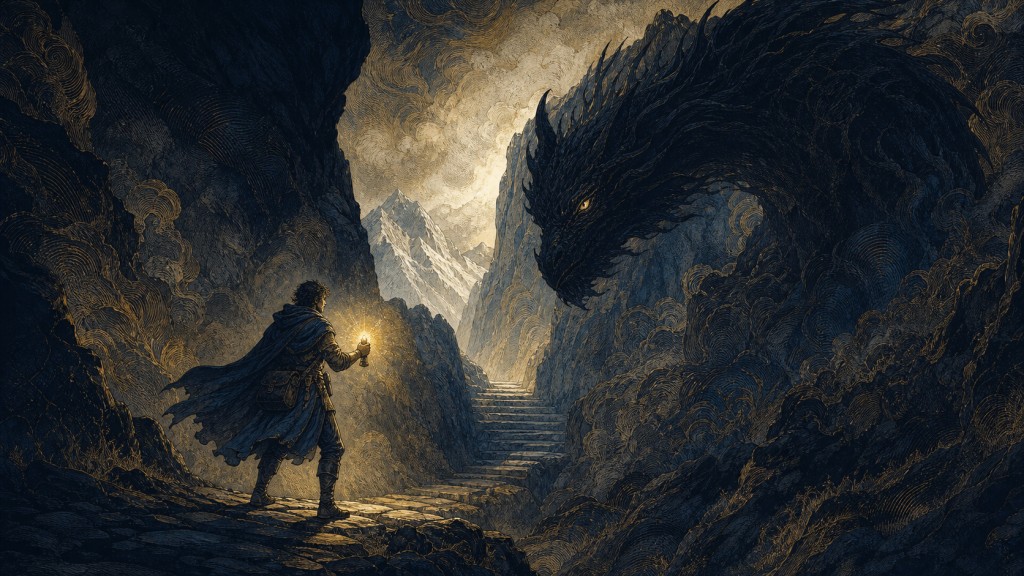
The Hero is an archetypal motif of confronting danger, overcoming an obstacle, and winning something that can contribute to greater consciousness or renewal.
Definition
An archetypal motif in which a figure confronts danger or darkness, undergoes trials, and seeks a valued outcome. Psychologically, it may represent the emergence of agency and consciousness, but it can also become inflated or destructive.
Core Characteristics
- Departure from a familiar or protected position
- Trials, conflict, danger, or confrontation with an opponent
- Development of courage, skill, endurance, or judgment
- A sought treasure, rescue, insight, reconciliation, or renewal
- The possibility of returning with something valuable for others
- Vulnerability to pride, inflation, violence, and compulsive conquest
Constructive Expression
The constructive Hero faces what has been avoided and accepts the discipline required by a real task. This expression includes courage without denial of fear, strength without contempt, and achievement connected to responsibility.
Shadow Expression
The shadow expression includes reckless risk, domination, savior fantasies, addiction to conflict, inability to accept limits, and the belief that personal conviction guarantees moral correctness. Identification with the Hero can conceal dependency, grief, shame, or fear.
Associated Symbols
Recurring motifs include a journey, threshold, wilderness, mountain, descent, monster or dragon, weapon, wound, helper, treasure, rescue, death-and-return, and homecoming. These motifs are culturally variable and must be interpreted in context.
What Is the Hero Archetype?
In Jungian psychology, the Hero is an archetypal motif organized around struggle, courage, separation, transformation, and the effort to overcome a threatening force. Hero stories appear in many cultures, but the characters and values through which the pattern is expressed vary widely.
The hero is not simply a brave personality type. It is a recurring symbolic pattern that may appear in myths, dreams, stories, fantasies, and periods of psychological change. Jung interpreted the hero’s contest with darkness or a monster as an image of emerging consciousness confronting forces that had remained unconscious.
The Basic Pattern
A hero narrative often begins when ordinary life is disrupted. The protagonist leaves familiar ground, faces trials, receives assistance, confronts a powerful opponent, and seeks a treasure, rescue, reconciliation, or return. These elements are not a mandatory formula. They are recurring motifs whose meaning depends on the story, culture, and individual context.
Psychologically, the “treasure” may represent a capacity, feeling, insight, or possibility that conscious identity has not yet integrated. The monster may symbolize fear, dependency, destructive power, or another obstacle—but no image has one fixed interpretation.
Hero and Individuation
The Hero can symbolize part of the movement toward individuation. Meeting an obstacle may require the ego to separate from passive conformity, tolerate uncertainty, and develop a more individual standpoint. Hero imagery can therefore accompany genuine growth in courage and agency.
The heroic pattern is not the whole of individuation. A person who identifies only with conquest, achievement, or exceptionalism may avoid vulnerability, relationship, grief, limitation, and dependence. Later development may require surrendering the fantasy that every psychological problem can be defeated through willpower.
Constructive Expression
Constructively expressed, the Hero supports perseverance, disciplined effort, protection of what matters, and willingness to face a difficult truth. It can help someone leave an outgrown role, confront injustice, endure training, or accept responsibility during a crisis.
The pattern becomes more mature when courage serves something beyond admiration for the hero. Returning with knowledge, accepting accountability, and using strength in service of community are as important as winning the battle.
Shadow and Inflation
Every archetypal pattern has destructive possibilities. Heroic energy may become recklessness, domination, compulsive competition, contempt for weakness, or an endless need for enemies. A person can become inflated—mistaking identification with a powerful archetypal image for personal greatness or moral certainty.
Hero worship can also transfer responsibility to an idealized leader. Jung’s own reflections on the Hero warned of the danger of being possessed by heroic ambition. A useful reading therefore asks not only, “What must be overcome?” but also, “What does this heroic identity prevent us from seeing?”
Gender and Culture
The Hero is not limited to men, warriors, or Western adventure stories. People of any gender may encounter heroic themes, and cultures express courage, sacrifice, service, survival, and transformation in different ways. Older Jungian writing sometimes used gendered assumptions that should not be treated as universal psychology.
Return, Repair, and Accountability
A heroic victory is psychologically incomplete when it ends with conquest. What happens after the ordeal—returning, repairing harm, sharing knowledge, accepting limitation, and restoring relationship—tests whether courage has matured. Some stories expose the hero’s failure to return or the community’s refusal to receive what changed. In personal reflection, ask what responsibility follows the breakthrough and who must live with its consequences.
Sources and Further Reading
Continue your study
Recommended Reading
Books selected because they directly develop ideas discussed on this page.
Aion: Researches into the Phenomenology of the Self
Aion is Jung’s advanced study of the Self, the shadow, opposites, and the religious, astrological, Gnostic, and alchemical symbols of psychological totality.
Man and His Symbols
Man and His Symbols is an illustrated introduction to dreams, symbols, archetypes, and individuation written by Carl Jung and four close collaborators for general readers.
The Origins and History of Consciousness
Erich Neumann’s The Origins and History of Consciousness uses mythic sequences to propose an archetypal model of ego development and the differentiation of consciousness.
Paid links. As an Amazon Associate I earn from qualifying purchases.
Related Concepts
Shadow
In Jungian psychology, the shadow is the part of the personality containing qualities, impulses, and capacities that the conscious ego does not recognize or accept as its own.
Individuation
Individuation is Jung’s term for the lifelong process of becoming a more differentiated and integrated psychological whole.
Collective Unconscious
In Jungian psychology, the collective unconscious is a proposed inherited layer of the psyche expressed through universal patterns called archetypes.
Self
The Self is Jung’s concept of the whole psyche—conscious and unconscious—and the archetypal principle of its organization, development, and potential integration.
Archetype
An archetype is an inherited organizing pattern in Jung’s theory that can shape recurring forms of imagery, emotion, perception, and behavior without prescribing one fixed image.
Participation Mystique
Participation mystique is a Jungian term for an unconscious state of identity in which the boundary between subject and object, self and other, is insufficiently differentiated.
Psychic Energy
Psychic energy, often called libido by Jung, is a conceptual way of describing the intensity, direction, and movement of psychological interest and desire.
Did Carl Jung Define 12 Archetypes?
Carl Jung did not establish a canonical list of twelve personality archetypes; the popular twelve-archetype model is a later simplification.
Related Dream Symbols
Snake
A snake in a dream can evoke danger, instinct, transformation, healing, sexuality, wisdom, or something unfamiliar—but its meaning depends on the dream’s details and the dreamer’s associations.

Mirror
A mirror in a dream may concern self-recognition, appearance, identity, reversal, duplication, self-judgment, projection, or the unsettling failure to recognize oneself.

Bird
A bird in a dream may raise questions about perspective, movement, voice, care, migration, territory, vulnerability, or confinement, depending on the species and complete context.

Mountain
A mountain dream may evoke challenge, perspective, endurance, isolation, boundary, permanence, sacred space, or a goal, depending on the mountain and the dreamer’s relationship to it.
Cave
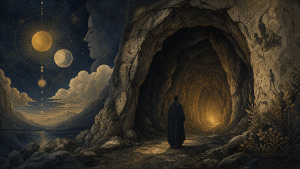
A cave in a dream may evoke concealment, shelter, descent, gestation, fear, burial, or contact with what lies outside ordinary awareness.
Bridge
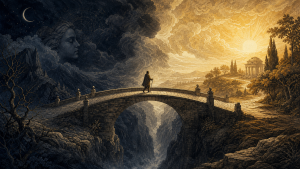
A bridge in a dream may represent passage, connection, risk, separation, transition, or the practical means of moving between two conditions.

River
A river in a dream may evoke movement, time, emotion, direction, boundary, renewal, danger, or a process larger than conscious control.
Stairs
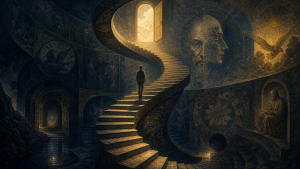
Stairs in a dream may emphasize gradual movement between levels, effort, access, hierarchy, descent, ascent, repetition, or an interrupted transition.
Related Practices

Shadow Work
Shadow work is a modern term for reflective practices that explore qualities, emotions, and patterns a person habitually rejects, hides, or fails to recognize in themselves.
Active Imagination
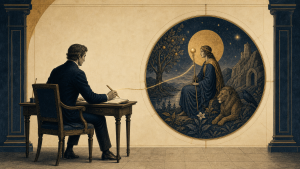
Active imagination is Jung’s method of consciously engaging emerging images, emotions, or figures through sustained attention and expression while preserving awareness and judgment.

Jungian Dream Analysis
Jungian dream analysis explores a dream’s personal associations, structure, emotional context, and possible compensatory relationship to conscious life without using fixed symbol definitions.
Related Books
Aion: Researches into the Phenomenology of the Self
Aion is Jung’s advanced study of the Self, the shadow, opposites, and the religious, astrological, Gnostic, and alchemical symbols of psychological totality.
Man and His Symbols
Man and His Symbols is an illustrated introduction to dreams, symbols, archetypes, and individuation written by Carl Jung and four close collaborators for general readers.
The Origins and History of Consciousness
Erich Neumann’s The Origins and History of Consciousness uses mythic sequences to propose an archetypal model of ego development and the differentiation of consciousness.