Dream Symbol
Snake
A snake in a dream can evoke danger, instinct, transformation, healing, sexuality, wisdom, or something unfamiliar—but its meaning depends on the dream’s details and the dreamer’s associations.
Symbol Overview
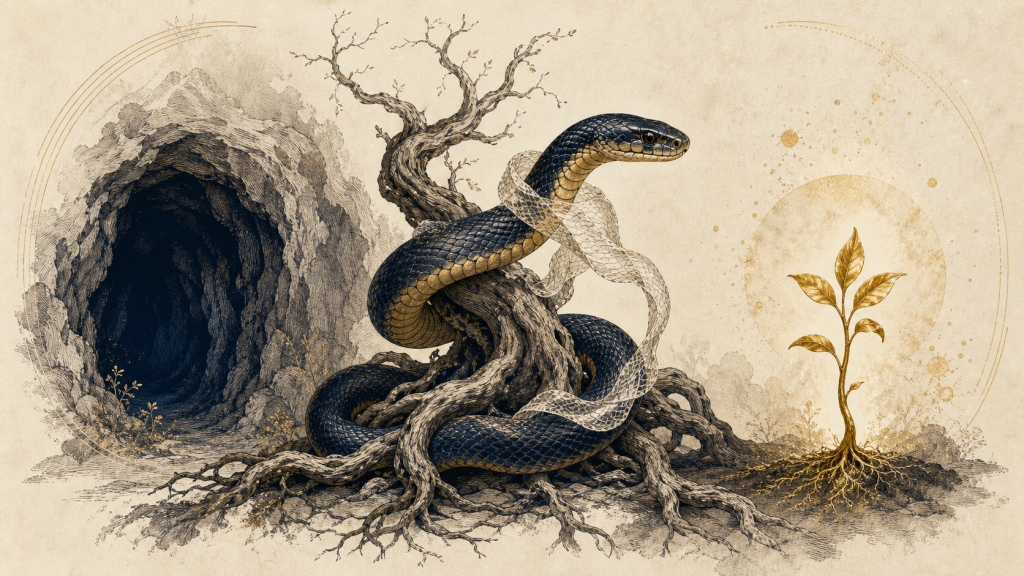
Snake imagery can be associated with danger, instinct, transformation, healing, poison, sexuality, wisdom, or the unfamiliar. None of these is a default answer; the dream’s action, emotional tone, personal associations, and cultural context determine which possibilities are relevant.
Possible Contexts
- A threatening snake: possible danger, fear, conflict, or an unfamiliar force demanding attention.
- A shedding snake: transition, renewal, loss of an old identity, or adaptation.
- A snakebite: sudden impact, injury, activation, contamination, or an urgent confrontation.
- A calm or protective snake: instinctive intelligence, healing, guardianship, or respectful contact with something unfamiliar.
- A coiled or circular snake: contained energy, cycles, tension, or an ouroboros-like image of wholeness.
- Many snakes: overwhelm, fascination, environmental danger, or a strong concentration of the image’s personal meaning.
Questions for Reflection
- What kind of snake was it, and what do I personally associate with that kind?
- What was the snake doing, and what was I doing?
- Which emotion was strongest during and after the dream?
- Where did the snake appear, and what does that place mean to me?
- Was the snake dangerous in the dream, or did I assume it was?
- What changed immediately before or after the snake appeared?
- Does a current situation involve threat, renewal, instinct, healing, or an unfamiliar change?
Interpretation Caution
Dream symbols do not have fixed universal meanings. A snake dream does not by itself predict betrayal, illness, pregnancy, spiritual awakening, or any future event. Begin with the dreamer’s associations and real-life context; use cultural parallels as possibilities, not verdicts.
What Can a Snake in a Dream Mean?
A snake dream does not come with one universal translation. Snakes carry sharply different meanings across personal experience, biology, religion, medicine, folklore, and mythology. The same image may feel terrifying, fascinating, protective, repulsive, sacred, or emotionally neutral.
In a Jungian approach, the first task is not to look up a fixed definition. It is to describe this particular snake, the dreamer’s response, and the situation in which it appeared. Cultural symbolism can broaden reflection later, but it should not erase the dream’s individual context.
Start With the Dream Itself
Record the species, color, size, movement, setting, and behavior of the snake. Was it hidden, shedding its skin, biting, coiled, injured, friendly, trapped, or simply present? Notice what happened immediately before and after its appearance.
Your emotional response matters. Fear may suggest perceived danger, but it does not prove that the snake “means” danger. Fascination, calm, disgust, curiosity, or protectiveness create very different interpretive possibilities.
Common Symbolic Contexts
Danger and the Unexpected
Because real snakes can appear suddenly and some are venomous, the image may express alertness to a threat, an unfamiliar impulse, or something that feels beyond conscious control. Jung emphasized the snake’s cold-blooded, nonhuman quality and its capacity to evoke both fear and awe.
Transformation and Renewal
Shedding skin makes the snake a widespread image of renewal, transition, death-and-return, and change. This interpretation is more plausible when the dream emphasizes molting, emergence, healing, or a movement from confinement into life.
Healing and Poison
Serpents appear in healing traditions, including the rod associated with Asclepius, while venom also makes them images of injury and poison. A dream may hold both possibilities at once: what harms can also provoke attention, adaptation, or transformation.
Instinct, Sexuality, and Vitality
The snake’s movement and bodily form can evoke instinct, sexuality, or vital energy. This is one possibility, not an automatic interpretation. The dreamer’s associations and the rest of the dream must support it.
Opposites and Wholeness
The ouroboros—a serpent forming a circle by taking its tail in its mouth—has been associated with cycles, self-containment, beginnings and endings, and undifferentiated wholeness. A coiled or circular snake may invite these comparisons, but the resemblance should not be forced.
A Jungian Way to Explore the Image
- Write the dream in present tense without interpreting it.
- List personal memories and feelings connected with snakes.
- Describe the snake as if it were a character with a role in the dream.
- Ask what conscious attitude the dream might be balancing or challenging.
- Compare cultural or mythological parallels only after examining personal context.
- Hold several possibilities rather than selecting the most dramatic answer.
What a Snake Dream Does Not Prove
It does not prove betrayal, pregnancy, illness, spiritual awakening, sexual desire, or an external prediction. A dream image is not a medical diagnosis, supernatural warning, or reliable forecast. If the dream connects with a real safety or health concern, evaluate that concern using ordinary evidence and qualified help.
The Snake’s Action Matters
A snake that watches, sheds, bites, guides, hides, circles, or is killed creates a different dream problem. Record distance, movement, color, setting, and the dreamer’s response before choosing a symbolic parallel. A bite may involve threat, contact, medicine, or literal memory; shedding may suggest change but does not guarantee renewal. The image’s role in the sequence is more informative than “snake meaning” by itself.
Sources and Further Reading
Continue your study
Recommended Reading
Books selected because they directly develop ideas discussed on this page.
Man and His Symbols
Man and His Symbols is an illustrated introduction to dreams, symbols, archetypes, and individuation written by Carl Jung and four close collaborators for general readers.
Memories, Dreams, Reflections
Memories, Dreams, Reflections is a semi-autobiographical account assembled from Carl Jung's recollections, manuscripts, and conversations with editor Aniela Jaffé.
The Red Book: Liber Novus
The Red Book: Liber Novus records and artistically develops Carl Jung's confrontation with inner figures and images during a formative period of his psychology.
Paid links. As an Amazon Associate I earn from qualifying purchases.
Related Concepts
Shadow
In Jungian psychology, the shadow is the part of the personality containing qualities, impulses, and capacities that the conscious ego does not recognize or accept as its own.
Individuation
Individuation is Jung’s term for the lifelong process of becoming a more differentiated and integrated psychological whole.
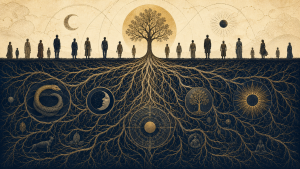
Collective Unconscious
In Jungian psychology, the collective unconscious is a proposed inherited layer of the psyche expressed through universal patterns called archetypes.
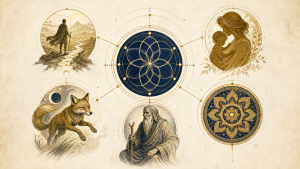
Archetype
An archetype is an inherited organizing pattern in Jung’s theory that can shape recurring forms of imagery, emotion, perception, and behavior without prescribing one fixed image.
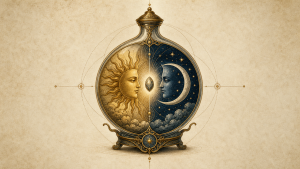
Coniunctio
Coniunctio is an alchemical image Jung used to explore the psychological union of opposites and the possibility of a new, more inclusive attitude.
Related Archetypes

Hero
The Hero is an archetypal motif of confronting danger, overcoming an obstacle, and winning something that can contribute to greater consciousness or renewal.
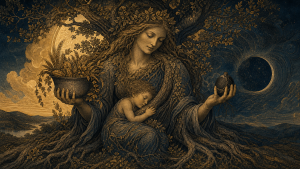
Great Mother
The Great Mother is an archetypal pattern of origin, nourishment, protection, fertility, containment, engulfment, and destructive power.
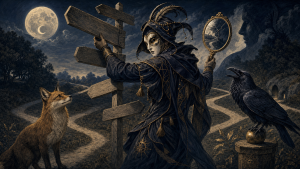
Trickster
The Trickster is an archetypal boundary-breaker whose humor, appetite, deception, mistakes, and reversals can expose rigidity while also causing real harm.
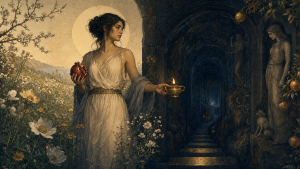
Maiden (Kore)
The Maiden, or Kore, is an archetypal image of youth, potential, vulnerability, separation, descent, renewal, and an identity not yet fully differentiated.
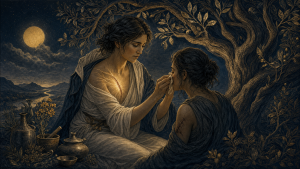
Wounded Healer
The Wounded Healer archetype holds vulnerability and the capacity to help in tension while requiring self-knowledge, competence, accountability, and clear boundaries.
Related Practices
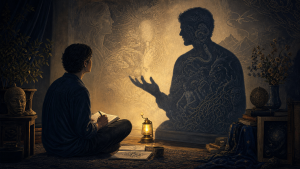
Shadow Work
Shadow work is a modern term for reflective practices that explore qualities, emotions, and patterns a person habitually rejects, hides, or fails to recognize in themselves.
Active Imagination
Active imagination is Jung’s method of consciously engaging emerging images, emotions, or figures through sustained attention and expression while preserving awareness and judgment.

Jungian Dream Analysis
Jungian dream analysis explores a dream’s personal associations, structure, emotional context, and possible compensatory relationship to conscious life without using fixed symbol definitions.

Dream Journaling
Dream journaling is the practice of recording dreams promptly and preserving their sequence, atmosphere, images, emotions, and personal associations.

Symbol Amplification
Symbol amplification is a Jungian method of comparing an image with mythic, religious, artistic, historical, and cultural parallels while staying anchored to personal context.

Sandplay Therapy
Sandplay therapy is a clinical, expressive method in which a client creates scenes with sand, water, and miniatures within a protected therapeutic relationship.
Personal Association in Dream Work
Personal association explores the dreamer’s own memories, feelings, language, culture, sensory responses, and current circumstances around a specific dream image.
Related Books
Man and His Symbols
Man and His Symbols is an illustrated introduction to dreams, symbols, archetypes, and individuation written by Carl Jung and four close collaborators for general readers.

Memories, Dreams, Reflections
Memories, Dreams, Reflections is a semi-autobiographical account assembled from Carl Jung's recollections, manuscripts, and conversations with editor Aniela Jaffé.
The Red Book: Liber Novus
The Red Book: Liber Novus records and artistically develops Carl Jung's confrontation with inner figures and images during a formative period of his psychology.