
Book
Science of the Soul
Science of the Soul is a posthumous collection of five Edinger essays on psychotherapy, transference, vocation, the greater personality, and Jungian psychological method.

Summary
The collection brings together “The Transference Phenomenon,” “The Therapeutic Life,” “Encounter with the Greater Personality,” “The Vocation of Depth Psychotherapy,” and an edited transcript of Edinger’s 1997 “Science of the Soul” video series.
Key Topics
- Transference
- Therapeutic relationship
- Depth psychotherapy
- Greater personality
- Professional vocation
- Analytical psychology
Reader Guidance
Advanced. The book presents Edinger’s Jungian perspective, not a comprehensive account of psychotherapy research, professional ethics, diagnosis, treatment standards, or the full range of clinical approaches.
What Is Science of the Soul?
Science of the Soul: A Jungian Perspective collects five essays by Edward F. Edinger. Edited after his death, the volume addresses the therapeutic relationship, the analyst’s vocation, encounters with a larger personality, and analytical psychology’s understanding of psyche.
The Five Essays
- “The Transference Phenomenon”
- “The Therapeutic Life”
- “Encounter with the Greater Personality”
- “The Vocation of Depth Psychotherapy”
- “Science of the Soul,” edited from a 1997 video series
Together they show Edinger moving between clinical relation, professional responsibility, and larger questions about the reality of psyche.
Transference
Transference involves feelings, expectations, images, and relational patterns that become attached to the therapist. A Jungian reading may include projection and archetypal material, but ordinary interpersonal facts and professional power remain essential.
Symbolic language must never weaken boundaries, informed consent, confidentiality, or accountability.
The Therapeutic Life
Edinger treats therapeutic work as a demanding vocation rather than a set of techniques alone. That emphasis can illuminate commitment and responsibility, but it must not romanticize overwork, isolation, inadequate supervision, or blurred roles.
Encounter with the Greater Personality
The “greater personality” overlaps with the Jungian Self. Encounter may challenge the ego’s assumptions and enlarge perspective, yet it can also produce fear or inflation.
Can Psychology Be a Science of the Soul?
Edinger’s phrase asserts that psychic images and experiences deserve disciplined attention. It should not be confused with a claim that every Jungian interpretation has been experimentally validated.
Readers should distinguish clinical observation, philosophical argument, symbolic interpretation, historical evidence, and controlled research.
Clinical Limits
- The book is educational and cannot diagnose or treat a reader.
- Jungian concepts are not substitutes for medical assessment or evidence-based care.
- Transference never excuses exploitation or boundary violations.
- Professional practice requires current licensing, ethics, supervision, and local standards.
- Symbolic interpretations should remain testable hypotheses within a collaborative relationship.
Who Should Read It?
The collection is especially relevant to clinicians, trainees, and advanced readers interested in analytical psychology. General readers can use it to understand Edinger’s clinical outlook while remembering that it represents one school of psychotherapy.
Edition Information
Inner City Books lists Title 102 as a 128-page volume published in 2002 with ISBN 9781894574037. The linked Amazon edition is ASIN 1894574036.
Sources
Related Concepts
Shadow
In Jungian psychology, the shadow is the part of the personality containing qualities, impulses, and capacities that the conscious ego does not recognize or accept as its own.

Individuation
Individuation is Jung’s term for the lifelong process of becoming a more differentiated and integrated psychological whole.

Collective Unconscious
In Jungian psychology, the collective unconscious is a proposed inherited layer of the psyche expressed through universal patterns called archetypes.

Personal Unconscious
In Jungian psychology, the personal unconscious contains experiences, perceptions, and emotionally charged material outside an individual’s present awareness.

Complex
In Jungian psychology, a complex is an emotionally charged network of associations that can temporarily influence perception, emotion, and behavior.
Ego
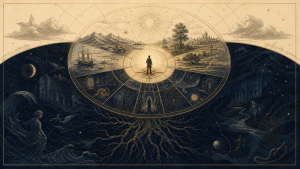
In Jungian psychology, the ego is the central complex of consciousness: the organizing “I” that experiences identity, makes choices, and adapts to inner and outer life.

Self
The Self is Jung’s concept of the whole psyche—conscious and unconscious—and the archetypal principle of its organization, development, and potential integration.

Archetype
An archetype is an inherited organizing pattern in Jung’s theory that can shape recurring forms of imagery, emotion, perception, and behavior without prescribing one fixed image.

Projection
Projection is the largely unconscious process of experiencing one’s own psychological content as if it belonged primarily or entirely to another person, group, or object.

Transcendent Function
The transcendent function is the new psychological attitude or symbolic possibility that can emerge when conscious and unconscious positions are held in genuine dialogue.

Psychological Inflation
Psychological inflation is an expanded or diminished self-estimate caused by identifying the ego with an archetype, role, group, insight, or unconscious content.
Related Practices

Shadow Work
Shadow work is a modern term for reflective practices that explore qualities, emotions, and patterns a person habitually rejects, hides, or fails to recognize in themselves.

Active Imagination
Active imagination is Jung’s method of consciously engaging emerging images, emotions, or figures through sustained attention and expression while preserving awareness and judgment.

Jungian Dream Analysis
Jungian dream analysis explores a dream’s personal associations, structure, emotional context, and possible compensatory relationship to conscious life without using fixed symbol definitions.

Symbol Amplification
Symbol amplification is a Jungian method of comparing an image with mythic, religious, artistic, historical, and cultural parallels while staying anchored to personal context.

Personal Association in Dream Work
Personal association explores the dreamer’s own memories, feelings, language, culture, sensory responses, and current circumstances around a specific dream image.
Related Psychologists

Carl Jung
Carl Gustav Jung was a Swiss psychiatrist who founded analytical psychology and developed influential ideas about complexes, archetypes, the collective unconscious, psychological types, and individuation.

Edward F. Edinger
Edward F. Edinger was an American psychiatrist, Jungian analyst, lecturer, and author who became a prominent interpreter of Jung’s work on the ego, Self, individuation, alchemy, and religious symbolism.