
Psychologist
James Hillman
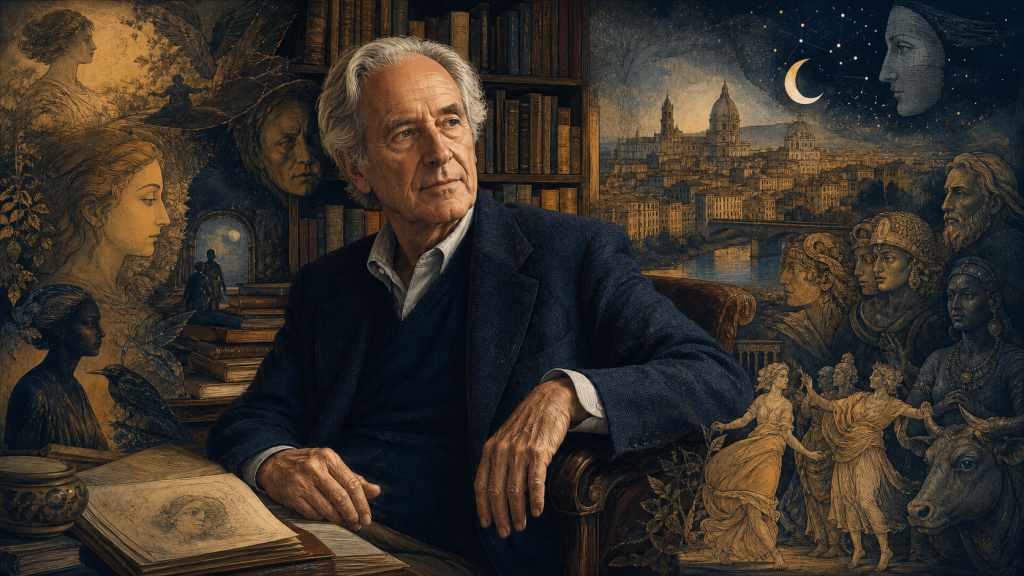
James Hillman was an American post-Jungian psychologist and writer who founded archetypal psychology, an imaginal approach centered on soul, myth, plurality, and close attention to images.
Known For
Archetypal psychology; soul-making; the poetic basis of mind; “sticking with the image”; the acorn theory; and psychology directed toward culture and the world.
Biography
Born in Atlantic City in 1926, Hillman served in the U.S. Navy Hospital Corps, studied in Paris and Dublin, earned his doctorate at the University of Zürich, and trained at the C. G. Jung Institute. He directed studies at the institute from 1959 to 1969, edited Spring, co-founded the Dallas Institute of Humanities and Culture, and wrote more than twenty books. He died in Connecticut in 2011.
Key Ideas
- Archetypal psychology as an imaginal, post-Jungian movement
- The poetic basis of mind and soul-making
- Psychological plurality rather than one ruling perspective
- Attending closely to dream images before translating them
- The acorn theory of character and calling
- Turning psychology toward culture, place, politics, and the world
Who Was James Hillman?
James Hillman (1926–2011) was an American psychologist, writer, and influential post-Jungian thinker who founded the movement known as archetypal psychology. Trained at the C. G. Jung Institute in Zürich, he later challenged several habits of both mainstream psychology and classical Jungian interpretation.
Hillman asked readers to take images, myths, symptoms, places, and cultural life seriously as expressions of psyche. His work is provocative rather than systematic: it offers a way of seeing, not a diagnostic method or a set of universal rules.
Life and Training
Hillman was born in Atlantic City, New Jersey, on April 12, 1926. He served in the United States Navy Hospital Corps during the Second World War, then studied at the Sorbonne in Paris and Trinity College Dublin. He earned a doctorate from the University of Zürich and completed analyst training at the C. G. Jung Institute.
In 1959 he became the institute’s Director of Studies, a position he held for a decade. He later edited Spring, returned to the United States, served at the University of Dallas, and helped establish the Dallas Institute of Humanities and Culture. He died at his home in Connecticut on October 27, 2011.
What Is Archetypal Psychology?
Archetypal psychology grew from archetypal and imaginal strands in Jung’s work, but Hillman gave them a distinctive emphasis. Instead of treating psychology mainly as the explanation of personal causes, he attended to the forms through which experience presents itself: dream images, fantasies, myths, artworks, symptoms, speech, landscapes, buildings, and public life.
For Hillman, an image should not be rushed into a single translation. A snake in a dream, for example, should not automatically become sexuality, transformation, danger, or healing. Its exact qualities and setting matter. This discipline is often summarized as staying with the image.
Soul-Making and the Poetic Basis of Mind
Hillman used the word soul to name a deepening perspective rather than a measurable substance. Soul-making involves seeing through literal appearances into the metaphors, contradictions, histories, and emotional textures that give experience depth.
His phrase “the poetic basis of mind” points toward imagination as fundamental to psychological life. This does not mean that facts are optional. It means that people encounter facts through images, stories, values, memories, and patterns of attention. Poetic sensitivity must remain accountable to evidence and consequences.
A Polytheistic Psyche
Hillman resisted reducing psychological life to one ruling center or a single path of development. Drawing on Greek mythology and Renaissance thought, he described psyche as plural: different figures, values, moods, and demands can coexist without resolving into one voice.
This “polytheistic” language is metaphorical and interpretive. It can help preserve complexity, but it should not be used to impose Greek deities on every culture or to turn mythology into a personality test. Cultural traditions deserve their own contexts.
Hillman and Carl Jung
Hillman’s work is indebted to Carl Jung, especially Jung’s attention to images, mythology, the collective unconscious, and symbolic life. Yet Hillman often shifted emphasis away from a developmental journey toward the Self and toward a continuing plurality of imaginal perspectives.
He also questioned interpretations that explain every image through biography, childhood, compensation, or a predetermined stage of individuation. The difference is not absolute: Jung’s writings are diverse, and Hillman’s ideas developed through argument with that inheritance rather than simple rejection of it.
Dreams and “Sticking With the Image”
Hillman’s The Dream and the Underworld proposes that dream images belong first to the dream’s own imaginal world. Instead of immediately converting them into waking advice, the dreamer can notice atmosphere, language, relationships, color, movement, and emotional tone.
This approach complements the context-first method used in Jungian dream analysis and symbol amplification. It does not establish a dream’s meaning by authority, and it does not replace medical or psychological care when dreams accompany distress, trauma, sleep problems, or changes in reality testing.
The Acorn Theory
In The Soul’s Code, Hillman presented the “acorn theory”: the idea that a person’s life may express an innate image of character or calling, much as an oak is imagined within an acorn. The theory challenged accounts that reduce a life entirely to parental influence, trauma, environment, or social adjustment.
As a metaphor, it can help readers notice persistent interests and forms of vocation. Taken literally, it can become deterministic, romanticize hardship, or understate material conditions and unequal opportunity. It is best used as a question about character—not proof that every event was destined.
Psychology Beyond the Consulting Room
Hillman argued that distress cannot always be located solely inside an individual. Cities, institutions, war, environmental destruction, ugliness, consumer culture, and political life also shape the psyche. His later work turned psychology outward toward what he called the soul of the world.
This remains one of his most useful challenges to narrowly individual explanations. Personal reflection matters, but it should not obscure unsafe conditions, discrimination, poverty, violence, or institutional responsibility.
Criticisms and Limitations
- Limited empirical grounding: Hillman’s arguments are philosophical, rhetorical, and interpretive rather than experimentally demonstrated theories.
- Dense and polemical style: vivid contrasts can illuminate a problem while oversimplifying the positions he criticizes.
- Mythological scope: Greek and European sources should not be treated as universal templates for all cultures.
- Clinical ambiguity: honoring symptoms as meaningful must never become a reason to delay appropriate assessment, protection, or treatment.
- Calling and destiny: the acorn metaphor can neglect social constraint or encourage retrospective stories of inevitability.
Major Works
- Re-Visioning Psychology
- The Dream and the Underworld
- Suicide and the Soul
- The Myth of Analysis
- Archetypal Psychology: A Brief Account
- The Soul’s Code
- We’ve Had a Hundred Years of Psychotherapy—and the World’s Getting Worse, with Michael Ventura
- A Terrible Love of War
How to Read Hillman Responsibly
Read Hillman as a disciplined provocateur. Let his work slow premature explanation, restore attention to images, and widen psychology beyond private biography. Then test his claims against history, culture, evidence, ethics, and lived consequences. An evocative interpretation earns consideration; it does not earn automatic authority.
Read Hillman Metaphorically
Hillman often resists literal explanation and asks what an image does when allowed to remain image. This style can restore complexity, but it should not dissolve factual, medical, historical, or ethical questions into metaphor. Readers can hold an imaginal interpretation beside empirical evidence and concrete responsibility. “Soul-making” is a way of attending, not a license to romanticize suffering or avoid action.
Sources and Further Reading
Continue your study
Recommended Reading
Books selected because they directly develop ideas discussed on this page.
Aion: Researches into the Phenomenology of the Self
Aion is Jung’s advanced study of the Self, the shadow, opposites, and the religious, astrological, Gnostic, and alchemical symbols of psychological totality.
The Archetypes and the Collective Unconscious
The Archetypes and the Collective Unconscious collects major essays in which Carl Jung develops his accounts of archetypes, collective psychic patterns, rebirth, the mother, the child,…
Re-Visioning Psychology
Re-Visioning Psychology is James Hillman’s foundational statement of archetypal psychology and its imaginal approach to soul, symptoms, myth, and psychological plurality.
Paid links. As an Amazon Associate I earn from qualifying purchases.
Related Concepts
Shadow
In Jungian psychology, the shadow is the part of the personality containing qualities, impulses, and capacities that the conscious ego does not recognize or accept as its own.

Individuation
Individuation is Jung’s term for the lifelong process of becoming a more differentiated and integrated psychological whole.
Collective Unconscious
In Jungian psychology, the collective unconscious is a proposed inherited layer of the psyche expressed through universal patterns called archetypes.
Ego
In Jungian psychology, the ego is the central complex of consciousness: the organizing “I” that experiences identity, makes choices, and adapts to inner and outer life.

Self
The Self is Jung’s concept of the whole psyche—conscious and unconscious—and the archetypal principle of its organization, development, and potential integration.
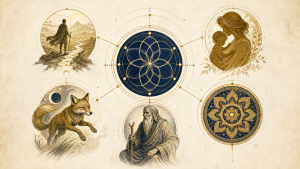
Archetype
An archetype is an inherited organizing pattern in Jung’s theory that can shape recurring forms of imagery, emotion, perception, and behavior without prescribing one fixed image.
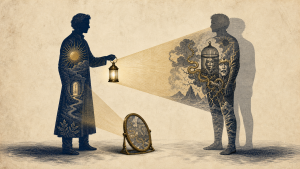
Projection
Projection is the largely unconscious process of experiencing one’s own psychological content as if it belonged primarily or entirely to another person, group, or object.

Psychological Opposites
Psychological opposites are conflicting conscious and unconscious positions whose tension can reveal one-sidedness and support development.

Analytical Psychology
Analytical psychology, often called Jungian psychology, is Carl Jung’s approach to the psyche, unconscious life, symbols, and psychological development.
Related Books
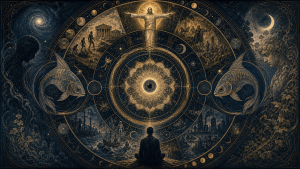
Aion: Researches into the Phenomenology of the Self
Aion is Jung’s advanced study of the Self, the shadow, opposites, and the religious, astrological, Gnostic, and alchemical symbols of psychological totality.

The Archetypes and the Collective Unconscious
The Archetypes and the Collective Unconscious collects major essays in which Carl Jung develops his accounts of archetypes, collective psychic patterns, rebirth, the mother, the child, and individuation.

Re-Visioning Psychology
Re-Visioning Psychology is James Hillman’s foundational statement of archetypal psychology and its imaginal approach to soul, symptoms, myth, and psychological plurality.

Senex & Puer
Senex & Puer collects James Hillman’s essays on the archetypal polarity between time, structure, authority, and the youthful forces of possibility, freedom, and renewal.
Related Practices

Jungian Dream Analysis
Jungian dream analysis explores a dream’s personal associations, structure, emotional context, and possible compensatory relationship to conscious life without using fixed symbol definitions.

Dream Journaling
Dream journaling is the practice of recording dreams promptly and preserving their sequence, atmosphere, images, emotions, and personal associations.

Symbol Amplification
Symbol amplification is a Jungian method of comparing an image with mythic, religious, artistic, historical, and cultural parallels while staying anchored to personal context.