
Jungian Concept
Anima
Anima is Jung’s historical term for an inner feminine archetypal figure in a man, associated with feeling, relationship, imagery, and mediation between consciousness and the unconscious.

Definition
In Jung’s original binary model, the anima is the inner feminine archetypal figure in a man and a possible mediator between ego-consciousness and the unconscious. Contemporary interpretations often detach the function from fixed gender.
What Is the Anima?
In Carl Jung’s original theory, the anima is an inner feminine archetypal figure in a man. Jung associated it with emotional life, relationship, spontaneity, fantasy, and a mediating connection between consciousness and the collective unconscious.
The anima is not a literal hidden woman, a diagnosis, or a rule about how men must feel. It belongs to a historical theory built on binary assumptions about sex and gender.
Anima and Persona
Jung described the anima as compensatory to the persona. A man strongly identified with a controlled, rational, or invulnerable public identity might experience disowned feeling and vulnerability indirectly through moods, fantasies, dreams, or attraction.
This does not mean rationality is masculine or emotion feminine by nature. It describes the gendered framework Jung used and the way excluded qualities may return from the unconscious.
Projection
When unconscious, the anima may be projected onto another person, who is then experienced through an idealized or threatening image. Intense fascination can reveal something about the observer’s inner life while still involving a real and separate human being.
Withdrawing projection means learning to distinguish the actual person from expectations placed upon them and developing a more conscious relationship with the qualities carried by the image.
Constructive Function
Jung believed a more conscious anima could support emotional differentiation, creativity, imagination, relationship, and dialogue with unconscious material. In dreams it may appear as a guide, stranger, beloved figure, artist, threatening figure, or another image shaped by personal and cultural experience.
Contemporary Reassessment
Many contemporary Jungians treat anima and animus less literally than Jung did. Some understand them as symbolic functions available to everyone; others revise or reject their gender assignment. This allows discussion of inner otherness, projection, and psychological complementarity without prescribing identity or reinforcing stereotypes.
A responsible account distinguishes Jung’s original model from later interpretations and leaves room for diverse bodies, genders, sexual orientations, cultures, and forms of relationship.
Projection and Relationship Ethics
Recognizing an anima projection does not make the other person responsible for carrying it or require a relationship to continue. Attraction, disappointment, and symbolic meaning must remain separate from consent, compatibility, promises, power, and observable conduct. The ethical task is to reclaim one’s expectations while listening to who the other person says they are. Symbolic reflection should increase respect for separateness, not turn someone into a character in another person’s development.
Sources and Further Reading
Origin and Development
Jung developed the anima through his work on complexes, dreams, projection, persona, and the “soul-image.” Major discussions appear in Two Essays on Analytical Psychology, The Archetypes and the Collective Unconscious, and Aion.
Examples
A man idealizes a new acquaintance as uniquely capable of giving his life meaning, despite knowing little about her. An anima-based reading would examine the projected emotional and symbolic expectations without reducing the actual person to a psychological symbol.
Common Misconceptions
- The anima is not a literal hidden woman.
- It does not define sexual orientation or gender identity.
- Emotion and relationship are not inherently female traits.
- A woman is not identical to a man’s projection of her.
- Jung’s original binary formulation is historically situated and contested.
Continue your study
Recommended Reading
Books selected because they directly develop ideas discussed on this page.
Aion: Researches into the Phenomenology of the Self
Aion is Jung’s advanced study of the Self, the shadow, opposites, and the religious, astrological, Gnostic, and alchemical symbols of psychological totality.
The Red Book: Liber Novus
The Red Book: Liber Novus records and artistically develops Carl Jung's confrontation with inner figures and images during a formative period of his psychology.
The Mystery of the Coniunctio
The Mystery of the Coniunctio is Edward F. Edinger’s compact Jungian study of alchemical union as an image of the relationship and possible integration of psychological…
Paid links. As an Amazon Associate I earn from qualifying purchases.
Related Concepts
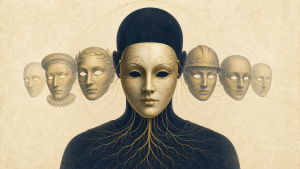
Persona
In Jungian psychology, the persona is the social identity or “mask” through which a person adapts to roles, expectations, and relationships.

Individuation
Individuation is Jung’s term for the lifelong process of becoming a more differentiated and integrated psychological whole.

Collective Unconscious
In Jungian psychology, the collective unconscious is a proposed inherited layer of the psyche expressed through universal patterns called archetypes.

Personal Unconscious
In Jungian psychology, the personal unconscious contains experiences, perceptions, and emotionally charged material outside an individual’s present awareness.
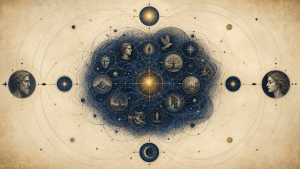
Complex
In Jungian psychology, a complex is an emotionally charged network of associations that can temporarily influence perception, emotion, and behavior.
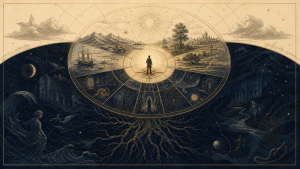
Ego
In Jungian psychology, the ego is the central complex of consciousness: the organizing “I” that experiences identity, makes choices, and adapts to inner and outer life.

Self
The Self is Jung’s concept of the whole psyche—conscious and unconscious—and the archetypal principle of its organization, development, and potential integration.
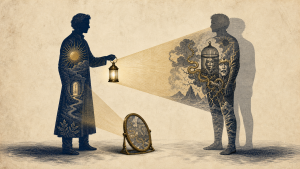
Projection
Projection is the largely unconscious process of experiencing one’s own psychological content as if it belonged primarily or entirely to another person, group, or object.

Animus
Animus is Jung’s historical term for an inner masculine archetypal figure in a woman, associated with opinion, agency, meaning, and mediation between consciousness and the unconscious.

Anima and Animus
Anima and animus are Jung’s historically gendered terms for inner otherness, relational projection, and qualities excluded from conscious identity.

The Four Major Jungian Archetypes
The shadow, persona, anima or animus, and Self are often taught as four major Jungian archetypes, though Jung’s wider theory is not limited to four.
Related Archetypes

Related Dream Symbols

Related Practices

Related Books
Aion: Researches into the Phenomenology of the Self
Aion is Jung’s advanced study of the Self, the shadow, opposites, and the religious, astrological, Gnostic, and alchemical symbols of psychological totality.

The Red Book: Liber Novus
The Red Book: Liber Novus records and artistically develops Carl Jung's confrontation with inner figures and images during a formative period of his psychology.
The Mystery of the Coniunctio
The Mystery of the Coniunctio is Edward F. Edinger’s compact Jungian study of alchemical union as an image of the relationship and possible integration of psychological opposites.
The Mysterium Lectures
The Mysterium Lectures is Edinger’s extensive chapter-by-chapter guide to Jung’s Mysterium Coniunctionis and its relevance to dreams and psychological life.

The Psyche on Stage
The Psyche on Stage is Edinger’s Jungian study of Measure for Measure, Romeo and Juliet, Oedipus the King, and Oedipus at Colonus.
The Aion Lectures
The Aion Lectures is Edinger’s edited lecture companion to C. G. Jung’s Aion, originally delivered in Los Angeles in 1988–89.

The Black Books
Carl Jung’s private notebooks recording fantasies, dreams, dialogues, and reflections from the period that also produced The Red Book.
Related Psychologists

Carl Jung
Carl Gustav Jung was a Swiss psychiatrist who founded analytical psychology and developed influential ideas about complexes, archetypes, the collective unconscious, psychological types, and individuation.

Emma Jung
Emma Jung was a Swiss Jungian analyst and author known for her work on the anima and animus, the Grail legend, and the early analytical psychology movement.

Toni Wolff
Toni Wolff was a Swiss analyst, scholar, institutional leader, and close collaborator of Carl Jung who developed four structural forms of the feminine psyche.

Barbara Hannah
Barbara Hannah was a British-born Jungian analyst, lecturer, and author known for her close work with C. G. Jung and Marie-Louise von Franz.