
Book
Man and His Symbols
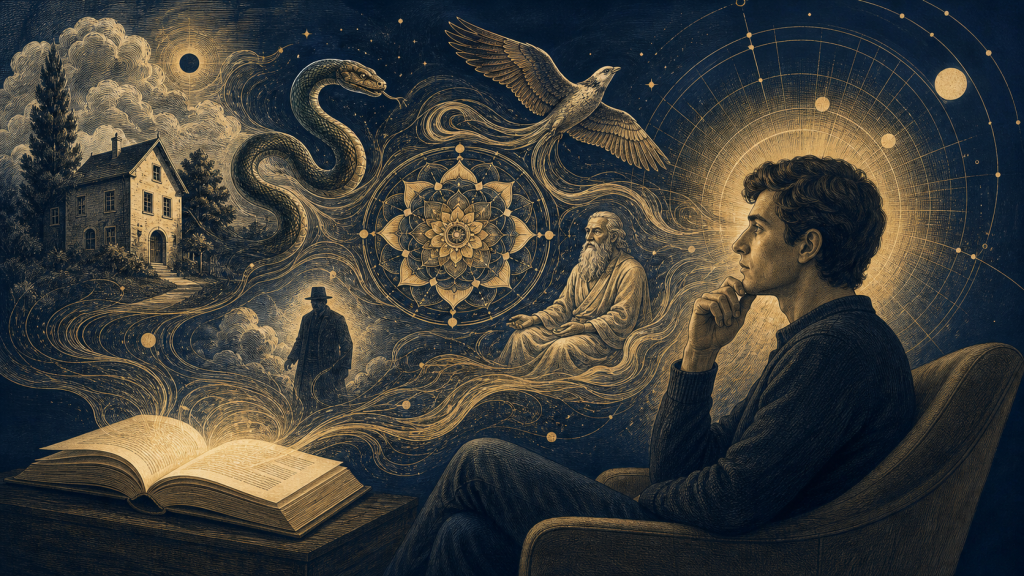
Man and His Symbols is an illustrated introduction to dreams, symbols, archetypes, and individuation written by Carl Jung and four close collaborators for general readers.
Summary
An illustrated introduction to Jungian psychology covering dreams, symbols, myth, archetypes, individuation, art, and material from an individual analysis.
Key Topics
- Dreams and the unconscious
- Symbols and signs
- Archetypes and myth
- Individuation
- Art and psychological imagery
Reader Guidance
Best suited to beginners seeking an illustrated, collaborative introduction. Read examples as demonstrations of method rather than universal symbol definitions.
What Is Man and His Symbols?
Man and His Symbols is a collaborative introduction to analytical psychology created for readers without specialist training. It presents dreams and symbols as meaningful expressions of psychological life rather than as images with one universal translation.
Who Wrote It?
Carl Jung wrote the opening section, “Approaching the Unconscious.” The remaining sections were written by Joseph L. Henderson, Marie-Louise von Franz, Aniela Jaffé, and Jolande Jacobi. John Freeman helped initiate and coordinate the project.
What the Book Covers
- Dreams as communications from the unconscious
- The difference between signs and living symbols
- Mythic and archetypal patterns in modern life
- Individuation and the development of personality
- Symbolism in visual art
- Dream material within an individual analysis
Why It Is a Useful Starting Point
The book was explicitly designed as an accessible presentation and uses many images and examples. It is usually easier to approach than Jung’s technical collected works. Von Franz’s chapter offers a particularly important account of individuation through dream sequences.
Important Reading Cautions
The book presents Jungian theory, not a contemporary diagnostic manual or universally accepted science of dreams. Some language and assumptions reflect its historical period. Readers should avoid converting its examples into a fixed dream dictionary.
Edition Information
This page records the Bantam trade paperback edition with ISBN 9780593499993. Purchase links remain blank until a verified direct Amazon Associates link for that exact edition is added.
Sources
Related Concepts

Shadow
In Jungian psychology, the shadow is the part of the personality containing qualities, impulses, and capacities that the conscious ego does not recognize or accept as its own.

Individuation
Individuation is Jung’s term for the lifelong process of becoming a more differentiated and integrated psychological whole.
Collective Unconscious
In Jungian psychology, the collective unconscious is a proposed inherited layer of the psyche expressed through universal patterns called archetypes.

Self
The Self is Jung’s concept of the whole psyche—conscious and unconscious—and the archetypal principle of its organization, development, and potential integration.
Archetype
An archetype is an inherited organizing pattern in Jung’s theory that can shape recurring forms of imagery, emotion, perception, and behavior without prescribing one fixed image.

Participation Mystique
Participation mystique is a Jungian term for an unconscious state of identity in which the boundary between subject and object, self and other, is insufficiently differentiated.
Introversion
Introversion is a Jungian attitude in which conscious energy and motivation give greater priority to the subject’s inner impressions, ideas, and standpoint.
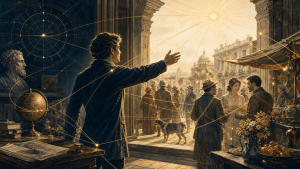
Extraversion
Extraversion is a Jungian attitude in which conscious energy and motivation give greater priority to external people, events, objects, and shared conditions.

Thinking
Thinking is the Jungian function that evaluates experience through concepts, logical relationships, and judgments about what something means.

Feeling
Feeling is the Jungian function that evaluates experience by assigning value: acceptable or unacceptable, important or unimportant, welcomed or rejected.
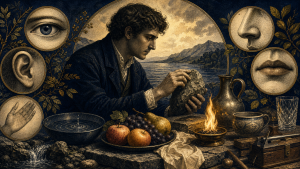
Sensation
Sensation is the Jungian function that perceives immediate concrete reality through the physical senses and awareness of bodily states.

Intuition
Intuition is the Jungian function that perceives possibilities, patterns, and implications through unconscious processes rather than direct sensory evidence.

Dominant Function
The dominant function is the psychological function a person uses most habitually and has developed most fully under conscious control.

Auxiliary Function
The auxiliary function supports the dominant function by adding a different mode of perception or judgment and helping consciousness adapt more flexibly.

Inferior Function
The inferior function is the least differentiated function in a person's conscious typology and the opposite of the dominant function.
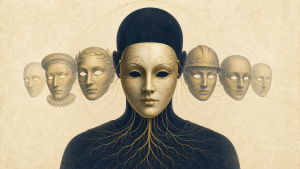
Persona
In Jungian psychology, the persona is the social identity or “mask” through which a person adapts to roles, expectations, and relationships.
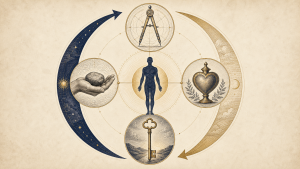
Psychological Types
Jung’s psychological types combine two attitudes—introversion and extraversion—with four functions: thinking, feeling, sensation, and intuition.
Compensation
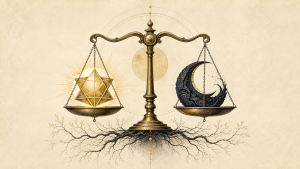
Compensation is the psyche’s tendency to balance or supplement a one-sided conscious attitude through dreams, emotions, fantasies, symptoms, and neglected perspectives.

Imago
An imago is an internal, subjectively shaped image of another person that must be distinguished from the person’s objective reality.

Psychic Energy
Psychic energy, often called libido by Jung, is a conceptual way of describing the intensity, direction, and movement of psychological interest and desire.

Constellation
Constellation is the activation of a complex or archetypal pattern by a situation, causing connected emotions, memories, expectations, and behaviors to become unusually available.
Analytical Psychology
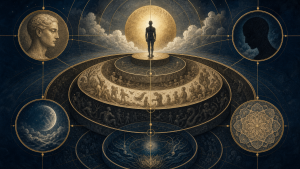
Analytical psychology, often called Jungian psychology, is Carl Jung’s approach to the psyche, unconscious life, symbols, and psychological development.

Carl Jung’s Theory of Personality
Carl Jung’s personality theory combines psychological attitudes and functions with a broader model of ego, persona, shadow, unconscious life, and individuation.
Carl Jung’s Philosophy
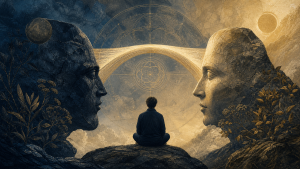
Carl Jung’s philosophy centers on psychological wholeness, symbols, opposites, meaning, and the relationship between conscious and unconscious life.

Is Shadow Work Dangerous?
Shadow Work can become harmful when it overwhelms coping capacity, encourages unsupported certainty, replaces treatment, or is used without appropriate boundaries.
Recurring Dreams
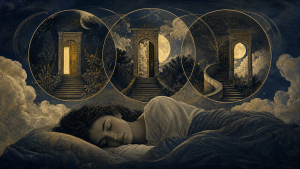
Recurring dreams repeat a theme, setting, conflict, or emotional pattern and are best studied as a series rather than decoded from one symbol.

Anima and Animus
Anima and animus are Jung’s historically gendered terms for inner otherness, relational projection, and qualities excluded from conscious identity.
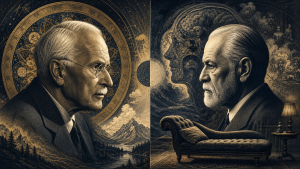
Carl Jung vs. Sigmund Freud
Carl Jung and Sigmund Freud shared an early psychoanalytic alliance but diverged over libido, religion, symbols, the unconscious, and the aims of psychological development.

Carl Jung and Art
Carl Jung used drawing, painting, mandalas, sculpture, and symbolic image-making as means of engaging psychic material, while distinguishing this work from aesthetic criticism.

Carl Jung and Astrology
Carl Jung discussed astrology as a historical symbolic system and explored astrological data in relation to synchronicity, without establishing astrology as validated causal science.
Carl Jung and MBTI
The Myers-Briggs Type Indicator was inspired by Carl Jung’s psychological types, but its four-letter system and assessment method were developed by Katharine Cook Briggs and Isabel Briggs Myers.
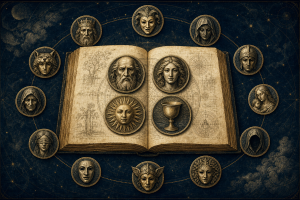
Did Carl Jung Define 12 Archetypes?
Carl Jung did not establish a canonical list of twelve personality archetypes; the popular twelve-archetype model is a later simplification.
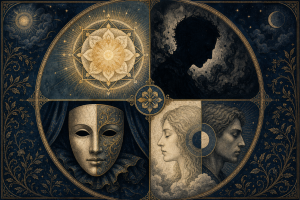
The Four Major Jungian Archetypes
The shadow, persona, anima or animus, and Self are often taught as four major Jungian archetypes, though Jung’s wider theory is not limited to four.
Related Practices

Jungian Dream Analysis
Jungian dream analysis explores a dream’s personal associations, structure, emotional context, and possible compensatory relationship to conscious life without using fixed symbol definitions.

Dream Journaling
Dream journaling is the practice of recording dreams promptly and preserving their sequence, atmosphere, images, emotions, and personal associations.

Symbol Amplification
Symbol amplification is a Jungian method of comparing an image with mythic, religious, artistic, historical, and cultural parallels while staying anchored to personal context.

Circumambulation
Circumambulation is a Jungian method of staying close to one image while examining it repeatedly from different personal, emotional, symbolic, and practical viewpoints.

Sandplay Therapy
Sandplay therapy is a clinical, expressive method in which a client creates scenes with sand, water, and miniatures within a protected therapeutic relationship.
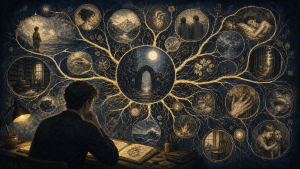
Personal Association in Dream Work
Personal association explores the dreamer’s own memories, feelings, language, culture, sensory responses, and current circumstances around a specific dream image.

Jungian Therapy
Jungian therapy is a depth-oriented form of psychotherapy that explores conscious and unconscious patterns through relationships, dreams, symbols, and personal history.

Shadow Work Exercises for Beginners
Beginner Shadow Work exercises focused on observation, projection checks, persona balance, recurring patterns, and responsible action.
Related Psychologists
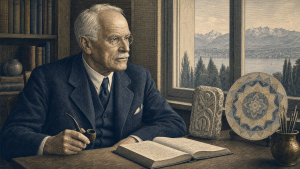
Carl Jung
Carl Gustav Jung was a Swiss psychiatrist who founded analytical psychology and developed influential ideas about complexes, archetypes, the collective unconscious, psychological types, and individuation.

Marie-Louise von Franz
Marie-Louise von Franz was a Swiss Jungian analyst and scholar known for her work on dreams, fairy tales, alchemy, and the process of individuation.

Aniela Jaffé
Aniela Jaffé was a German-born Swiss Jungian analyst, author, and longtime collaborator who recorded and edited the material behind Memories, Dreams, Reflections.

Emma Jung
Emma Jung was a Swiss Jungian analyst and author known for her work on the anima and animus, the Grail legend, and the early analytical psychology movement.

Dora Kalff
Dora Kalff was a Swiss therapist who developed Jungian sandplay therapy by integrating Margaret Lowenfeld’s World Technique with analytical psychology.
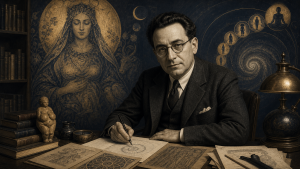
Erich Neumann
Erich Neumann was a German-born Israeli analytical psychologist who extended Jungian psychology through studies of consciousness, mythology, ethics, creativity, and Jewish thought.

Edward F. Edinger
Edward F. Edinger was an American psychiatrist, Jungian analyst, lecturer, and author who became a prominent interpreter of Jung’s work on the ego, Self, individuation, alchemy, and religious symbolism.
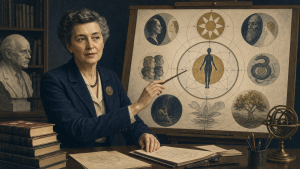
Jolande Jacobi
Jolande Jacobi was a Swiss psychologist, author, and early interpreter of C. G. Jung whose systematic introductions helped make analytical psychology accessible.

Barbara Hannah
Barbara Hannah was a British-born Jungian analyst, lecturer, and author known for her close work with C. G. Jung and Marie-Louise von Franz.