
Jungian Concept
Shadow
In Jungian psychology, the shadow is the part of the personality containing qualities, impulses, and capacities that the conscious ego does not recognize or accept as its own.
Definition
The shadow is a Jungian term for aspects of the personality that remain outside a person’s conscious self-image. These aspects may have been rejected, discouraged, overlooked, or never fully developed.
Although the shadow is often described as the “dark side” of personality, it is not limited to traits considered bad. It may also contain vitality, creativity, tenderness, assertiveness, and other useful capacities that conflict with the identity a person has learned to maintain.
How Carl Jung defined the shadow
For Carl Jung, the shadow was not a second personality or a synonym for evil. It described qualities that remain outside the ego’s accepted identity. Shadow psychology therefore asks what a person has disowned, overlooked, or left undeveloped—and how those contents appear indirectly through projection, emotional charge, dreams, and conflict with the persona.
In Jungian psychology, the shadow is the part of personality that remains outside the conscious self-image. It is not simply a list of bad traits. Shadow material can include rejected emotions, needs, strengths, and creative capacities, and it often appears through projection, disproportionate reactions, recurring patterns, and dreams.
How the Shadow Forms
The shadow develops wherever parts of a person’s experience are excluded from the identity they consciously present to themselves and others. Families, communities, and cultures reward some qualities and discourage others. A child may learn that anger is unacceptable, for example, while another learns that tenderness is unsafe. The discouraged quality does not simply disappear. It may remain outside ordinary awareness and continue influencing emotion, judgment, and behavior.
The shadow is therefore personal. Its contents depend on temperament, experience, relationships, and the standards a person has absorbed. It can contain hostility, envy, selfishness, or fear, but it can also contain assertiveness, creativity, sensitivity, ambition, and other capacities that were never given a healthy place in conscious life.
How the Shadow Appears
Shadow material often becomes noticeable indirectly. A reaction may feel far stronger than the immediate situation seems to justify. The same conflict may repeat across different relationships. Someone may become fascinated by, contemptuous of, or unusually threatened by a quality in another person. Dreams may also present unfamiliar, embarrassing, hostile, vulnerable, or neglected figures that challenge the dreamer’s preferred self-image.
None of these signs proves a particular interpretation. They are starting points for inquiry. A useful question is not “What does this symbol always mean?” but “What does this reaction or image reveal about the parts of experience I find hardest to recognize as my own?”
Shadow and Projection
Projection is one of the principal ways the shadow is encountered. A quality that is difficult to recognize internally may be experienced as though it belongs entirely to someone else. This does not mean that every criticism is a projection or that harmful behavior should be ignored. Other people can genuinely behave badly. The practical question is whether the intensity, certainty, or repetition of a reaction also reveals something about the observer.
Withdrawing a projection means examining one’s own participation without pretending that external reality does not matter. The aim is greater accuracy and responsibility—not self-blame.
What Shadow Integration Means
Integration does not mean acting out every impulse or deciding that every hidden tendency is good. It means developing enough awareness to recognize a disowned quality, understand the conditions under which it appears, and choose a more conscious response. Aggression, for instance, might be expressed destructively, but its underlying energy may also support boundaries, courage, or decisive action.
In Jungian psychology, this work contributes to individuation: the gradual development of a more differentiated and inclusive personality. The objective is not a flawless self-image. It is a more honest relationship with the whole personality, including contradictions that cannot be solved by denial.
Questions for Reflection
- Which qualities in other people provoke an unusually strong reaction in me?
- What emotions or needs do I most quickly dismiss, hide, or judge?
- Which positive qualities do I admire but have difficulty claiming in myself?
- When does my behavior conflict with the person I believe myself to be?
- What recurring dream figures or situations feel alien, embarrassing, threatening, or neglected?
These questions are invitations to observe patterns, not tools for diagnosing yourself or other people.
Important Boundaries
Shadow language should not be used to excuse abuse, dismiss legitimate danger, or tell another person that their perceptions are unreal. It is an interpretive framework within analytical psychology, not a clinical diagnosis. Difficult material can involve trauma, severe shame, or destabilizing emotions. When reflection becomes overwhelming or interferes with daily life, working with a qualified mental-health professional is more appropriate than attempting to force the process alone.
The Positive Shadow
People also disown capacities that threaten a narrow identity. Confidence may be rejected as arrogance, pleasure as irresponsibility, leadership as domination, tenderness as weakness, or creativity as impracticality. Encountering a positive shadow can produce intense admiration or envy. Integration means developing the capacity in a proportionate form rather than copying the admired person or claiming an exceptional hidden destiny.
Sources and Further Reading
- C. G. Jung, Aion: Researches into the Phenomenology of the Self, Collected Works, Volume 9, Part II, especially paragraphs 13–19.
- Society of Analytical Psychology, “The Jungian Shadow.”
- Society of Analytical Psychology, “Analytical Psychology—An Overview of Jungian Psychology.”
Historical Context and Further Reading
For the broader structure surrounding the shadow, see analytical psychology and individuation. Jolande Jacobi helped systematize Jung’s concepts for later readers, while the guide to criticisms of Jung’s theories explains the evidentiary and cultural limits of treating symbolic concepts as universal facts.
Want a grounded introduction? The free beginner's guide to Jungian psychology explains the Shadow, archetypes, dreams, and individuation in a clear starting sequence.
Origin and Development
Carl Jung developed the shadow concept within analytical psychology. His most concentrated mature discussion appears in Aion, where he described confronting the shadow as a moral challenge because it requires a person to acknowledge qualities that contradict the ego’s preferred account of itself.
Later Jungian analysts expanded the concept while retaining its central function: the shadow names what is personally close to consciousness yet resisted, disowned, or insufficiently differentiated.
Examples
- A person who identifies as endlessly agreeable may remain unaware of resentment until it appears as sarcasm or sudden anger.
- Someone taught that confidence is arrogant may condemn self-assurance in others while leaving their own leadership ability undeveloped.
- A person who values rational control may dismiss vulnerability, then encounter it indirectly through recurring relationship conflicts or dreams.
These examples illustrate possibilities, not fixed interpretations. Context and personal history determine what belongs to an individual shadow.
Common Misconceptions
- The shadow is not simply evil. It includes whatever the conscious personality excludes, including constructive qualities.
- Integration is not acting out. Awareness should increase choice and responsibility rather than justify harmful behavior.
- Every criticism is not projection. A reaction can contain projection while still responding to something real.
- The shadow is not a diagnosis. It is a concept within analytical psychology.
- There is no universal list of shadow traits. Shadow contents differ between people and cultures.
- Shadow psychology is not mind reading. It offers questions for self-examination, not certainty about another person’s unconscious motives.
The shadow is a moral problem that challenges the whole ego-personality.
Continue your study
Recommended Reading
Books selected because they directly develop ideas discussed on this page.
Aion: Researches into the Phenomenology of the Self
Aion is Jung’s advanced study of the Self, the shadow, opposites, and the religious, astrological, Gnostic, and alchemical symbols of psychological totality.
Man and His Symbols
Man and His Symbols is an illustrated introduction to dreams, symbols, archetypes, and individuation written by Carl Jung and four close collaborators for general readers.
Memories, Dreams, Reflections
Memories, Dreams, Reflections is a semi-autobiographical account assembled from Carl Jung's recollections, manuscripts, and conversations with editor Aniela Jaffé.
Paid links. As an Amazon Associate I earn from qualifying purchases.
Related Concepts
Persona
In Jungian psychology, the persona is the social identity or “mask” through which a person adapts to roles, expectations, and relationships.

Individuation
Individuation is Jung’s term for the lifelong process of becoming a more differentiated and integrated psychological whole.

Collective Unconscious
In Jungian psychology, the collective unconscious is a proposed inherited layer of the psyche expressed through universal patterns called archetypes.

Personal Unconscious
In Jungian psychology, the personal unconscious contains experiences, perceptions, and emotionally charged material outside an individual’s present awareness.

Complex
In Jungian psychology, a complex is an emotionally charged network of associations that can temporarily influence perception, emotion, and behavior.
Ego
In Jungian psychology, the ego is the central complex of consciousness: the organizing “I” that experiences identity, makes choices, and adapts to inner and outer life.

Self
The Self is Jung’s concept of the whole psyche—conscious and unconscious—and the archetypal principle of its organization, development, and potential integration.

Archetype
An archetype is an inherited organizing pattern in Jung’s theory that can shape recurring forms of imagery, emotion, perception, and behavior without prescribing one fixed image.

Projection
Projection is the largely unconscious process of experiencing one’s own psychological content as if it belonged primarily or entirely to another person, group, or object.

Psychological Opposites
Psychological opposites are conflicting conscious and unconscious positions whose tension can reveal one-sidedness and support development.

Psychological Inflation
Psychological inflation is an expanded or diminished self-estimate caused by identifying the ego with an archetype, role, group, insight, or unconscious content.

Compensation
Compensation is the psyche’s tendency to balance or supplement a one-sided conscious attitude through dreams, emotions, fantasies, symptoms, and neglected perspectives.

Enantiodromia
Enantiodromia is the emergence of an unconscious counter-position after a conscious attitude becomes rigid, extreme, or chronically one-sided.

Constellation
Constellation is the activation of a complex or archetypal pattern by a situation, causing connected emotions, memories, expectations, and behaviors to become unusually available.

Analytical Psychology
Analytical psychology, often called Jungian psychology, is Carl Jung’s approach to the psyche, unconscious life, symbols, and psychological development.

Carl Jung’s Theory of Personality
Carl Jung’s personality theory combines psychological attitudes and functions with a broader model of ego, persona, shadow, unconscious life, and individuation.

Is Shadow Work Dangerous?
Shadow Work can become harmful when it overwhelms coping capacity, encourages unsupported certainty, replaces treatment, or is used without appropriate boundaries.

Anima and Animus
Anima and animus are Jung’s historically gendered terms for inner otherness, relational projection, and qualities excluded from conscious identity.

Did Carl Jung Define 12 Archetypes?
Carl Jung did not establish a canonical list of twelve personality archetypes; the popular twelve-archetype model is a later simplification.

The Four Major Jungian Archetypes
The shadow, persona, anima or animus, and Self are often taught as four major Jungian archetypes, though Jung’s wider theory is not limited to four.

Symbolic Attitude
A symbolic attitude is the willingness to hold an image, event, or conflict as potentially meaningful without forcing it into a literal or fixed explanation.
Ego–Self Axis
The ego–Self axis is Edward Edinger’s influential model for the changing relationship between conscious identity and the wider psychic totality Jung called the Self.
Archetypal Possession
Archetypal possession describes a state in which an impersonal pattern overwhelms ordinary perspective and is experienced as if it defines the whole person or situation.

Autonomy of Complexes
The autonomy of complexes refers to the way emotionally charged patterns can interrupt intention, capture attention, and produce reactions that feel partly outside conscious control.
The Numinous
The numinous is an experience of compelling awe, fascination, dread, or significance that seems greater than ordinary conscious intention.
Libido in Jungian Psychology
In Jungian psychology, libido means general psychic energy rather than sexual drive alone.
Psychological Differentiation
Psychological differentiation is the development of clearer distinctions among functions, values, roles, emotions, and unconscious influences.
Psychological Integration
Psychological integration is the ongoing work of bringing previously excluded experience into a more conscious and responsible relationship with the personality.
Psychological Wholeness
Psychological wholeness is Jung’s ideal of a personality able to relate consciously to its tensions, limits, and wider range rather than identifying with a narrow self-image.

Teleology in Jungian Psychology
Teleology in Jungian psychology is the practice of asking what direction or future possibility a psychological event may be moving toward, alongside asking what caused it.
Related Archetypes

Hero
The Hero is an archetypal motif of confronting danger, overcoming an obstacle, and winning something that can contribute to greater consciousness or renewal.

Great Mother
The Great Mother is an archetypal pattern of origin, nourishment, protection, fertility, containment, engulfment, and destructive power.

Trickster
The Trickster is an archetypal boundary-breaker whose humor, appetite, deception, mistakes, and reversals can expose rigidity while also causing real harm.

Maiden (Kore)
The Maiden, or Kore, is an archetypal image of youth, potential, vulnerability, separation, descent, renewal, and an identity not yet fully differentiated.

Puer Aeternus
Puer aeternus, the eternal-youth archetype, carries possibility, freedom, renewal, and imagination but becomes one-sided when potential repeatedly replaces commitment and lived experience.

Senex
The Senex archetype carries time, structure, discipline, memory, authority, limit, and responsibility; one-sided, it may harden into rigidity, control, sterility, or punitive order.

Wounded Healer
The Wounded Healer archetype holds vulnerability and the capacity to help in tension while requiring self-knowledge, competence, accountability, and clear boundaries.
Father Archetype
The father archetype is a recurring pattern associated with authority, order, law, protection, tradition, judgment, and orientation.
Mother Archetype
The mother archetype is a recurring pattern associated with origin, nourishment, belonging, protection, embodiment, growth, and engulfment.
King Archetype
The king archetype is a pattern of ordering authority, stewardship, judgment, fertility, and responsibility for a larger whole.
Queen Archetype
The queen archetype is a pattern of sovereign presence, relational authority, discernment, protection, and the organization of a shared realm.
Mentor Archetype
The mentor archetype is a recurring pattern of guidance, transmission, initiation, perspective, and preparation for a difficult passage.
Related Dream Symbols
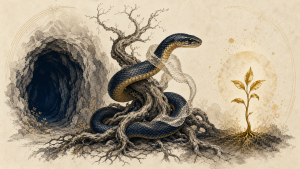
Snake
A snake in a dream can evoke danger, instinct, transformation, healing, sexuality, wisdom, or something unfamiliar—but its meaning depends on the dream’s details and the dreamer’s associations.

Mirror
A mirror in a dream may concern self-recognition, appearance, identity, reversal, duplication, self-judgment, projection, or the unsettling failure to recognize oneself.

Cave
A cave in a dream may evoke concealment, shelter, descent, gestation, fear, burial, or contact with what lies outside ordinary awareness.

Cat Dream Meaning
A cat in a dream may draw attention to autonomy, closeness, watchfulness, vulnerability, instinct, or a specific personal relationship with cats.

Spider Dream Meaning
A spider dream may involve creativity, patient construction, entanglement, fear, predation, attention to detail, or an ordinary encounter with spiders.

Fire Dream Meaning
Fire dreams may involve warmth, anger, danger, destruction, purification, energy, transformation, renewal, or a recent real-world concern.

Owl Dream Meaning
An owl dream may involve perception, night awareness, vigilance, knowledge, predation, silence, fear, death imagery, or a recent encounter with birds.

Horse Dream Meaning
A horse dream may concern vitality, movement, partnership, labor, status, control, freedom, fear, sexuality, or a specific history with horses.

Wolf Dream Meaning
A wolf dream may involve instinct, group belonging, threat, protection, isolation, pursuit, social order, wilderness, or learned cultural imagery.

Bathroom Dream Meaning
A bathroom dream may organize concerns about privacy, exposure, bodily needs, relief, cleanliness, shame, or finding an acceptable place to deal with something personal.

Maggots Dream Meaning
Maggots in a dream may focus attention on decay, disgust, neglected material, transformation, decomposition, contamination, or an organic process that continues outside conscious control.
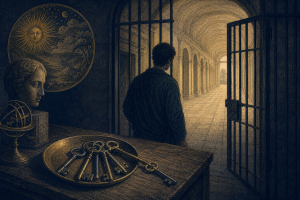
Going to Jail Dream Meaning
A jail dream may stage restriction, guilt, consequences, loss of choice, judgment, confinement, responsibility, or fear that a situation has become difficult to escape.

Funeral Dream Meaning
A funeral dream may organize grief, memory, social ritual, unfinished goodbye, fear of loss, or recognition that a role, relationship, expectation, or life phase has ended.

Finding Money Dream Meaning
Finding money in a dream may raise questions about value, opportunity, ownership, resources, luck, self-worth, obligation, or the discovery of something useful that was overlooked.

Black Bear Dream Meaning
A black-bear dream may involve strength, territorial boundaries, caution, protection, appetite, solitude, maternal defense, wilderness, or fear of a powerful presence.

Partner Cheating Dream Meaning
A dream about a partner cheating may express insecurity, fear of replacement, past betrayal, emotional distance, comparison, unmet needs, or ordinary relationship anxiety without proving actual infidelity.

Crab Dream Meaning
A crab dream may concern protection, vulnerability beneath a hard exterior, indirect movement, defensiveness, grasping, tidal change, nourishment, or life at a boundary.
Cockroach Dream Meaning
A cockroach dream may involve disgust, persistence, contamination, neglected conditions, survival, intrusion, or a recent real-world encounter.

Tiger Dream Meaning
A tiger dream may concern power, beauty, predation, territoriality, fear, protection, captivity, cultural imagery, or a recent encounter with animal media.

Cutting Hair Dream Meaning
A hair-cutting dream may involve appearance, identity, consent, change, control, loss, relief, ritual, or a recent real haircut or grooming concern.
Snake Bite Dream Meaning
A snake-bite dream may involve sudden threat, bodily alarm, conflict, transformation imagery, medical fear, betrayal concerns, or a recent snake-related stimulus.
Death Dream Meaning
A death dream may involve grief, fear, transition, separation, memory, identity change, health anxiety, or ordinary processing of loss and mortality.

Lion Dream Meaning
A lion dream may involve authority, courage, predation, pride, protection, status, family structure, captivity, or familiar cultural imagery.
Ant Dream Meaning
Ants in dreams may involve cooperation, repetitive labor, organization, intrusion, small accumulated problems, persistence, or a literal pest concern.
Crow Dream Meaning
A crow dream may involve intelligence, observation, social signaling, scavenging, death imagery, adaptation, noise, or an ordinary encounter with urban wildlife.

Falling Off a Cliff Dream Meaning
Falling from a cliff in a dream may involve loss of footing, risk, transition, helplessness, exhilaration, bodily sleep sensations, or fear of irreversible consequences.

Tornado Dream Meaning
A tornado dream may involve rapidly changing danger, loss of control, concentrated force, family safety, weather anxiety, conflict, or recent storm coverage.

Dog Bite Dream Meaning
A dog-bite dream may involve violated trust, defensive aggression, fear, boundaries, loyalty conflict, bodily alarm, or a real experience with dogs.

Snow Dream Meaning
Snow in dreams may involve quiet, cold, concealment, renewal, isolation, danger, play, seasonal memory, or an ordinary response to weather.
Drowning Dream Meaning
A drowning dream may involve panic, helplessness, emotional overwhelm, rescue, bodily breathing disturbance, grief, or a literal fear of water.
Blood Dream Meaning
Blood in a dream may involve injury, vitality, menstruation, kinship, sacrifice, fear, illness, violence, or a recent bodily concern.
Keys Dream Meaning
Keys in dreams may involve access, responsibility, privacy, permission, security, solution seeking, loss, or an ordinary concern about misplaced keys.
Zombie Dream Meaning
A zombie dream may involve contagion fears, emotional numbness, crowd pressure, exhaustion, dehumanization, survival narratives, or recent horror media.
Bat Dream Meaning
A bat dream may involve navigation in darkness, fear, social roosting, illness associations, transformation stories, wildlife encounters, or recent media.
Related Practices

Shadow Work
Shadow work is a modern term for reflective practices that explore qualities, emotions, and patterns a person habitually rejects, hides, or fails to recognize in themselves.

Active Imagination
Active imagination is Jung’s method of consciously engaging emerging images, emotions, or figures through sustained attention and expression while preserving awareness and judgment.

Jungian Therapy
Jungian therapy is a depth-oriented form of psychotherapy that explores conscious and unconscious patterns through relationships, dreams, symbols, and personal history.

Shadow Work Exercises for Beginners
Beginner Shadow Work exercises focused on observation, projection checks, persona balance, recurring patterns, and responsible action.
Related Books
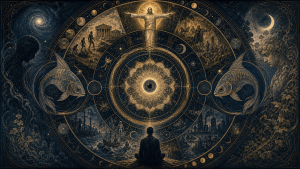
Aion: Researches into the Phenomenology of the Self
Aion is Jung’s advanced study of the Self, the shadow, opposites, and the religious, astrological, Gnostic, and alchemical symbols of psychological totality.

Man and His Symbols
Man and His Symbols is an illustrated introduction to dreams, symbols, archetypes, and individuation written by Carl Jung and four close collaborators for general readers.

Memories, Dreams, Reflections
Memories, Dreams, Reflections is a semi-autobiographical account assembled from Carl Jung's recollections, manuscripts, and conversations with editor Aniela Jaffé.

The Archetypes and the Collective Unconscious
The Archetypes and the Collective Unconscious collects major essays in which Carl Jung develops his accounts of archetypes, collective psychic patterns, rebirth, the mother, the child, and individuation.

The Origins and History of Consciousness
Erich Neumann’s The Origins and History of Consciousness uses mythic sequences to propose an archetypal model of ego development and the differentiation of consciousness.

Re-Visioning Psychology
Re-Visioning Psychology is James Hillman’s foundational statement of archetypal psychology and its imaginal approach to soul, symptoms, myth, and psychological plurality.

Senex & Puer
Senex & Puer collects James Hillman’s essays on the archetypal polarity between time, structure, authority, and the youthful forces of possibility, freedom, and renewal.
Anatomy of the Psyche
Anatomy of the Psyche is Edward F. Edinger’s Jungian study of Western alchemical images and operations as symbolic parallels for psychological processes and psychotherapy.

The Mystery of the Coniunctio
The Mystery of the Coniunctio is Edward F. Edinger’s compact Jungian study of alchemical union as an image of the relationship and possible integration of psychological opposites.

Encounter with the Self
Encounter with the Self is Edward F. Edinger’s Jungian commentary on William Blake’s illustrations of the Book of Job and their imagery of psychic and religious transformation.

The Christian Archetype
The Christian Archetype is Edward F. Edinger’s Jungian commentary on central episodes in the life of Christ and their possible psychological significance.

Transformation of the God-Image
Transformation of the God-Image is Edinger’s Jungian elucidation of Answer to Job, developed from seminars at the C. G. Jung Institute of Los Angeles.

Science of the Soul
Science of the Soul is a posthumous collection of five Edinger essays on psychotherapy, transference, vocation, the greater personality, and Jungian psychological method.

Goethe’s Faust: Notes for a Jungian Commentary
Goethe’s Faust is Edinger’s Jungian commentary on Goethe’s drama as a psychological portrait, symbolic analytic process, and bridge to alchemy.

Melville’s Moby-Dick: An American Nekyia
Melville’s Moby-Dick is Edinger’s Jungian interpretation of Melville’s novel as an American nekyia—a descent into dangerous and transformative psychic depths.

Ego and Self: The Old Testament Prophets
Ego and Self is Edinger’s psychological commentary on the prophetic books of the Hebrew Bible, continuing the work begun in The Bible and the Psyche.

The Mysterium Lectures
The Mysterium Lectures is Edinger’s extensive chapter-by-chapter guide to Jung’s Mysterium Coniunctionis and its relevance to dreams and psychological life.

The Bible and the Psyche
The Bible and the Psyche is Edinger’s Jungian commentary on individuation symbolism in biblical books from Genesis through Esther.

The Psyche on Stage
The Psyche on Stage is Edinger’s Jungian study of Measure for Measure, Romeo and Juliet, Oedipus the King, and Oedipus at Colonus.

The Aion Lectures
The Aion Lectures is Edinger’s edited lecture companion to C. G. Jung’s Aion, originally delivered in Los Angeles in 1988–89.

The Black Books
Carl Jung’s private notebooks recording fantasies, dreams, dialogues, and reflections from the period that also produced The Red Book.
Related Psychologists

Carl Jung
Carl Gustav Jung was a Swiss psychiatrist who founded analytical psychology and developed influential ideas about complexes, archetypes, the collective unconscious, psychological types, and individuation.

Erich Neumann
Erich Neumann was a German-born Israeli analytical psychologist who extended Jungian psychology through studies of consciousness, mythology, ethics, creativity, and Jewish thought.

James Hillman
James Hillman was an American post-Jungian psychologist and writer who founded archetypal psychology, an imaginal approach centered on soul, myth, plurality, and close attention to images.

Barbara Hannah
Barbara Hannah was a British-born Jungian analyst, lecturer, and author known for her close work with C. G. Jung and Marie-Louise von Franz.