Jungian Concept
Collective Unconscious
In Jungian psychology, the collective unconscious is a proposed inherited layer of the psyche expressed through universal patterns called archetypes.
Definition
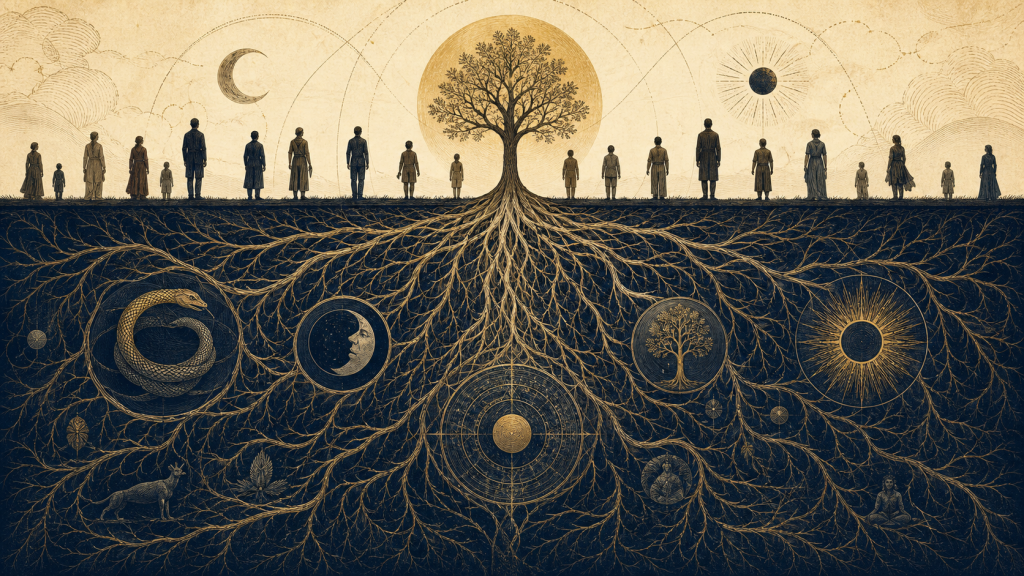
In Carl Jung's analytical psychology, the collective unconscious is a proposed level of the unconscious that does not arise from one person's forgotten or repressed experiences. Jung described it as a shared psychological inheritance: a set of underlying forms or predispositions that shape how human beings encounter recurring situations such as birth, danger, parenthood, conflict, transformation, and death.
Jung used the concept to explain why similar symbolic patterns can appear in myths, religions, stories, fantasies, and dreams across different times and cultures. These patterns are called archetypes. The collective unconscious is a central idea within Jungian theory, but it should not be presented as an established anatomical structure or a conclusion accepted uniformly throughout modern psychology.
Collective and Personal Unconscious
Jung’s model distinguishes the collective unconscious from the personal unconscious. The personal unconscious contains material connected to an individual’s life: forgotten experiences, emotionally charged memories, perceptions that never reached full awareness, and material excluded from the conscious personality.
The collective unconscious, by contrast, refers to patterns Jung believed were not acquired through personal experience. It does not mean that everyone secretly remembers the same events. Nor does it function like a shared database of facts. It is better understood within Jung’s theory as a common psychological framework that influences the forms human imagination may take.
Its Relationship to Archetypes
Archetypes are the organizing patterns associated with the collective unconscious. Jung did not treat an archetype as a fixed picture with one universal meaning. The underlying pattern is distinguished from the particular image through which it appears. A mother figure, guide, adversary, child, journey, descent, or renewal may be expressed very differently depending on the person and culture involved.
This distinction matters. Finding similar images in two stories does not prove that both mean exactly the same thing. Personal history and cultural context still shape every symbolic expression. Jungian interpretation therefore considers both the recurring pattern and the circumstances in which it appears.
Its Role in Individuation
The collective unconscious is relevant to individuation, Jung’s term for the gradual development of a more integrated personality. In this process, a person becomes more conscious of attitudes, conflicts, and symbolic patterns that had operated outside awareness.
Encountering archetypal material does not automatically produce insight. Jungian work asks how a symbol relates to the individual’s actual life rather than forcing it into a ready-made dictionary definition. The goal is not to abandon individuality for something collective, but to develop a more conscious relationship with influences that may otherwise shape behavior without being recognized.
Contemporary Perspective
The collective unconscious remains influential in analytical psychology, religious studies, literary criticism, mythology, and the study of symbolism. It is also debated; the guide to major criticisms of Jung’s theories examines the evidentiary and cultural questions in more detail. Similarities across cultures may arise through shared human biology, recurring social problems, cultural transmission, historical contact, or combinations of these factors. Jung’s theory offers one interpretive framework; it does not settle those questions by itself.
For readers, the safest approach is to treat the concept as a historically important psychological theory. It can provide a vocabulary for examining recurring patterns without turning every coincidence, dream image, or cultural similarity into evidence of a universal hidden meaning.
Universality and Cultural Transmission
A recurring motif does not by itself prove inheritance from a collective unconscious. Shared bodies, developmental problems, migration, trade, conquest, translation, media, and direct historical contact can also produce similarities. Responsible comparison investigates those routes before claiming universality. Jung’s theory remains an interpretive proposal that may organize patterns; it should not erase the documented movement of stories or the authority of communities over their own traditions.
Sources and Further Reading
Origin and Development
Jung developed the concept while distinguishing his analytical psychology from psychological models centered primarily on personal experience and repression. His writings separated a personal layer of unconscious material from a deeper collective layer that he believed was common to humanity.
The idea was developed across multiple works. A principal source is The Archetypes and the Collective Unconscious, published as Volume 9, Part 1 of Jung’s collected works. Earlier discussion of the personal and collective unconscious also appears in his essays on the relationship between consciousness and the unconscious.
Examples
Imagine that someone repeatedly dreams of entering an unfamiliar underground chamber. A Jungian interpretation would not begin by assigning the chamber a fixed universal definition. It would first examine the dreamer’s associations, emotions, circumstances, and personal history.
The analyst might then ask whether the descent resembles a broader archetypal pattern found in stories of journeys into an underworld or hidden realm. That comparison could offer a useful perspective, but it would remain an interpretation—not proof that every underground place carries the same meaning or that the dream came from a literal shared memory.
Common Misconceptions
- It is not a shared storehouse of personal memories. Jung’s theory concerns inherited organizing patterns, not access to other people’s experiences.
- Archetypes are not rigid characters or personality labels. They are theoretical patterns that can appear through many different images and behaviors.
- Similar symbols do not always have identical meanings. Culture, biography, emotion, and context remain essential.
- The theory is not universally accepted as established science. It remains a central idea in Jungian psychology and an influential interpretive framework.
- Symbolic interpretation is not diagnosis. A dream or image should not be used by itself to make claims about someone’s mental health.
Continue your study
Recommended Reading
Books selected because they directly develop ideas discussed on this page.
Aion: Researches into the Phenomenology of the Self
Aion is Jung’s advanced study of the Self, the shadow, opposites, and the religious, astrological, Gnostic, and alchemical symbols of psychological totality.
Man and His Symbols
Man and His Symbols is an illustrated introduction to dreams, symbols, archetypes, and individuation written by Carl Jung and four close collaborators for general readers.
Memories, Dreams, Reflections
Memories, Dreams, Reflections is a semi-autobiographical account assembled from Carl Jung's recollections, manuscripts, and conversations with editor Aniela Jaffé.
Paid links. As an Amazon Associate I earn from qualifying purchases.
Related Concepts
Shadow
In Jungian psychology, the shadow is the part of the personality containing qualities, impulses, and capacities that the conscious ego does not recognize or accept as its own.

Individuation
Individuation is Jung’s term for the lifelong process of becoming a more differentiated and integrated psychological whole.

Personal Unconscious
In Jungian psychology, the personal unconscious contains experiences, perceptions, and emotionally charged material outside an individual’s present awareness.
Persona
In Jungian psychology, the persona is the social identity or “mask” through which a person adapts to roles, expectations, and relationships.
Self
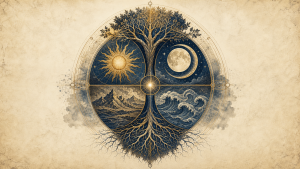
The Self is Jung’s concept of the whole psyche—conscious and unconscious—and the archetypal principle of its organization, development, and potential integration.
Archetype
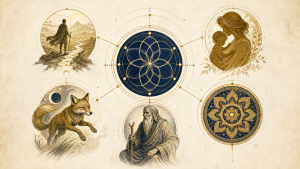
An archetype is an inherited organizing pattern in Jung’s theory that can shape recurring forms of imagery, emotion, perception, and behavior without prescribing one fixed image.

Anima
Anima is Jung’s historical term for an inner feminine archetypal figure in a man, associated with feeling, relationship, imagery, and mediation between consciousness and the unconscious.
Animus
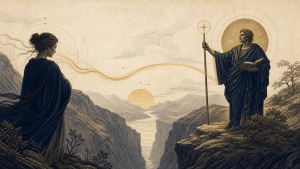
Animus is Jung’s historical term for an inner masculine archetypal figure in a woman, associated with opinion, agency, meaning, and mediation between consciousness and the unconscious.
Synchronicity
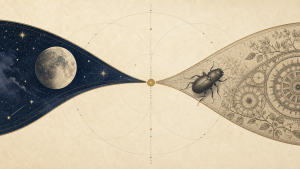
Synchronicity is Jung’s term for a meaningful coincidence between an inner psychological state and an external event when no adequate causal connection is apparent.

Transcendent Function
The transcendent function is the new psychological attitude or symbolic possibility that can emerge when conscious and unconscious positions are held in genuine dialogue.
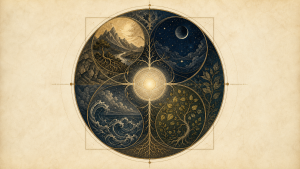
Mandala
A mandala is a centered, often circular symbolic form that Jung associated with psychic order, wholeness, containment, and the Self.
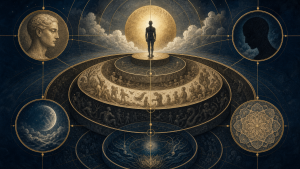
Analytical Psychology
Analytical psychology, often called Jungian psychology, is Carl Jung’s approach to the psyche, unconscious life, symbols, and psychological development.
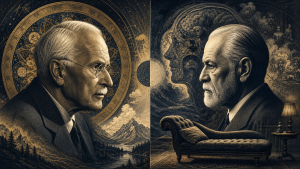
Carl Jung vs. Sigmund Freud
Carl Jung and Sigmund Freud shared an early psychoanalytic alliance but diverged over libido, religion, symbols, the unconscious, and the aims of psychological development.

Carl Jung and Religion
Carl Jung approached religion as a psychological and symbolic phenomenon whose images can organize experience, while avoiding a clinical proof of theological claims.

Carl Jung and Art
Carl Jung used drawing, painting, mandalas, sculpture, and symbolic image-making as means of engaging psychic material, while distinguishing this work from aesthetic criticism.

Carl Jung and Astrology
Carl Jung discussed astrology as a historical symbolic system and explored astrological data in relation to synchronicity, without establishing astrology as validated causal science.
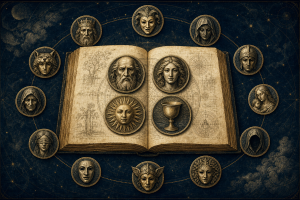
Did Carl Jung Define 12 Archetypes?
Carl Jung did not establish a canonical list of twelve personality archetypes; the popular twelve-archetype model is a later simplification.
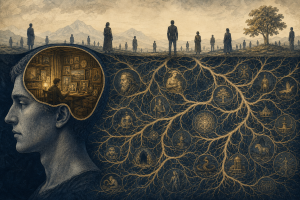
Personal Unconscious vs Collective Unconscious
The personal unconscious contains forgotten or repressed individual material, while the collective unconscious names inherited archetypal patterns shared across human life.
Related Archetypes

Hero
The Hero is an archetypal motif of confronting danger, overcoming an obstacle, and winning something that can contribute to greater consciousness or renewal.
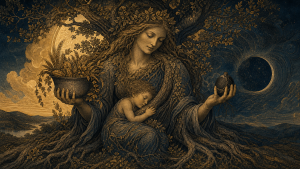
Great Mother
The Great Mother is an archetypal pattern of origin, nourishment, protection, fertility, containment, engulfment, and destructive power.

Child
The Child archetype represents vulnerable beginnings, unrealized potential, renewal, dependence, abandonment, and a future personality still developing.

Maiden (Kore)
The Maiden, or Kore, is an archetypal image of youth, potential, vulnerability, separation, descent, renewal, and an identity not yet fully differentiated.
Father Archetype
The father archetype is a recurring pattern associated with authority, order, law, protection, tradition, judgment, and orientation.
Mother Archetype
The mother archetype is a recurring pattern associated with origin, nourishment, belonging, protection, embodiment, growth, and engulfment.
King Archetype
The king archetype is a pattern of ordering authority, stewardship, judgment, fertility, and responsibility for a larger whole.
Queen Archetype
The queen archetype is a pattern of sovereign presence, relational authority, discernment, protection, and the organization of a shared realm.
Mentor Archetype
The mentor archetype is a recurring pattern of guidance, transmission, initiation, perspective, and preparation for a difficult passage.
Related Dream Symbols
Snake
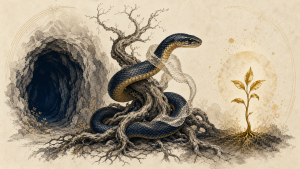
A snake in a dream can evoke danger, instinct, transformation, healing, sexuality, wisdom, or something unfamiliar—but its meaning depends on the dream’s details and the dreamer’s associations.

Water
Water in a dream may relate to emotion, bodily life, the unconscious, renewal, danger, depth, or overwhelming experience, depending on its form and context.

Forest
A forest in a dream may suggest an unfamiliar psychological territory, instinctive life, concealment, danger, refuge, disorientation, or a path of discovery.

Bird
A bird in a dream may raise questions about perspective, movement, voice, care, migration, territory, vulnerability, or confinement, depending on the species and complete context.

Mountain
A mountain dream may evoke challenge, perspective, endurance, isolation, boundary, permanence, sacred space, or a goal, depending on the mountain and the dreamer’s relationship to it.
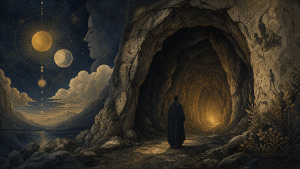
Cave
A cave in a dream may evoke concealment, shelter, descent, gestation, fear, burial, or contact with what lies outside ordinary awareness.

Fish Dream Meaning
Fish in dreams may involve vitality, nourishment, depth, adaptation, capture, abundance, vulnerability, spiritual imagery, or ordinary experience with water and food.

Wolf Dream Meaning
A wolf dream may involve instinct, group belonging, threat, protection, isolation, pursuit, social order, wilderness, or learned cultural imagery.

Tsunami Dream Meaning
A tsunami dream may involve overwhelming change, fear, helplessness, collective danger, emotional intensity, disaster imagery, or recent media exposure.
Ant Dream Meaning
Ants in dreams may involve cooperation, repetitive labor, organization, intrusion, small accumulated problems, persistence, or a literal pest concern.

Killer Whale Dream Meaning
A killer-whale dream may involve intelligence, family bonds, coordinated power, ocean depth, captivity, danger, awe, or recent marine media.
Bee Dream Meaning
Bees in dreams may involve cooperation, labor, pollination, sweetness, danger, social organization, environmental concern, or a literal fear of stings.
Ocean Dream Meaning
An ocean in a dream may evoke emotional scale, the unknown, collective life, origin, danger, freedom, or a boundary between conscious and unconscious experience.
Moon Dream Meaning
A moon in a dream may suggest changing visibility, rhythm, reflection, night consciousness, orientation, or something known indirectly.
Sun Dream Meaning
The sun in a dream may evoke consciousness, vitality, exposure, authority, clarity, heat, danger, or a powerful organizing center.
Tree Dream Meaning
A tree in a dream may represent growth, rootedness, ancestry, seasonal change, branching possibility, shelter, injury, or continuity.
Garden Dream Meaning
A garden in a dream may evoke cultivation, enclosure, care, pleasure, neglected potential, controlled nature, or a protected inner space.
Maze Dream Meaning
A maze in a dream may express disorientation, initiation, repeated choices, confinement, play, strategy, or a path toward an unknown center.
School Dream Meaning
A school in a dream may relate to evaluation, learning, social comparison, old identity, preparation, authority, or a lesson that feels unfinished.
Phone Dream Meaning
A phone in a dream may concern connection, interruption, missed communication, access, distance, identity, or dependence on a technological channel.
Baby Dream Meaning
A baby in a dream may evoke vulnerability, responsibility, new potential, dependency, neglected needs, literal family concerns, or an emerging development.
Storm Dream Meaning
A storm in a dream may represent emotional intensity, conflict, rapid change, danger, cleansing, disruption, or forces beyond conscious control.
Related Practices
Active Imagination
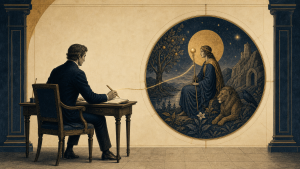
Active imagination is Jung’s method of consciously engaging emerging images, emotions, or figures through sustained attention and expression while preserving awareness and judgment.

Jungian Dream Analysis
Jungian dream analysis explores a dream’s personal associations, structure, emotional context, and possible compensatory relationship to conscious life without using fixed symbol definitions.

Symbol Amplification
Symbol amplification is a Jungian method of comparing an image with mythic, religious, artistic, historical, and cultural parallels while staying anchored to personal context.
Circumambulation
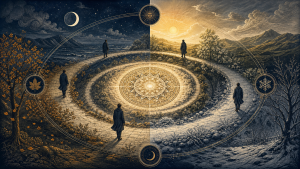
Circumambulation is a Jungian method of staying close to one image while examining it repeatedly from different personal, emotional, symbolic, and practical viewpoints.

Sandplay Therapy
Sandplay therapy is a clinical, expressive method in which a client creates scenes with sand, water, and miniatures within a protected therapeutic relationship.
Related Books
Aion: Researches into the Phenomenology of the Self
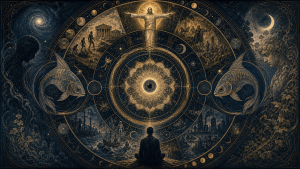
Aion is Jung’s advanced study of the Self, the shadow, opposites, and the religious, astrological, Gnostic, and alchemical symbols of psychological totality.
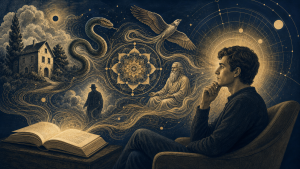
Man and His Symbols
Man and His Symbols is an illustrated introduction to dreams, symbols, archetypes, and individuation written by Carl Jung and four close collaborators for general readers.

Memories, Dreams, Reflections
Memories, Dreams, Reflections is a semi-autobiographical account assembled from Carl Jung's recollections, manuscripts, and conversations with editor Aniela Jaffé.
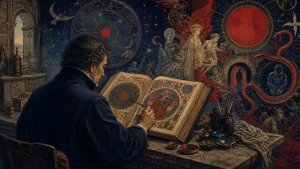
The Red Book: Liber Novus
The Red Book: Liber Novus records and artistically develops Carl Jung's confrontation with inner figures and images during a formative period of his psychology.
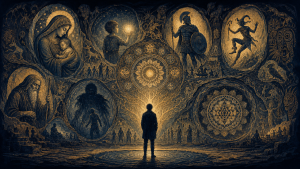
The Archetypes and the Collective Unconscious
The Archetypes and the Collective Unconscious collects major essays in which Carl Jung develops his accounts of archetypes, collective psychic patterns, rebirth, the mother, the child, and individuation.
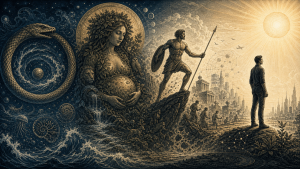
The Origins and History of Consciousness
Erich Neumann’s The Origins and History of Consciousness uses mythic sequences to propose an archetypal model of ego development and the differentiation of consciousness.
Re-Visioning Psychology
Re-Visioning Psychology is James Hillman’s foundational statement of archetypal psychology and its imaginal approach to soul, symptoms, myth, and psychological plurality.

Ego and Archetype
Ego and Archetype is Edward F. Edinger’s influential Jungian study of individuation and the changing relationship between the conscious ego and the Self.
The Eternal Drama
The Eternal Drama is Edward F. Edinger’s Jungian exploration of major Greek myths and divine figures as recurring images of psychological conflict, development, and transformation.
Anatomy of the Psyche
Anatomy of the Psyche is Edward F. Edinger’s Jungian study of Western alchemical images and operations as symbolic parallels for psychological processes and psychotherapy.

The Sacred Psyche
The Sacred Psyche is Edward F. Edinger’s psychological interpretation of the Psalms, developed from lectures and focused on their continuing significance in individual experience.
The Mystery of the Coniunctio
The Mystery of the Coniunctio is Edward F. Edinger’s compact Jungian study of alchemical union as an image of the relationship and possible integration of psychological opposites.
Encounter with the Self
Encounter with the Self is Edward F. Edinger’s Jungian commentary on William Blake’s illustrations of the Book of Job and their imagery of psychic and religious transformation.
The Creation of Consciousness
The Creation of Consciousness is Edward F. Edinger’s concise proposal for a modern Jungian worldview joining the scientific pursuit of knowledge with the religious search for meaning.
The Christian Archetype
The Christian Archetype is Edward F. Edinger’s Jungian commentary on central episodes in the life of Christ and their possible psychological significance.
Transformation of the God-Image
Transformation of the God-Image is Edinger’s Jungian elucidation of Answer to Job, developed from seminars at the C. G. Jung Institute of Los Angeles.

Science of the Soul
Science of the Soul is a posthumous collection of five Edinger essays on psychotherapy, transference, vocation, the greater personality, and Jungian psychological method.

Goethe’s Faust: Notes for a Jungian Commentary
Goethe’s Faust is Edinger’s Jungian commentary on Goethe’s drama as a psychological portrait, symbolic analytic process, and bridge to alchemy.

Melville’s Moby-Dick: An American Nekyia
Melville’s Moby-Dick is Edinger’s Jungian interpretation of Melville’s novel as an American nekyia—a descent into dangerous and transformative psychic depths.
Ego and Self: The Old Testament Prophets
Ego and Self is Edinger’s psychological commentary on the prophetic books of the Hebrew Bible, continuing the work begun in The Bible and the Psyche.
The Mysterium Lectures
The Mysterium Lectures is Edinger’s extensive chapter-by-chapter guide to Jung’s Mysterium Coniunctionis and its relevance to dreams and psychological life.

The Bible and the Psyche
The Bible and the Psyche is Edinger’s Jungian commentary on individuation symbolism in biblical books from Genesis through Esther.
The Psyche in Antiquity, Book One
The Psyche in Antiquity, Book One is Edinger’s psychological tour of early Greek philosophy from the Milesians through Plotinus.

The Psyche on Stage
The Psyche on Stage is Edinger’s Jungian study of Measure for Measure, Romeo and Juliet, Oedipus the King, and Oedipus at Colonus.
The Aion Lectures
The Aion Lectures is Edinger’s edited lecture companion to C. G. Jung’s Aion, originally delivered in Los Angeles in 1988–89.

Synchronicity: An Acausal Connecting Principle
Carl Jung’s principal essay proposing synchronicity as a framework for meaningful coincidence not adequately described by ordinary causal explanation.
Two Essays on Analytical Psychology
Two central essays in which Carl Jung explains the ego, personal and collective unconscious, persona, anima, and the movement toward individuation.
Related Psychologists
Carl Jung
Carl Gustav Jung was a Swiss psychiatrist who founded analytical psychology and developed influential ideas about complexes, archetypes, the collective unconscious, psychological types, and individuation.

Marie-Louise von Franz
Marie-Louise von Franz was a Swiss Jungian analyst and scholar known for her work on dreams, fairy tales, alchemy, and the process of individuation.

Aniela Jaffé
Aniela Jaffé was a German-born Swiss Jungian analyst, author, and longtime collaborator who recorded and edited the material behind Memories, Dreams, Reflections.

Dora Kalff
Dora Kalff was a Swiss therapist who developed Jungian sandplay therapy by integrating Margaret Lowenfeld’s World Technique with analytical psychology.
Erich Neumann
Erich Neumann was a German-born Israeli analytical psychologist who extended Jungian psychology through studies of consciousness, mythology, ethics, creativity, and Jewish thought.

James Hillman
James Hillman was an American post-Jungian psychologist and writer who founded archetypal psychology, an imaginal approach centered on soul, myth, plurality, and close attention to images.

Edward F. Edinger
Edward F. Edinger was an American psychiatrist, Jungian analyst, lecturer, and author who became a prominent interpreter of Jung’s work on the ego, Self, individuation, alchemy, and religious symbolism.